
Collection management across editions, systems and miniature ranges
Warhammer Collection Management
Warhammer collecting can span miniatures, armies, boxed games, rulebooks, codexes, campaign books, magazines, limited releases, promotional material and discontinued specialist ranges.
Collectaneum connects systems, factions, editions, sculpts and releases while preserving the build, paint, completeness, provenance and evidence of every owned example.
Why Warhammer becomes difficult to catalogue
A long-running ecosystem, not one product line
Rules change, miniature ranges evolve, factions are renamed or reinterpreted, boxed contents differ and older designs return as reissues.
A useful record must identify what the object is within that history and separately describe what has happened to the collector's own example.
Systems and settings
Connect objects to Warhammer Fantasy Battle, Warhammer 40,000, specialist games and related settings without treating the brand as one flat line.
Editions and releases
Separate rules editions, boxed-game versions, release waves, regional packaging and later reissues.
Sculpts and materials
Preserve sculpt, pose, designer, base, metal, plastic, resin and production differences where collectors distinguish them.
Build and paint state
Record sealed, new on sprue, assembled, converted, primed, painted, stripped or restored status at owned-item level.
Completeness
Track sprues, cards, templates, dice, counters, books, inserts, transfers and other components that determine whether a boxed release is complete.
Collection purpose
Support gaming armies, display collections, edition runs, sculpt histories, sealed products and nostalgia-driven collections without forcing one model.
From range to owned miniature
Build the record in connected layers
Release and sculpt knowledge can be reused across a collection, while paint, conversion, completeness, condition and provenance remain specific to the object you own.
Identify the release
Record the game system, faction, product name, edition, release period, manufacturer and catalogue context.
Distinguish the version
Capture sculpt, material, pose, packaging, base, regional issue, reissue and component differences.
Describe your example
Preserve build, conversion and paint state, completeness, damage, repairs, storage, photographs and ownership history.
Attach the evidence
Connect catalogues, White Dwarf references, receipts, provenance, comparison images, research notes and valuations.
A record in practice
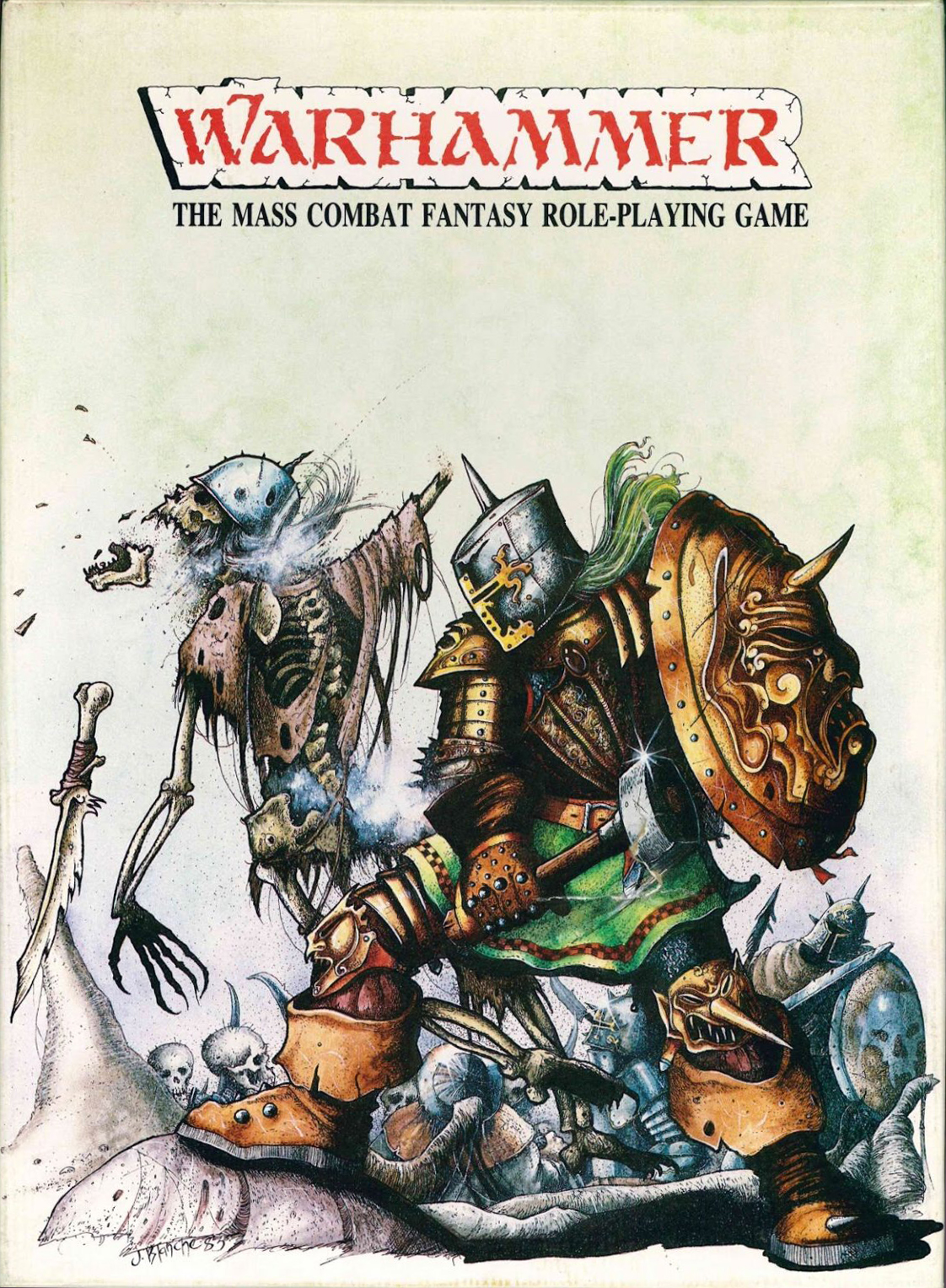
A first-edition boxed game is more than its title
The shared release record can identify the edition, publication date, expected books, miniatures, dice, reference sheets and packaging.
The owned record then captures exactly which components remain, whether replacements are present, box and contents condition, annotations, repairs, acquisition source, photographs and provenance.
That distinction prevents a visually convincing but incomplete or assembled example from being treated as equivalent to an original complete set.
Important collecting distinctions
Details that should remain separate
Edition or later reissue
A familiar design may return with changed components, packaging, rules or production material. The release history should remain explicit.
Original sculpt or conversion
Conversions can be artistically important, but should not be confused with the original production configuration.
Complete boxed game or assembled contents
A box containing plausible components is not necessarily complete or original to that release.
Gaming condition or collector condition
Playability, paint quality, completeness and originality answer different questions and should be recorded separately.
Beyond the army list
Collecting history can matter as much as gaming utility
Some collections are built to play. Others preserve early editions, particular sculptors, complete magazine runs, discontinued systems, sealed releases or the history of a faction across decades.
A flexible registry should support those different intentions without losing the stable identity of the objects or the evidence attached to them.
Knowledge and registry working together
Preserve condition, completeness and research together
Miniatures and boxed games often require careful photography, condition documentation, restoration notes and comparison research.
Collectaneum keeps those observations attached to the exact release and owned example without pretending to grade or authenticate it for the collector.
Build a Warhammer registry around the way you collect
Start with one system, army or edition
Create the releases, distinguish the sculpts and versions, then preserve the build, paint, completeness and provenance of the examples you own.