
Collection management for the history of a changing game
Dungeons & Dragons Collection Management
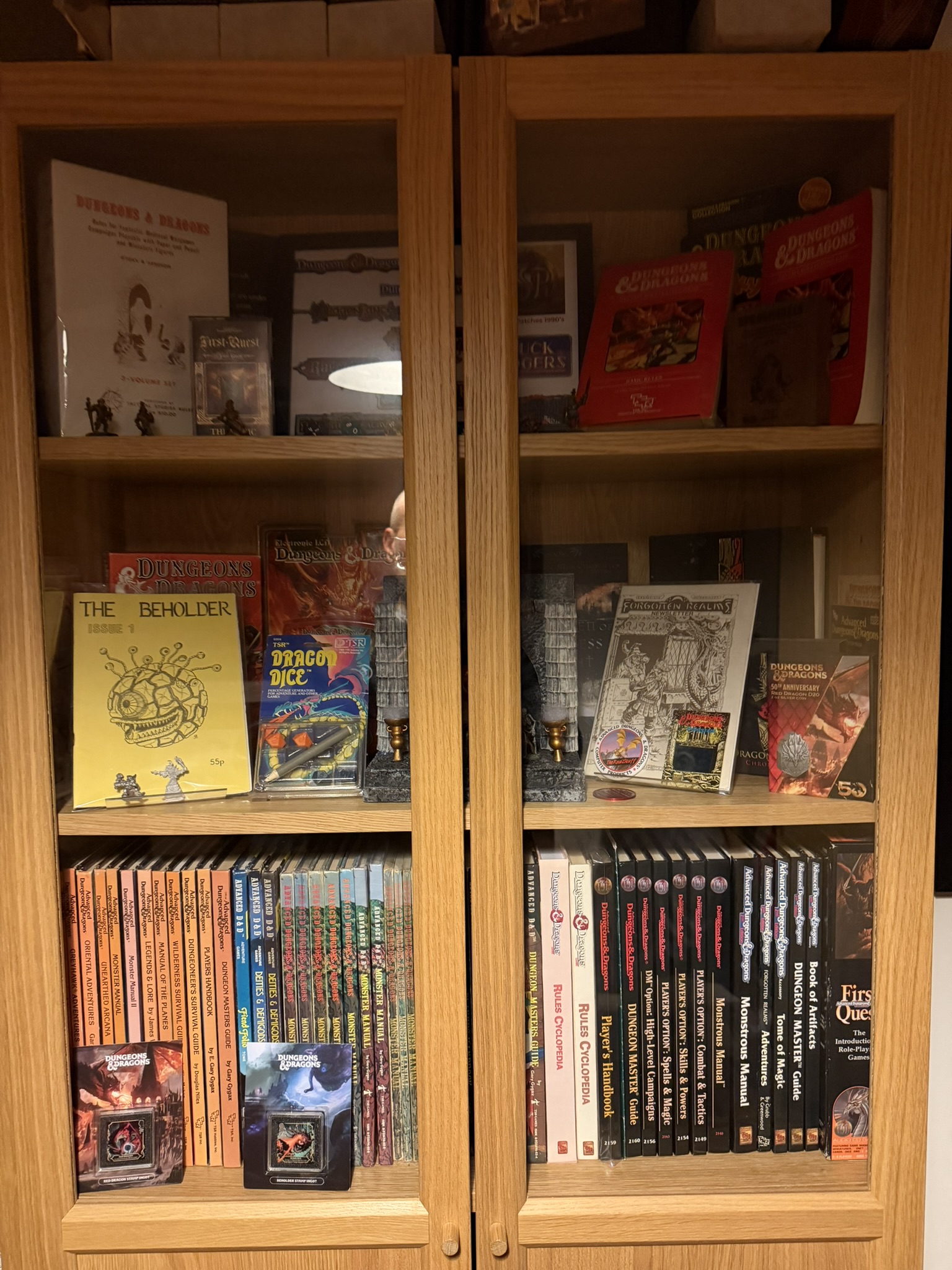
Dungeons & Dragons collecting reaches across rulebooks, supplements, adventures, boxed sets, campaign settings, magazines, dice, miniatures, convention material and the wider history of TSR.
Collectaneum separates the publication, edition or printing from the exact copy you own, preserving completeness, condition, provenance, research and the small physical details that make one example different from another.
Why D&D becomes difficult to catalogue
The collection is layered by publication, edition and physical evidence
A title may exist in several printings. A boxed set may have changed contents. A familiar cover may conceal a different imprint, advert or map. A promotional object may have no obvious place in a conventional book inventory.
The difficulty is not simply volume. It is preserving the relationships and distinctions that allow the collection to be understood later.
Editions and printings
Separate game editions, printings, cover states, logos, publisher details, adverts and other bibliographic differences.
Boxed-set completeness
Record books, maps, dice, counters, reference sheets, inserts and packaging rather than treating the box as one indivisible object.
A connected product history
Link core rules, supplements, adventures, campaign settings, magazines and accessories through system, edition, world and publisher.
Condition at copy level
Preserve annotations, detached covers, map wear, box splits, staining, repairs and component condition against the exact copy.
Memorabilia and ephemera
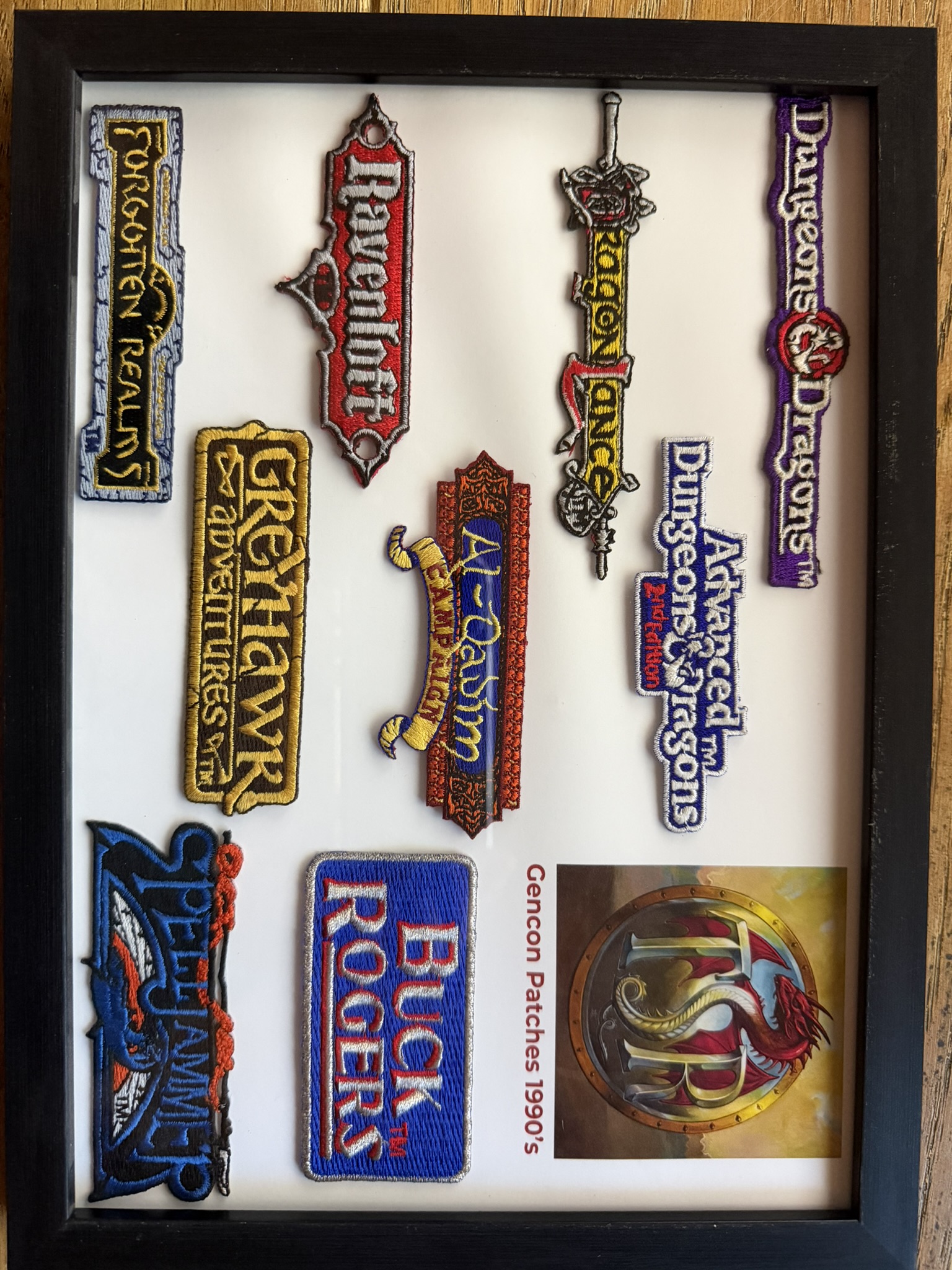
Include patches, convention material, flyers, catalogues, promotional items and staff-associated objects alongside formal publications.
Research and attribution
Keep print-run research, comparison notes, provenance and uncertainty attached to the object rather than hidden in a separate spreadsheet note.
From publication to owned copy
Build the record in connected layers
Research about a publication or printing can be reused, while completeness, annotations, provenance and condition remain attached to the collector's exact copy.
Identify the publication
Record title, product code, publisher, game line, edition, format, creators and original release context.
Distinguish the printing
Capture cover, logo, imprint, copyright statement, adverts, maps, inserts and other evidence used to separate printings or states.
Describe your copy
Preserve completeness, annotations, wear, repairs, signatures, ownership marks, photographs, location and acquisition history.
Attach the evidence
Connect receipts, provenance, correspondence, comparison images, Acaeum research, valuations and unresolved questions to the exact item.
A record in practice
A shelfie shows the collection, but not its record structure
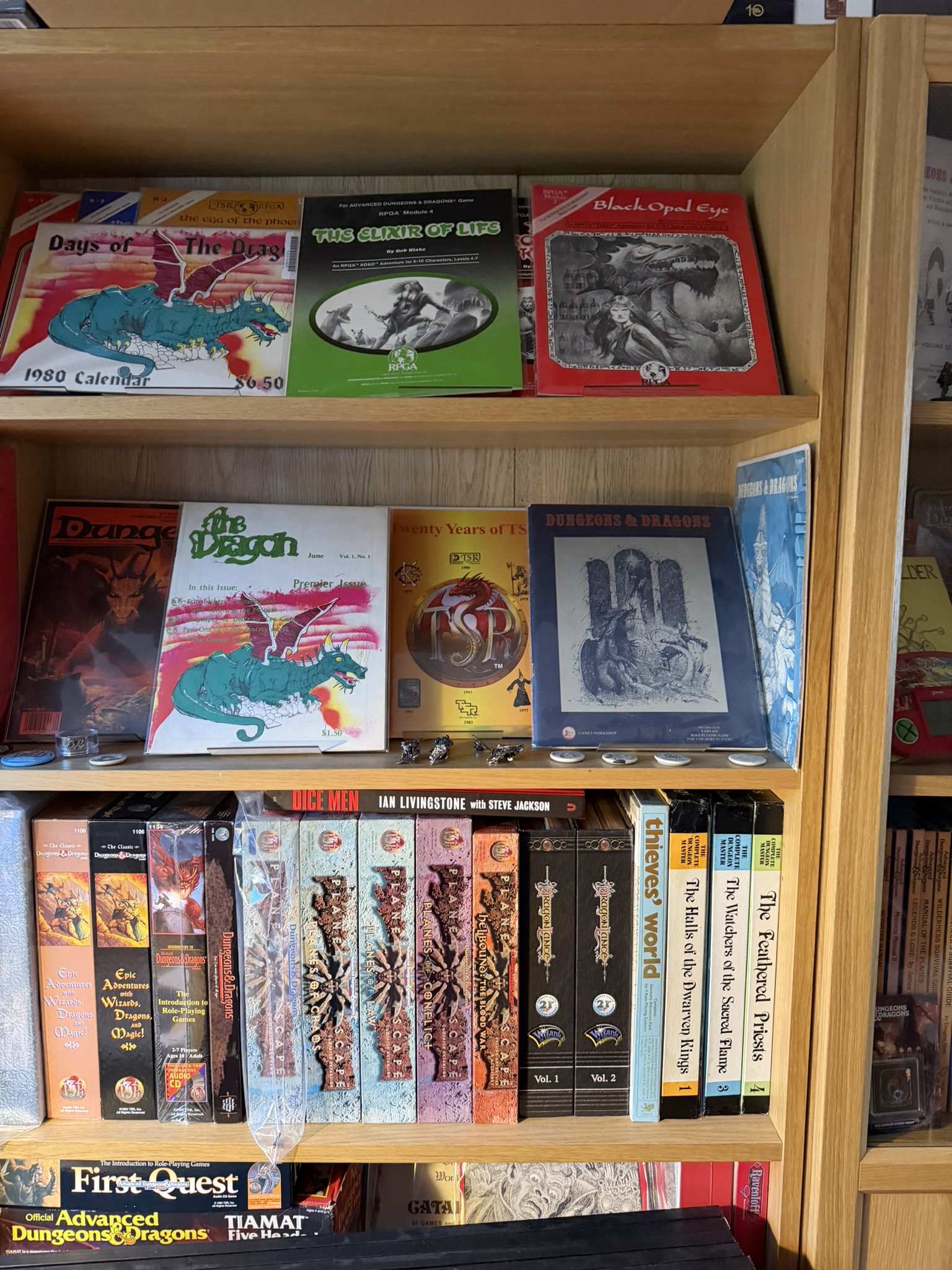
A shelf photograph is valuable because it preserves collection-level context. It can show how material was grouped, which game lines or periods dominate, how boxed sets sit alongside books and magazines, and what was physically present at a particular moment in the collection's history.
It is not, however, a substitute for individual records. The shelf shown here contains core rules, adventures, magazines, boxed products, reference works and promotional material. Each object type carries different identity, edition, printing, completeness and condition questions that cannot be resolved from the overall view alone.
A boxed set adds another layer because it is both a recognised product and a group of related components. Its shared record may identify the product code, game line, edition, release period and expected contents: books, maps, dice, counters, reference sheets and packaging.
The owned record then documents exactly what remains together, whether anything has been replaced, the condition of each component, box repairs, annotations, ownership marks, provenance and acquisition history. This prevents a complete original set, an incomplete example and a later assembled set from collapsing into the same description.
Shelf-level context
Preserve the arrangement, collecting focus, grouping and date of the photograph as evidence of the collection as a whole.
Object-level records
Identify each book, magazine, boxed set or promotional item separately, then connect related components without erasing their individual condition and provenance.
Important collecting distinctions
Details that should not be flattened into one field
The strongest records preserve what is known, what is inferred and what belongs only to the individual copy.
Edition or printing
An edition can contain multiple printings. A useful record should not use the terms interchangeably when the physical evidence supports a narrower identification.
Complete set or attractive box
The presence of the box does not establish completeness. Maps, dice, booklets, inserts and reference sheets should be checked individually.
Publication or owned copy
Bibliographic identity can be shared, while annotations, wear, provenance, signatures and repairs belong to the individual copy.
Known fact or collector interpretation
Research conclusions may change. Preserve the source and level of confidence rather than converting every interpretation into an unquestioned field value.
Beyond books and boxed sets
The history of the hobby survives in its ephemera
Patches, flyers, catalogues, convention items, staff material, promotional objects and accessories can document how the game was marketed, played and experienced.
These objects may not fit conventional bibliographic fields, but they still have identity, date, context, condition, provenance and significance.
For detailed TSR edition and printing research, collectors may also consult The Acaeum. Collectaneum provides the place to preserve the resulting identification and evidence against the owned item.
Knowledge and registry working together
Research the printing, then preserve the evidence
Edition identification, provenance, condition assessment and documentation depend on judgement and supporting sources.
Collectaneum does not replace that research. It keeps conclusions, photographs, comparison notes, documents and uncertainty connected to the exact copy.
Build a registry around the D&D collection you actually own
Start with one shelf, boxed set or collecting theme
Create the publications and printings, record the exact copies and components you own, then add research, provenance and photographs as the collection grows.