
Collection management for small objects with significant variation
Dice Collection Management
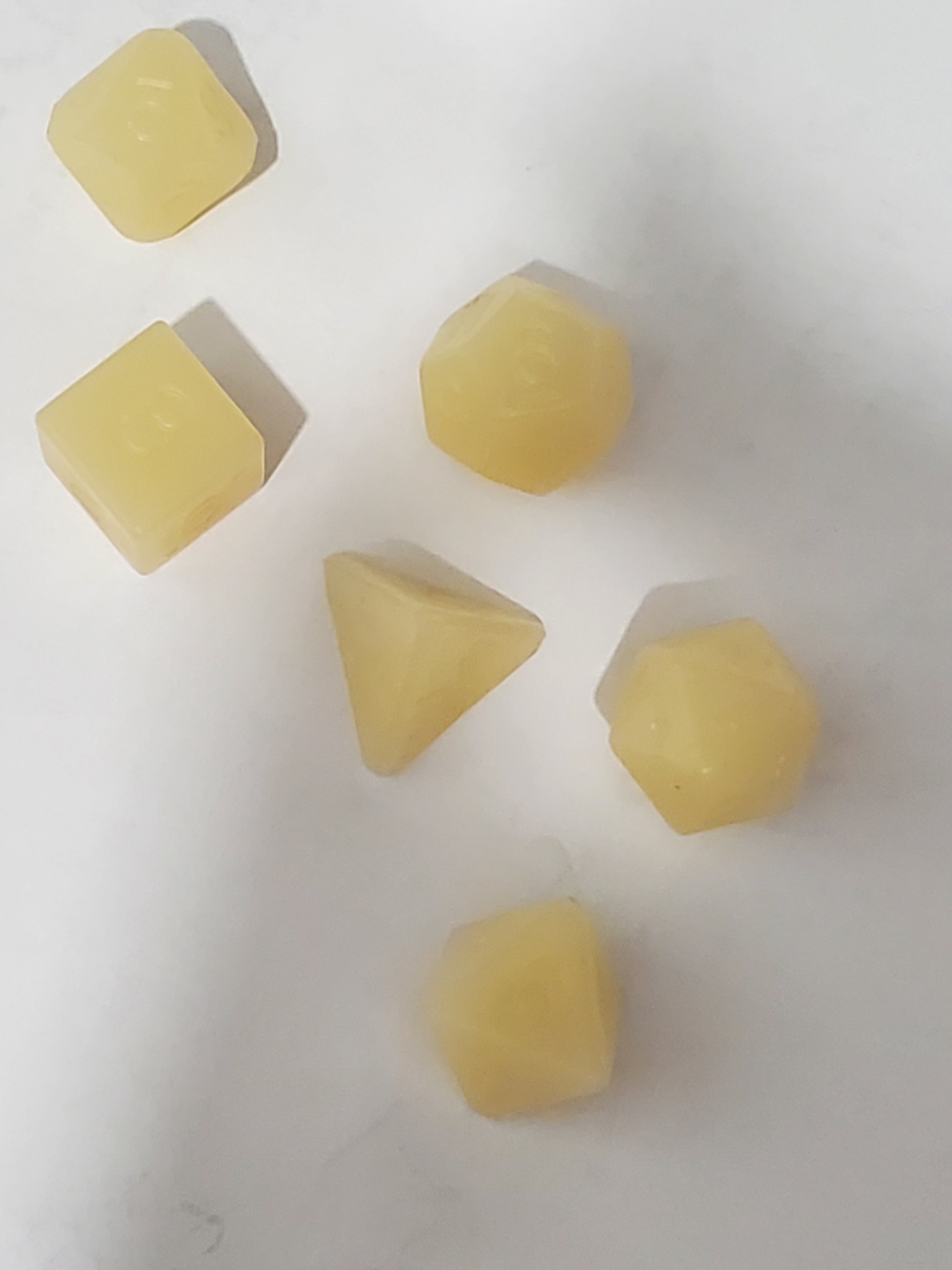
Dice may be physically small, but a serious collection can contain deep differences in material, mould, numbering, colourway, finish, packaging and release history.
Collectaneum separates the known release from the exact set or single die you own, so completeness, substitutions, condition, provenance and identifying evidence remain attached to the right object.
Why dice become difficult to catalogue
Similar at a glance, distinct in the details
A set may be a standard retail issue, a component of a boxed game, a convention release, a promotional item, a prototype or a later assembly of individual dice.
Those differences are often expressed through subtle physical evidence. A useful registry must preserve that evidence rather than reducing every group to colour and number of sides.
Set composition
Record whether a group is a complete matched set, a partial set, a mixed replacement set or a collection assembled over time.
Materials and manufacture
Distinguish resin, acrylic, metal, stone, wood and other materials alongside mould, finish, inclusions and manufacturing clues.
Numbering and symbols
Preserve typeface, logo, ink, symbol placement, orientation and other small features that can identify a release or variation.
Colourway and finish
Track transparent, opaque, marbled, pearlescent, glittered, layered and hand-finished appearances without relying on colour names alone.
Packaging and release context
Connect dice to boxed games, conventions, promotions, retailers, makers or limited releases while preserving original packaging.
Provenance and rarity
Keep seller history, correspondence, photographs and research attached to prototypes, unusual issues and disputed attributions.
From release to owned set
Build the record in connected layers
Reusable release knowledge should remain separate from the condition, completeness, substitutions and history of your own set.
Identify the release
Record the maker, product line, set type, release context, material and known date or period.
Distinguish the variation
Capture mould, numbering style, logo, colourway, finish, ink and packaging differences.
Describe your set
Preserve the exact dice present, completeness, substitutions, wear, chips, ink loss, storage and photographs.
Attach the evidence
Connect receipts, seller notes, provenance, comparison images, research and valuation history to the exact set.
A record in practice
A boxed-game dice set is more than seven pieces
The shared record may identify the game, edition, publisher, expected dice composition, material, mould characteristics, numbering style and original packaging.
The owned record then preserves exactly which dice remain, whether any are replacements, ink and edge condition, packaging wear, acquisition source, photographs and the evidence supporting an unusual or prototype attribution.
That structure allows comparison without losing the story of the particular set.
Important collecting distinctions
Details that should not be collapsed into one label
Matched set or assembled group
Dice that look compatible may not have been issued together. Record the evidence for a matched set rather than assuming it.
Colour description or identifiable colourway
Lighting and photography alter colour. Maker names, comparison images and finish details often provide stronger identification.
Prototype or unusual production piece
An unfamiliar appearance does not prove prototype status; provenance and comparison with known production examples matter.
Shared release or owned example
The release can be described once, while chips, ink wear, substitutions, provenance and packaging belong to the individual set.
Knowledge and registry working together
Document the identification, not just the conclusion
Photography, provenance, comparison and careful condition notes are especially important when identification depends on small physical differences.
Collectaneum keeps the conclusion and its supporting evidence together while allowing uncertainty to remain visible.
Build a dice registry that preserves the differences
Start with the set you know best
Create the release, record the exact dice you own and add photographs, provenance and research as your understanding grows.