
Collecting World
A watch is a machine, a design object and a historical claim strapped to the wrist.
Watch collecting becomes serious when the collector stops asking whether a watch is simply genuine, beautiful or valuable and starts asking whether this particular example makes sense as the object it claims to be.
Case, dial, hands, movement, bracelet, ageing, service history and paperwork can all be individually plausible. The harder judgement is whether they tell the same chronological story.
The central judgement
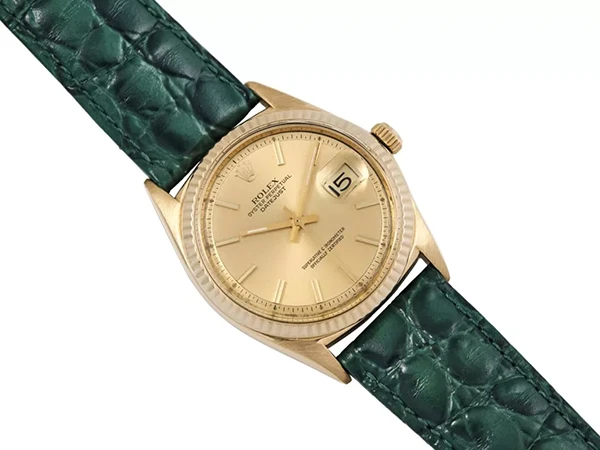
A watch must make sense
Experienced collectors often begin holistically. Before the loupe, serial table or movement photograph, there is a simpler reaction: does the watch look internally coherent?
Correctness is relational.
A genuine part can still be wrong for the watch. A beautifully restored component can still make the object historically less coherent. Authentication is therefore not just part-by-part verification - it is the reconstruction of a plausible whole.
The beginner sees a watch. The specialist sees a bundle of historical claims.
Reference scholarship
Expertise creates more objects
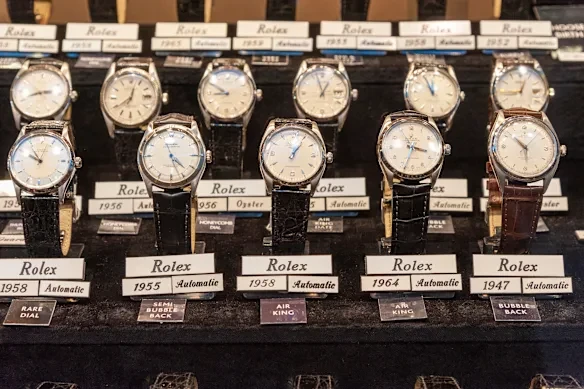
To an outsider, a Rolex Submariner, Omega Speedmaster or Cartier Tank is a model. To a specialist, the model breaks apart into references, production periods and component generations. Tiny differences in printing order, hand shape, lume, bezel font or bracelet construction can become chronology.
Chronology becomes taxonomy. Taxonomy becomes scarcity. Scarcity can become value. The result is a collecting culture in which a millimetre, a typeface or the order of two words can separate major categories.
A collector pursuing one reference may eventually distinguish chapter-ring and non-chapter-ring dials, metres-first and feet-first printing, multiple lume generations, several bezels, bracelets and production ranges. The collection becomes narrower in subject and wider in objects at the same time.
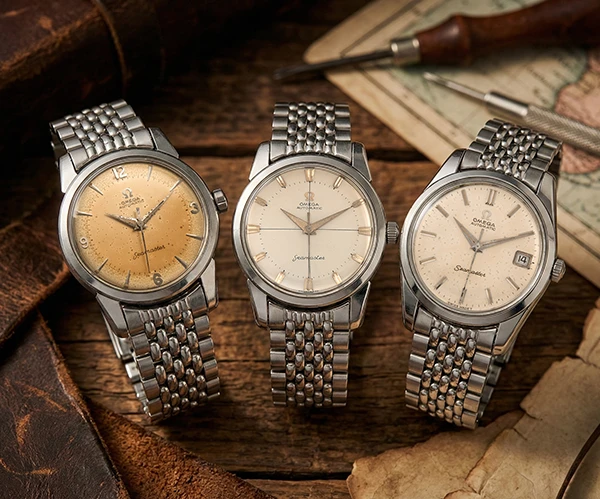
When did you stop seeing the model and start seeing the individual example?
The dial
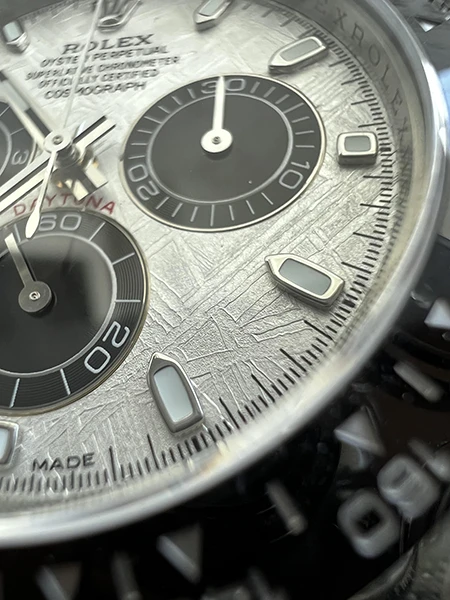
A millimetre can become evidence
Collectors read typography, spacing, logos, minute tracks, luminous plots, signatures, applied indices and tiny manufacturer or country marks. Entire reference taxonomies can be built from changes that a non-collector would never register.
Usually preferred where condition and authenticity remain convincing.
Often more desirable than a cleaner replacement because the surface still belongs to the watch's own history.
Can become a premium characteristic when ageing is coherent, stable and aesthetically compelling.
Authentic manufacturer material, but not the dial with which the watch originally left the factory.
May look cleaner while carrying materially less originality for collectors who value untouched surfaces.
Original is not the same as authentic.
Condition
Better looking can mean worse preserved
Watch collecting repeatedly reverses the obvious visual hierarchy. Scratches may be tolerated as honest wear. A faded bezel can be prized. Cream or orange luminous material can become desirable. A spotless dial may create suspicion. A polished case may be less desirable than one carrying decades of marks.
Are the lugs still full? Are bevels and transitions sharp? Have hallmarks survived?
Original, refinished, spotted, faded, relumed or structurally unstable?
Do dial, hands, lume, bezel, case and bracelet appear to have lived through the same decades?
A beautiful exterior can hide corrosion, damaged screws or poor servicing.
Correct period, correct end links and clasp, or heavily stretched and assembled?
Polishing, reluming, replacement parts and cosmetic work can matter more than superficial scratches.
Condition is not simply the amount of wear a watch has suffered. It is the surviving relationship between original material, mechanical health, ageing and intervention.
Patina and honest wear
Damage becomes acceptable when collectors believe it tells the truth
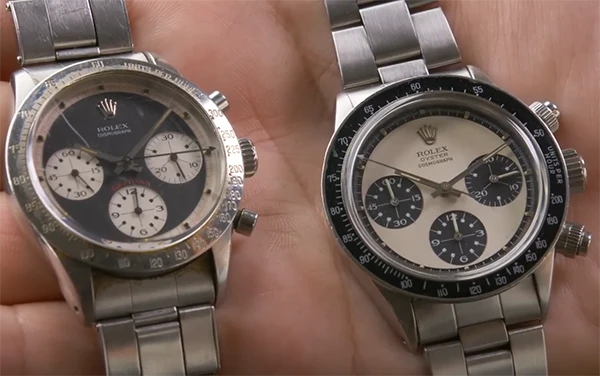
Watch collectors use words such as patina, tropical and honest to distinguish some forms of ageing from ordinary deterioration. That language is revealing because the boundary is not purely scientific.
Uniform fading may be celebrated while rust, flaking or unstable luminous material is condemned. The same broad process - deterioration through time - can therefore move from defect to desirability depending on coherence, rarity, stability and taste.
May show scratches, worn lume, a stretched bracelet, faded components and small dents, but without evidence that somebody has tried to disguise its age. The scars remain readable as history.
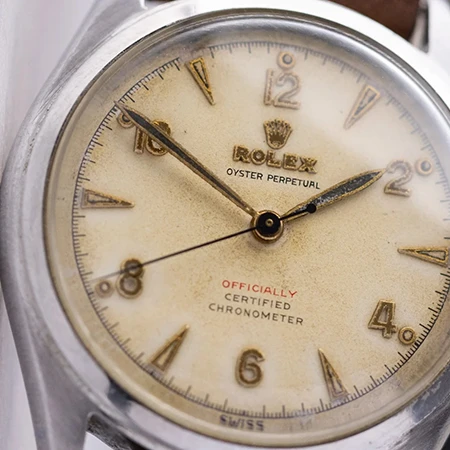
Patina is deterioration that the collecting community has decided adds meaning.
Polishing
Removing scratches can remove the object
Polishing seems benign until the collector remembers what polishing physically does: it removes metal. Repeated or aggressive polishing can thin lugs, erase bevels, weaken hallmarks, soften brushing and blur the transitions that gave the case its original architecture.
This is why unpolished has become powerful collector language. Yet the claim itself is not always provable. Serious collectors increasingly judge geometry rather than relying on a sales adjective.
The scratched watch may preserve more original object than the shiny one.
The machine problem
Preservation requires intervention
A mechanical watch is not a static relic. Oils age. Springs fatigue. Seals fail. Friction continues. If the movement is never serviced, preservation can become neglect.
Yet service centres often approach an old watch as a machine to be made safe and functional. They may want to replace faded hands, worn crowns, scratched crystals, deteriorated dials or obsolete components that collectors regard as historical material.
The museum instinct says preserve. The machine instinct says maintain.
Dismantling, cleaning, lubrication, regulation and replacement of genuinely worn mechanical components can protect the movement from further damage.
Polishing, refinishing, reluming and replacement of visible identity-bearing components can make a watch look newer while reducing collector originality.
Keep the removed parts. A worn crown, hand or bezel may no longer be useful in service but can remain part of the watch's documentary history.
Identity-bearing components
Not every original part carries the same weight
Watch collecting exposes a useful hierarchy. Some components are understood as service material. Others carry so much visible identity that replacing them can materially alter the collectible even when the replacement is genuine and mechanically superior.
Usually high identity weight
Context dependent
Usually treated as service material
The collector question is not only "Is this original?" but "How much identity did this component carry?"
Authenticity
A watch can be genuine and still be wrong
Counterfeit watches are one risk. Historically incorrect watches assembled from real parts are another. A genuine case, genuine movement, genuine dial and genuine handset do not automatically make a coherent watch if those components do not belong together.
The term covers a spectrum, from an old watch sympathetically kept alive with period replacements to a deliberately assembled object designed to imitate a rare configuration.
The word matters because it acknowledges that authenticity is not binary. The collector must understand chronology, component compatibility and intent.
Special cases
Sometimes originality becomes physically awkward
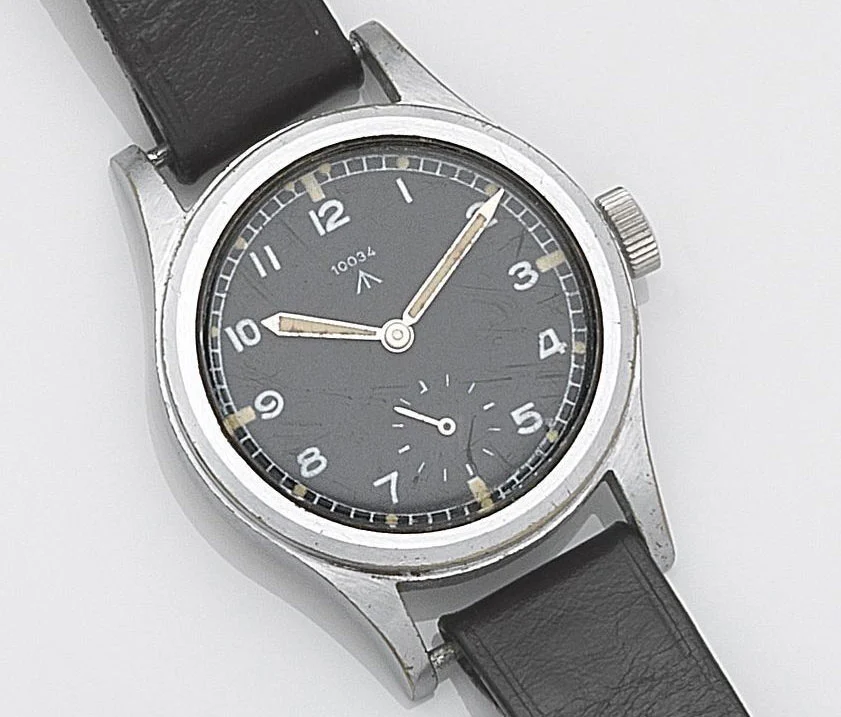
Older luminous watches can contain radioactive materials such as radium. Collectors may value the original luminous compound because it is part of the dial and handset's historical integrity, while transport, servicing and disposal regulations may impose very different priorities.
The problem is unusually revealing. Historical authenticity does not automatically override safety, law or conservation realities.
Can hazardous original material still be essential historical material?
Completeness
Collectors construct the universe before they complete it
Nobody can complete watches. Collectors define a boundary, then decide which distinctions count inside it. The boundary can be broad, elegant, microscopic or deeply personal.
A collector-created set
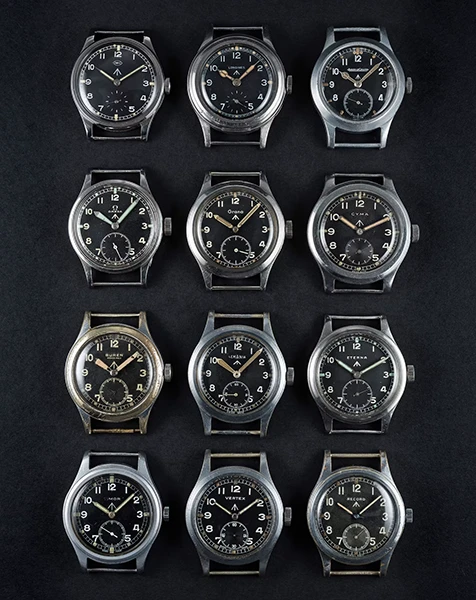
The Dirty Dozen shows how completeness can be invented after the event
The British state did not create a boxed collector set. It commissioned watches from twelve manufacturers for military use. Collectors retrospectively defined those twelve makers as a complete universe.
The Dirty Dozen is a collector-created universe: twelve manufacturers supplied military wristwatches to Britain during the Second World War, and collectors later turned those historical contracts into a defined set.
This is one of the clearest examples of completeness being a cultural construction. Historical production creates the objects. Collector scholarship creates the boundary.
Completeness is often a rule collectors agree to obey.
Full set
Sometimes completeness belongs to one watch rather than the collection
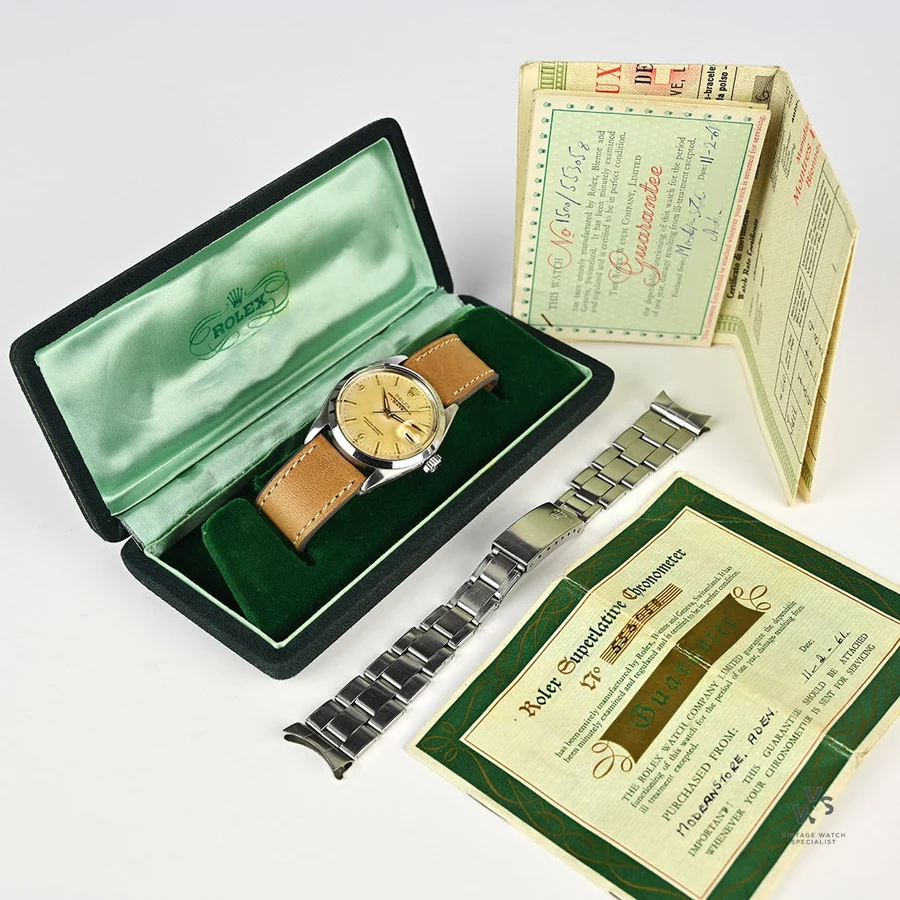
Box, outer box, guarantee papers, certificate, manual, tags, original receipt, spare bracelet links and service records can materially change how a modern watch is understood and valued. The expectation is age-sensitive: missing papers on a very old watch may be entirely normal, while their absence on a recent example is much more conspicuous.
Manufacturer archive services can confirm manufacturing or sale information. They do not recreate the original certificate that accompanied the watch when new. Later confirmation and surviving original documentation are different kinds of evidence.
As much of the original documentation that is available helps establish the history of the watch and the componants that make up the item.
Provenance
Usually optional. Occasionally transformational.
Most watches do not need a complete ownership chain. A good vintage Omega remains collectible even if the identities of its previous owners are unknown.
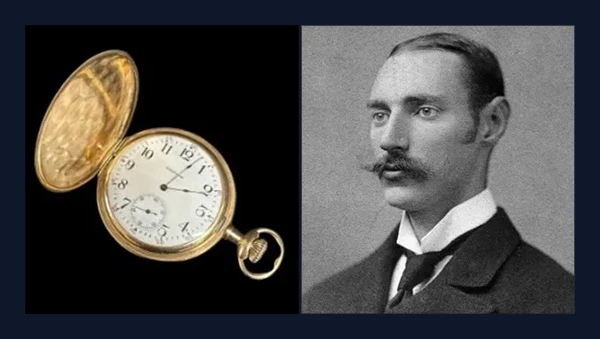
Provenance becomes powerful when it connects the watch to celebrity, military use, exploration, scientific work, sport, aviation, an unusual commission or an institution. In those cases, ownership history can move the object out of ordinary reference collecting and into cultural artefact.
A scratch that would normally be a defect may become historically meaningful if it plausibly belongs to the life of an important wearer. Removing it can erase evidence rather than improve condition.
Retailer signatures
Place can become part of identity
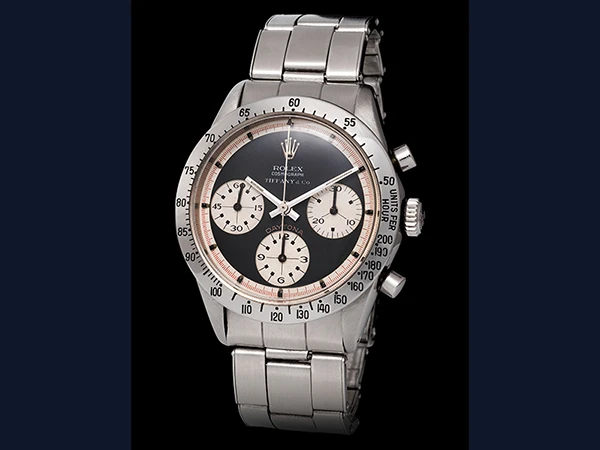
A dial carrying the name of Tiffany & Co., Gubelin, Beyer, Asprey or Serpico y Laino can turn an otherwise familiar reference into a far more specialised object. The extra signature connects manufacturer, retailer, geography and customer network.
Regional variants can also emerge through local regulation, export requirements, military contracts, language and production geography. For some collectors, market destination is not background information - it is part of the variant.
Wearing the collection
Ownership physically changes the collectible
Watches are unusually intimate collectibles because collectors routinely wear them. They touch the body, accumulate scratches, accompany ordinary days and major life events, and can be inherited with the marks of a previous owner still present.
This creates a permanent conflict between preservation and participation. A safe queen may preserve condition. A daily wearer may acquire the very biography that eventually gives it personal meaning.
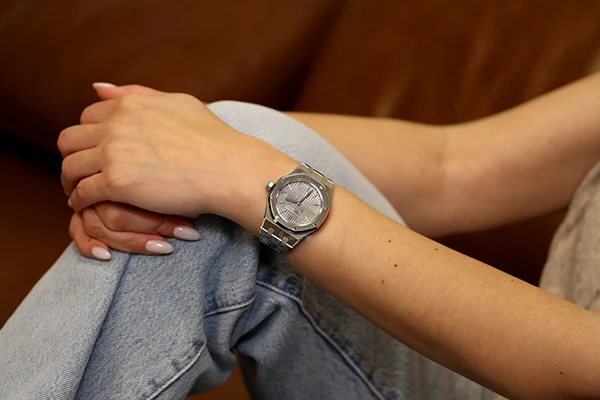
The watch measures passing time while becoming evidence of the time through which it has passed.
Market value
Rarity is only one variable
Thousands of genuinely rare watches remain inexpensive. At the same time, recognisable watches made in substantial numbers can command extraordinary premiums because demand, brand, design and cultural visibility overwhelm simple production rarity.
Rare-but-unloved and common-but-desired are both normal states in this market.
Identity value
The most important watch may be financially ordinary
An inherited watch can rank above a five-figure acquisition because its value lies in family continuity, memory and the body of the previous wearer. That provenance may matter almost entirely to one person and still dominate their collection.
Market value and identity value can occupy completely different hierarchies.
Collector cultures
The watch world is a federation of overlapping obsessions
Different collectors can admire the same object for almost opposite reasons. The shared vocabulary of watches conceals several distinct collecting cultures.
Originality, period-correct components, coherent ageing and untouched case geometry.
Microscopic production changes, serial ranges, dial generations and component taxonomies.
Military, diving, aviation, exploration and occupational watches where intended use matters.
Cartier, Piaget, shaped cases, jewellery watches and the visual language of designers such as Gerald Genta.
Movements, finishing, escapements, complications and technical architecture.
Individual makers, small production, workshop identity and the formation of a modern canon.
Seiko, Grand Seiko, Citizen, Casio and deep domestic-market reference cultures.
Technological history, industrial design and objects long undervalued by mechanical-watch hierarchies.
Small-batch production, direct relationships with founders, launches and contemporary experimentation.
Watches whose importance comes from military use, exploration, sport, celebrity or an individual life.
Design versus horology
Mechanical complexity does not monopolise seriousness
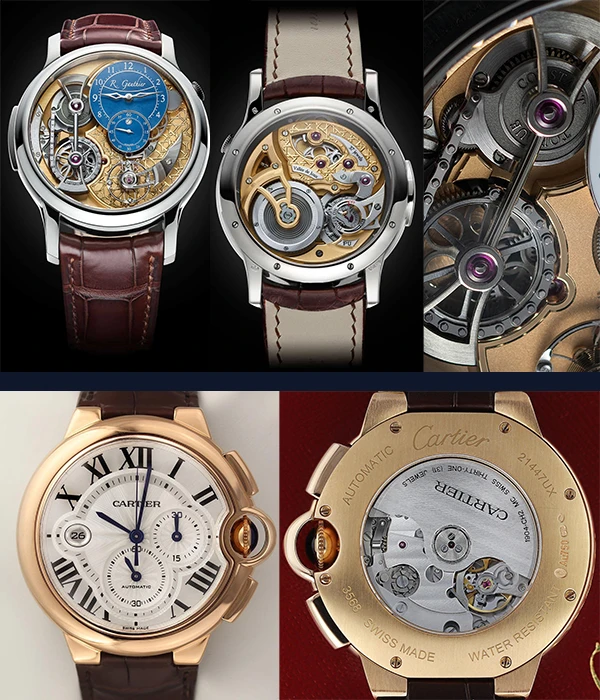
A technically simple Cartier can sustain deep collecting through proportion, case shape, dial, period, production location and design language. A quartz watch can matter because of industrial design or technological history. A highly complicated watch can be visually restrained while its fascination sits almost entirely inside the movement.
This prevents watch collecting from collapsing into one prestige hierarchy. The watch can be collected as machine, sculpture, jewellery, instrument, fashion object or cultural design.
Reads silhouette, proportion, geometry, dial architecture and cultural influence.
Reads escapements, chronograph architecture, finishing, complications and movement genealogy.
The market changed the culture
Scarcity can now be manufactured, allocated and priced in real time
Contemporary watch collecting is shaped by limited editions, boutique-only releases, geographical editions, preferred-client allocation and direct access to makers. Online marketplaces and price-data services then make secondary values immediately visible. The collector can admire a watch and watch its market price at the same time.
Passion or asset class?
Rarity or recognition?
Luxury or specialist culture?
Scholarship and market infrastructure
The same institutions can research the object and sell the object
Auction houses, dealers, manufacturers, specialist publications, forums, museums and collector communities all participate in the production of watch knowledge. They identify variants, reconstruct serial ranges, publish provenance and sometimes establish the vocabulary collectors then adopt.
That research can be excellent, but commercial incentives remain visible. A catalogue essay can simultaneously be scholarship and sales narrative.
A once-overlooked dial, designer, production run, independent maker or neo-vintage reference can become highly desirable when research explains why it matters.
Expertise
Watch knowledge is partly documentary and partly visual memory
Collectors learn through handling watches, comparing auction photographs, studying reference books, watching watchmakers, examining service histories and seeing hundreds of correct and incorrect examples. Eventually certain mistakes simply look wrong before the collector can explain why.
A nice vintage watch.
A case that may have lost its bevels, hands that seem too new for the dial, lume ageing that does not match, a crown from a later service period, a correct calibre with suspicious tool marks, a bracelet from another production window and paperwork whose geography does not quite fit the story.
Expertise is the ability to notice when the story stops agreeing with itself.
Collector vocabulary
The language reveals the values
Watch collecting has developed shorthand for ageing, originality, use and intervention. The terms are useful because they encode cultural judgements that ordinary condition language misses.
Age-appropriate wear without a misleading attempt to erase the object's history.
A dial whose original colour has changed through ageing, usually in a way collectors find attractive.
A dial that has been repainted or refinished.
Replacement or restoration of luminous material.
Genuine manufacturer replacements installed during servicing, but not original to the watch.
A claim that original case geometry and finish survive, though the geometry itself is more useful evidence than the adjective.
A watch assembled from components that may be individually genuine but do not belong together historically.
A watch accompanied by much or all of its original packaging and documentation.
A watch largely preserved rather than regularly worn.
A watch kept in regular use, accepting that ownership will continue to mark it.
Preservation in practice
Good custodianship is active, documented and selective
Water resistance degrades. Avoid assuming an old dive watch remains a dive instrument without testing.
Mechanical movements can be affected by magnetic fields, altering timekeeping.
UV can affect dials and materials; leather straps need dry, stable storage.
Record interventions and retain removed parts so the watch's mechanical biography remains legible.
Preservation cannot mean "do nothing" when the collectible contains a mechanism that can destroy itself through neglect.
Collecting Intelligence
Questions that reveal judgement
The wider principle
Watches expose several Collectaneum ideas with unusual clarity
Ageing, originality, geometry, movement health and intervention must be read together.
Genuine components can coexist in an historically incorrect object.
Mechanical survival can demand intervention that reduces material originality.
Collectors define the universe, then decide which variants and accessories count.
Wear, inheritance and personal history can dominate the owner's hierarchy of value.
Worlds within a world
Watches can stand alone strongly - and still feed much deeper pages
The core page works because the same questions recur across the field: coherence, originality, use, servicing, identity and evidence. But several areas have enough specialist language, history and collector behaviour to deserve later exploration without weakening this overview.
Vintage Rolex
Reference, dial, bezel, bracelet and production scholarship is deep enough to form a world of its own.
Military Watches
Contracts, issue markings, provenance, service replacement and set-building create a distinct specialist culture.
Space & Exploration Watches
NASA qualification, mission use, astronaut association and tool-watch history cross directly into exploration memorabilia.
Japanese Watches
Seiko alone supports enormous reference depth, while Grand Seiko, Citizen and Casio introduce very different collecting behaviours.
Independent Watchmaking
Journe, Dufour, Voutilainen, Smith and other makers show a collecting canon forming while its creators are still alive.
Cartier & Design-Led Watches
Shape, proportion, jewellery, workshop geography and design history can matter more than mechanical complexity.
Digital & Quartz Watches
Technology, industrial design and cultural importance challenge the assumption that serious watch collecting must be mechanical.
Complications
Chronographs, repeaters, calendars, world timers and other mechanisms each support their own technical genealogy.
When collecting worlds collide
Watches continually escape the category of watches
Military watches become militaria. Speedmasters become space memorabilia. Racing chronographs connect with motorsport. Dive watches cross into diving history. Cartier can sit beside jewellery and design. Pocket watches overlap with scientific and industrial history. An inherited watch can become family archive before it is ever a market object.
At what point does the watch stop being primarily a watch and become evidence of the world around it?
Collecting Intelligence
The most interesting expertise lives between the parts
Watch collectors, watchmakers, dealers, auction specialists and historians can all read the same object differently. Interviews become most useful when they expose how those judgements are made rather than simply identifying desirable brands.
Explore Collecting Intelligence →Knowledge Center
Watches make preservation, restoration and authenticity difficult in useful ways
The distinction between service and restoration, authentic and original, visible condition and internal condition gives watch collecting unusually strong links into broader Collectaneum knowledge around evidence, intervention and object history.
Explore the Knowledge Center →Watches as a Collecting World