
Collecting World
A teddy bear can be an artefact, a face, a survivor and a personality at the same time.
Teddy-bear collecting sits in an unusual place between antique connoisseurship, decorative art, manufactured collectibility and emotional attachment. Serious collectors can care about original stuffing and eye material while still speaking about a bear's name, expression, character and life story.
That is not sentimental decoration around the hobby. It changes how condition, restoration, provenance, desirability and even identity are judged.
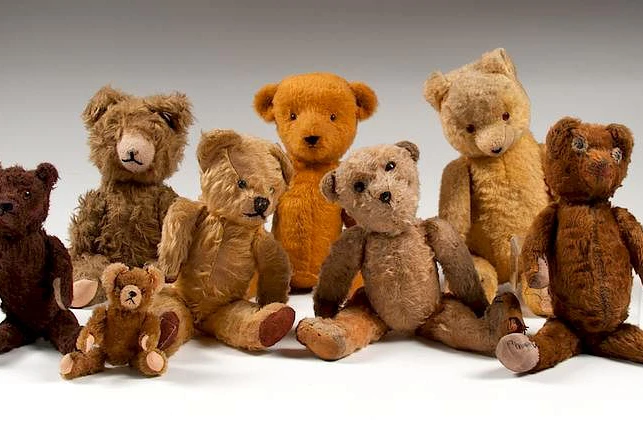
The defining contradiction
The object can be forensic without becoming impersonal
Antique collectors learn to inspect mohair, seams, stuffing, pads, joints, labels, eye material and stitching almost anatomically. Yet the same collector may preserve a bear's historic name, describe its expression as irresistible and reject a technically superior example because it lacks character.
A serious collector can protect the original stuffing because it is evidence - and protect the bear's name because it is identity.
What is actually being collected?
Teddy bears contain several overlapping collecting systems
Two people can both say they collect teddy bears while pursuing almost entirely different evidence, markets and definitions of completion. The boundary of the world is porous by design.
Antique connoisseurship
Historic makers, period construction, original mohair, jointing, stuffing, labels and survivor condition define a knowledge-heavy antique market.
Maker specialism
A collector may narrow to Steiff, British makers such as Farnell or Merrythought, or even a factory period, button type, colour or construction family.
Artist bears
Named contemporary makers, recognisable style, commissions, tiny editions and OOAK work create a culture closer to decorative art than mass-market toys.
Modern manufactured collecting
Limited editions, club bears, event exclusives, commemoratives, licensed designs and retired models make planned scarcity part of the collecting proposition.
Biography and nostalgia
Some bears matter because of who owned them, how they were loved, what they survived or the memories attached to them - irrespective of market value.
The expanded collection
Clothing, catalogues, advertising, accessories, patterns, bear-making material, photographs and ephemera can sit inside or beside the bear collection.
There is no universal teddy-bear collection. There are collector-defined worlds joined by a common object.
Attribution
The newcomer sees a face. The specialist sees construction.
Maker attribution often rests on clusters of physical evidence rather than one decisive mark. A missing label does not automatically make a bear anonymous, and a button or tag does not end the investigation if the rest of the object contradicts it.
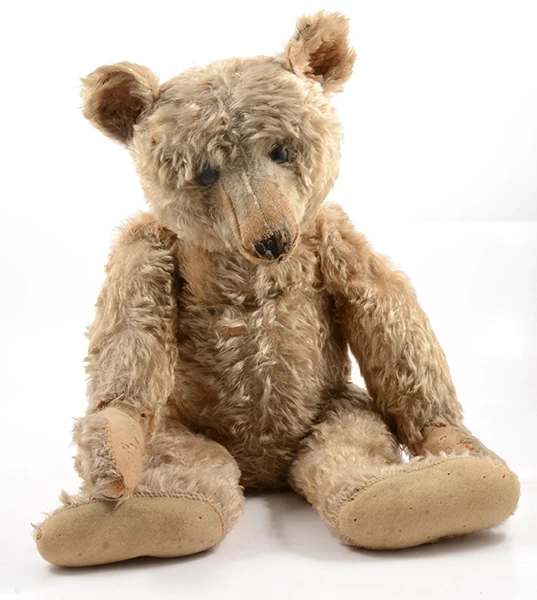
A novice searches for a label. An expert searches for consistency.
Originality
"All original" is powerful because originality is granular
Antique bears are composite objects. A century-old example can be original in one limb, restuffed in another, retain one historic eye, have later pads and carry an old family repair. Serious descriptions therefore work component by component.
Preserving original material normally matters more than making the bear look cosmetically perfect.
Condition
Wear can be damage, history and character at the same time
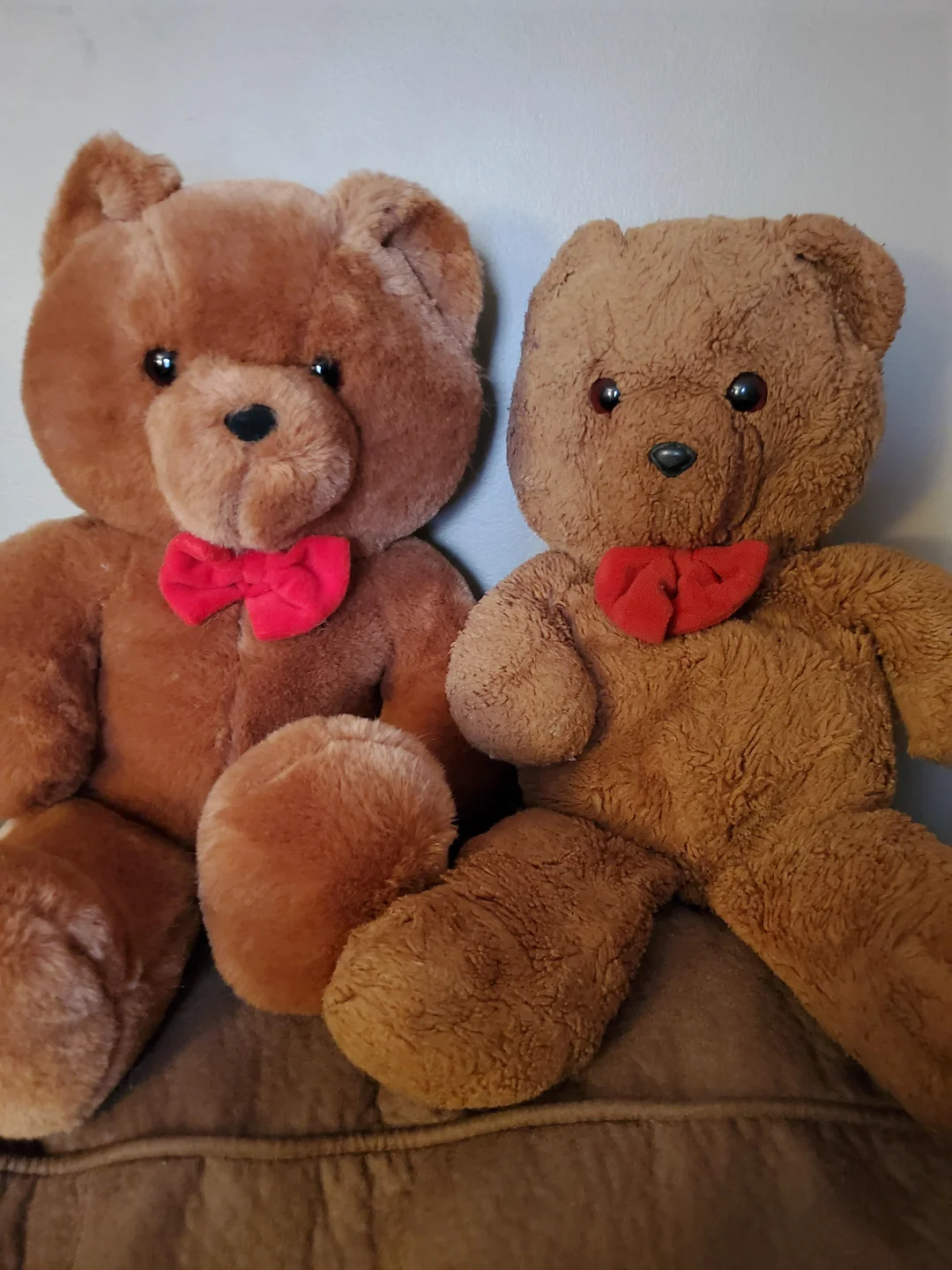
Teddy bears were made to be touched. Mohair disappears from muzzles, pads wear, stuffing settles and seams are repaired precisely because the object fulfilled its original purpose. This creates two condition ideals that never fully reconcile.
Strong mohair coverage, original eyes and pads, firm joints, intact stitching, original identifiers, working mechanisms and minimal replacement material.
Coherent wear, an old patch, a faded ribbon or settled stuffing can preserve the evidence that this was a particular bear in a particular life.
Wear is sometimes damage. Sometimes it is history. Frequently it is both.
Condition without a slab
One number cannot explain what has survived
Teddy-bear collecting has no universally dominant third-party numerical grading culture. The specialist market remains descriptive because a bear can have superb mohair and replaced pads, or heavy wear and almost complete originality.
Coverage, thinning, baldness, fading, staining, moth activity and whether wear is coherent with age.
Eye position, muzzle shape, stitching integrity and whether intervention has altered character.
Originality, holes, patches, replacement material and structural stability.
Joint firmness, settled stuffing, seam weakness, distortion and ability to support the bear safely.
Presence, originality and function of growler or squeaker where applicable.
What has been cleaned, opened, restuffed, restitched, patched, replaced or reconstructed.
Condition is best understood as a map of surviving material, wear, stability and intervention - not a single score.
Expression
A "good face" is a real collector judgement even when it cannot be measured cleanly
Tiny differences in eye placement, muzzle formation, stitching, wear and stuffing can give two examples of the same model very different expressions. Collectors often describe the stronger one as having character. The judgement is subjective, but it is not therefore meaningless.
maker + age + rarity + originality + condition + expression
A technically better preserved bear may still be the less desirable bear.
For artist bears the same principle becomes explicit authorship. Collectors may follow individual makers in much the same way others follow ceramicists, illustrators or sculptors, learning to recognise the choices that recur across their work.
Eye proportions, nose form, colouring, posture, scale, paw construction and even a particular fantasy vocabulary can become part of a maker's visual signature. Over time, the collector is not simply identifying who made the bear - they are judging how strongly a particular example expresses that artist's distinctive style.
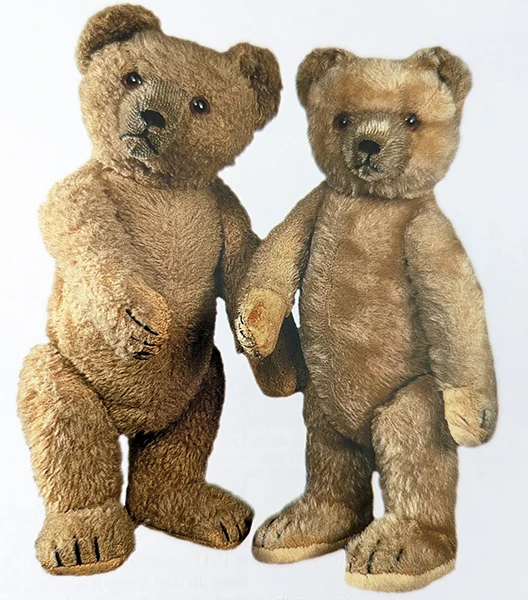
Restoration as a parallel culture
Teddy-bear restoration is not merely an aftercare service
The familiar language of the "teddy-bear hospital" is revealing. Repairers, makers, collectors and conservators do not sit neatly apart from one another, and decisions about intervention can determine whether a bear is understood primarily as a historic artefact, a loved companion or something intended to be made whole again.
A restoration-focused Facebook community of roughly 46,000 members is a useful contemporary signal of scale: restoration can function as a specialist culture in its own right, with its own techniques, ethics, before-and-after judgements and ideas of successful care.
Replacing eyes, rebuilding pads or restuffing a collapsed body may be exactly the outcome the owner wants.
Retention, stabilisation and legibility of intervention may matter more than visual renewal.
Do not ask only "Has it been restored?" Ask "Exactly what has been changed?"
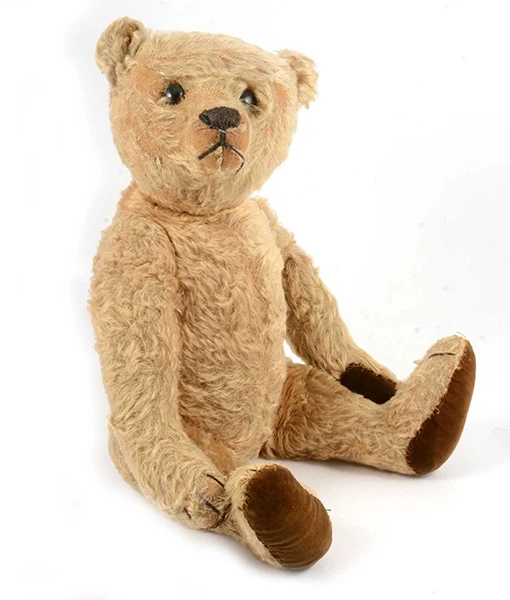
Cleaning and preservation
"Dirty" does not automatically mean "needs washing"
An antique bear can combine old dyes, mohair, felt, metal joints, adhesives, stitching and absorbent stuffing. Water may migrate colour, distort pads, corrode hardware or leave moisture inside the body. Cleaning therefore belongs closer to conservation than housekeeping when value or historic fabric matters.
Limit direct sunlight and intense prolonged exposure. Textile fading is cumulative and irreversible.
Protect the surface and use gentle, appropriate methods rather than routine washing.
Mohair, wool, felt and organic residues can make old bears vulnerable to insect activity.
A newly acquired bear can be a risk to the rest of the collection if hidden pests are present.
Weak bears should be supported rather than forced into standing or sitting positions their structure cannot safely hold.
Regular close looking is preventive care: fading, pest evidence, loose seams and joint weakness are easier to manage early.
Collectors want to see their bears. Preservation prefers darkness.
Completeness
"Complete" changes depending on which teddy-bear world you inhabit
Antique, artist and modern edition collecting do not share one completeness model. The collector must first define what kind of object or programme is being completed.
Antique bear
Eyes, pads, stuffing, joints, stitching, growler and maker identifiers become the relevant components. Packaging is usually secondary to surviving original fabric.
Modern edition
Bear, tags, costume, accessories, numbered certificate, box and edition identification may all influence completeness and resale desirability.
Collecting programme
Every Club bear, one example from each maker, all colourways, a complete annual run or every work by a favourite artist can define completion.
Completeness is not one property of the bear. It is a relationship between the object and the collector's chosen boundary.
Authenticity
Genuine and original are not the same question
A modern Steiff replica can be entirely genuine Steiff while being deliberately later than the design it recreates. A historic bear can be genuine but restored. A period bear can also be wrongly attributed to a more desirable maker. Teddy-bear collecting therefore needs more than a binary genuine/fake model.
A replica described as a replica is not deceptive. A replica passed off as period is.
Rarity versus desirability
Teddy bears contain several different kinds of scarcity
Scarcity can emerge accidentally through survival, deliberately through edition size, absolutely through OOAK authorship, or unexpectedly through an unusual colour or construction variant. None guarantees demand.
An early bear becomes scarce because time, childhood use, disposal, moth damage and material fragility removed most of its peers.
Unusual colour, size, seam construction, material or production detail can turn a familiar maker into a genuinely exceptional object.
An OOAK artist bear is unique by authorship: there was never a second example to survive or disappear.
A modern edition of 500 is scarce because the manufacturer decided it would be from the moment it entered the market.
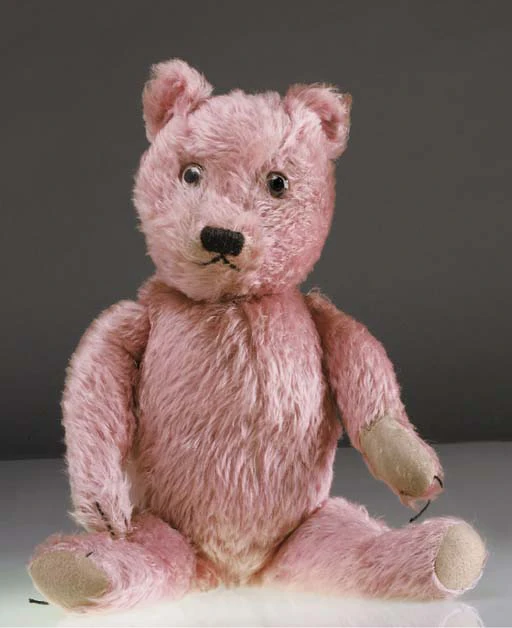
Scarcity creates possibility. Cultural meaning, condition, expression and collector desire decide whether that possibility becomes value.
Object biography
A mass-produced bear can become an individual historical object
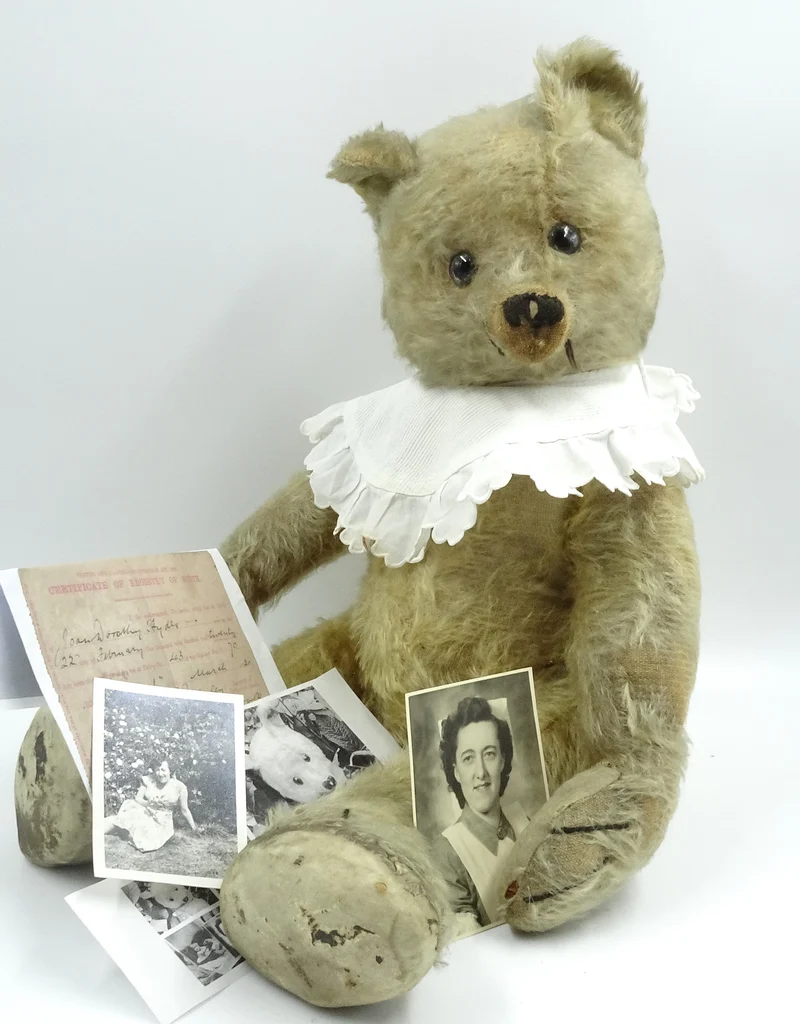
Provenance is often financially modest until it becomes extraordinary. What matters is not simply that a bear belonged to someone, but whether photographs, letters, exhibition records, auction history or other evidence connect that individual object to a person or event.
"This was my grandmother's childhood bear." Emotionally meaningful, but difficult to translate into wider historical significance without documentation.
The same bear is identifiable in dated photographs, letters, publications or a historically important event. The ownership story becomes evidence attached to this specific object.
The name can begin as affectionate metadata and end as part of the object's historical identity.
The four values can collapse into one another
Condition, provenance, authenticity and emotion are unusually entangled
Condition loss - and potentially evidence of decades of handling.
A repair - and potentially part of a documented family history.
A fragile accessory - and possibly the one visible in an old photograph.
Personal metadata - and, when repeatedly documented, persistent object identity.
Many traits, documents & defects can carry identity
Artist bears
Authorship changes the question from factory attribution to artistic voice
Contemporary artist bears can be OOAK, produced in tiny editions, commissioned, traditionally jointed, sculptural, realistic, miniature or fantastical. At the upper end the collecting logic begins to resemble contemporary craft and decorative art.
Can you recognise the maker - or reconstruct the attribution?
A maker's eye proportions, nose form, colouring, distressing, body shape, miniature scale, paw construction or fantasy vocabulary can become recognisable enough that the collector follows the artist rather than a generic teddy-bear type.
For artist bears, the maker's visual language can become explicit enough that collectors learn to recognise the hand behind the object. Historic factory bears work in the opposite direction. Here the collector may be trying to reconstruct authorship from subtler evidence - proportions, muzzle shape, ear placement, stitching, pads, stuffing and construction.
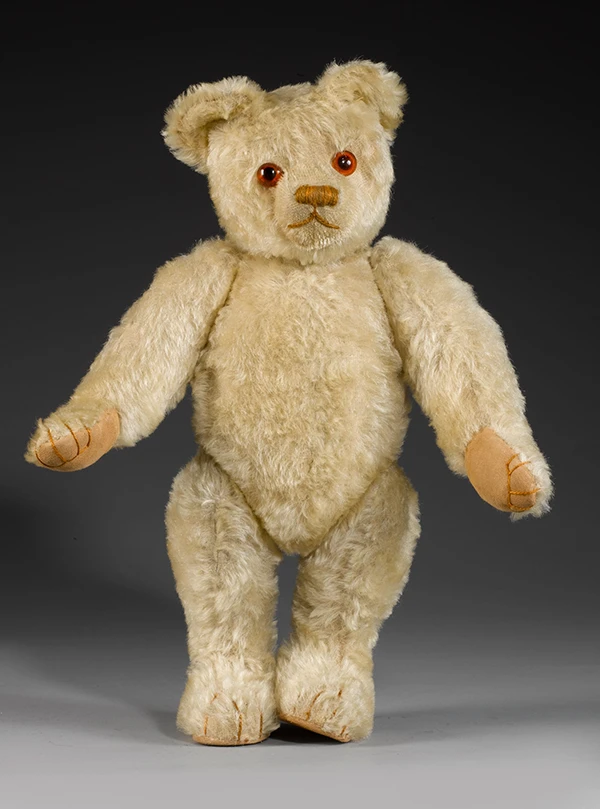
Early J.K. Farnell bears, for example, can superficially resemble contemporary Steiff bears to an untrained eye, so attribution depends less on an overall impression than on whether the physical details consistently point toward one maker.
Historic scarcity
Survival creates the hunt
Early bears become scarce through use, loss, disposal, material decay and incomplete records. The collector often searches backwards from a surviving object to determine what it was.
History destroyed most of the comparison set.
Modern collectibility
Scarcity can be designed in advance
Numbered editions, Club access, event exclusives, geographical releases, licensed collaborations, anniversaries and deliberate retirement can make the collecting programme part of the product from day one.
"Limited" is a production fact. Desirability still has to be earned.
The generational edge
The next teddy-bear collector may not begin with teddy bears
Traditional collectors may enter through Steiff, Farnell, Chiltern, Merrythought, antique mohair and artist bears. A younger collector may arrive through Jellycat, Charlie Bears, character plush, social media, colourways, retired releases and limited drops. The historical knowledge bases can be very different even when the behaviours overlap.
Broader collectible plush increasingly overlaps teddy-bear collecting, but the two should not automatically be collapsed into one world. The routes into expertise, maker histories and material knowledge remain distinct.
The market
There is no single teddy-bear price ecosystem
Antique dealers, specialist auctions, general auctions, fairs, modern retailers and online resale each reward different kinds of knowledge. Spectacular six-figure records exist, but most bears are not investment-grade objects.
Antique dealers
Attribution, period, construction and originality drive specialist confidence.
Specialist auctions
Important makers, major collections and well-described condition histories receive focused collector attention.
General auctions
Misidentified or poorly catalogued bears can create genuine discovery opportunities for knowledgeable buyers.
Fairs
Market, education and social ritual merge: collectors can handle objects, meet makers and speak directly with repairers.
Modern retail
Edition strategy, Club access, exclusives and retirement shape the primary market.
Online secondary market
Retired and mid-value bears circulate through dealers, eBay, Facebook groups and collector communities.
The word "Steiff" cannot function as a value category by itself. Period, construction, rarity, originality, condition, model, provenance and demand still have to converge.
Expertise and infrastructure
Expertise is visual, tactile, comparative - and often social
Books and databases matter, but collectors also learn what old mohair feels like, how wood-wool stuffing changes firmness, how early joints influence posture and how naturally an eye sits within an aged face. Repeated handling builds a kind of object memory.
Fairs are unusually important because collectors, dealers, artists, makers, repairers and material suppliers meet inside the same ecosystem. Making and collecting also overlap: once someone has installed joints, inserted eyes or embroidered a nose, historic construction can become easier to read.
Does it have a maker's label?
Does the proposed identity make sense across silhouette, seams, stuffing, eye material, pads, stitching, hardware, identifiers, wear pattern and age?
Collectaneum lens
Teddy bears expose the difference between preserving material and preserving identity
This collecting world is an unusually strong test case because analytical categories repeatedly overlap. Condition loss can become provenance. A repair can become family history. A name can become persistent identity. Replacing a damaged component can improve appearance while weakening documentary truth.
Judge what remains against realistic survival, not an abstract mint ideal.
Record which components survive rather than flattening the bear into restored/unrestored.
Treat names, photographs, repairs and owner stories as potentially meaningful object history.
Document the sequence and purpose of repairs because later collectors may judge them differently.
The collector is not only deciding how much damage a bear has suffered. They are deciding which parts of its past still deserve to remain physically visible.
Where collectors disagree
The arguments reveal different theories of what should be preserved
Restore or retain?
Damage or biography?
Character or condition?
Antique rarity or planned collectibility?
Replica or lesser object?
Teddy bears or collectible plush?
Full-width collector questions
The questions that move an inspection beyond description
Collecting Intelligence
Specialist judgement lives between the catalogue description and the bear itself
Antique-bear collectors, maker specialists, artists and restorers can expose the hidden decisions behind attribution, expression, intervention and survivor condition in ways a generic reference entry cannot.
Explore Collecting Intelligence →Knowledge Center
Go deeper into preservation, restoration and provenance
Textile care, pest management, mixed-media conservation, restoration ethics, authenticity and provenance all become clearer when separated from the collecting culture that gives them meaning.
Explore the Knowledge Center →Teddy Bears as a Collecting World