
The perfect stamp may be one that was never used. The most important stamp may matter precisely because it was.
Philately begins with a small printed object and expands almost immediately into printing history, postal systems, political change, material evidence and forensic judgement.
A collector may be looking at paper, watermark, perforation, gum, plate position, cancellation, rate, route, provenance or the relationship between a stamp and the cover it travelled on. The image on the front is only one layer.
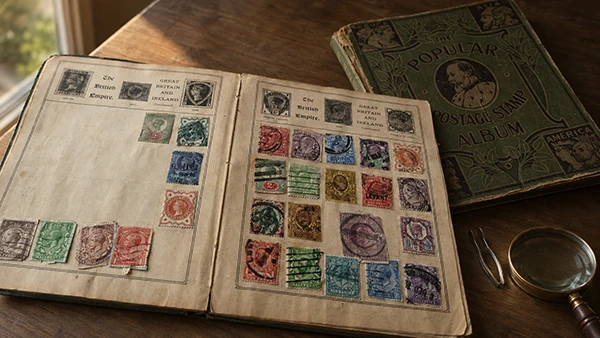
What exactly is the collector trying to preserve?
The same issue can be collected as a manufactured stamp, a catalogue variety, a postal instrument, a cancellation carrier, a fragment of political history or one component of a travelled piece of mail.
Two collectors can own the same stamp issue while collecting completely different evidence.
The stamp that should never have been removed
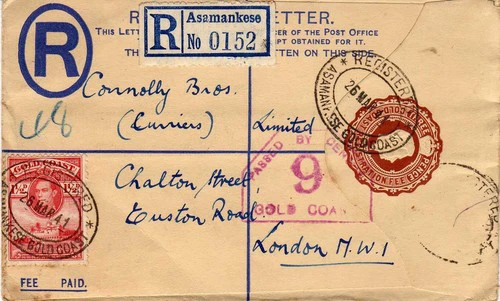
A beginner may see an envelope as packaging around the collectible. A postal historian may see the envelope, stamp, postmarks, destination, handwriting, rate and routing as one inseparable historical artefact.
Soaking the stamp free can preserve the adhesive stamp while destroying the relationship that proves how, where and why it was used.
Origin, destination, date, postal rate, routing, transit marks, receiving marks, registration, censorship, transport history, correspondence and evidence that the stamp genuinely belonged there.
Physical completeness and historical completeness are not the same thing.
The catalogue does not merely describe the collection. It helps decide what counts as a different thing.
Philately developed a dense classification culture because apparently identical stamps can differ through paper, watermark, perforation, printing method, plate, shade, overprint, gum, phosphor, tagging or sheet position. Once a recognised catalogue separates those differences, collectors begin to organise around them.
A different gauge or method can create a separate collectible identity.
Orientation or design may distinguish printings invisible from the face.
Tiny colour differences can become catalogue varieties - but can also be chemically induced.
Paper type, printing process, retouch or plate characteristic can define issue sequence.
In philately, classification can create markets. A newly recognised variety can become something collectors suddenly need.
The album makes absence visible. A blank printed space can turn a catalogue decision into a personal obligation.
"Complete" only makes sense after the collector defines the universe
Worldwide completion became unrealistic long ago. Modern collectors narrow the field by country, reign, period, issue, production variety, postal system or theme. The crucial question is not whether the collection is complete in the abstract, but complete according to which rules.
Did I choose my collecting boundary, or did a catalogue, album publisher or exhibition class quietly choose it for me?
A tiny object has an unusually large number of condition surfaces
A stamp can be beautifully centred, strongly coloured, lightly creased, original gum, previously hinged and carry one short perforation all at once. Condition is therefore not one fact but a bundle of material judgements.
Colour, freshness, printing quality, fading, stains, toning, creases, abrasions, oxidation and chemical change.
Margins on imperforates, perforation quality on perforated stamps, and whether straight edges are original or manipulated.
Original gum, hinging, disturbance, thins, adhesion, toning, repairs and evidence of regumming.
Cancellation type, date, clarity, position, genuineness and whether the stamp was genuinely postally used.
A manufacturing tolerance became an aesthetic hierarchy
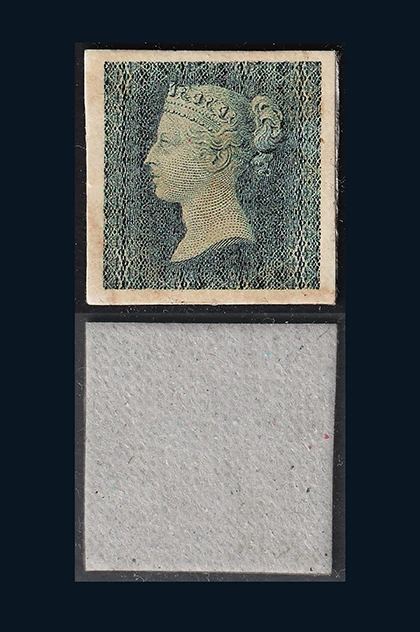
Early perforating machinery frequently cut designs off-centre. The stamp still performed its postal function perfectly, yet modern collectors may pay a significant premium for the example where the printed design sits symmetrically inside the perforations.
Both stamps worked.
One may be dramatically more desirable.
Gum can carry more collecting consequence than the printed image
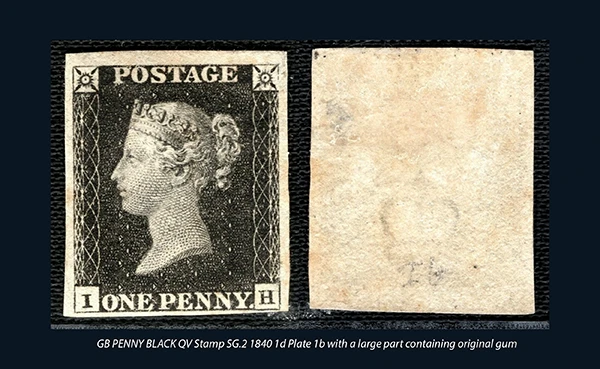
On unused stamps, the original adhesive is part of the surviving object. Collectors distinguish original gum, never hinged, previously hinged, disturbed gum, redistributed gum, part gum, traces of gum and regummed examples.
That creates one of philately's most revealing historical reversals. Paper hinges were once normal, careful album practice. Later hingeless systems turned the evidence of that careful practice into a market disadvantage.
Yesterday's correct preservation method can become today's condition defect.
Philately contains two opposing ideals of authenticity
Preserve manufacture
Original gum, fresh colour, intact perforations, strong centring and no hinge disturbance preserve the stamp close to the state in which it was made.
Preserve function
A genuine postal cancellation records that the stamp fulfilled its intended purpose. The mark that physically alters the object can be the evidence that makes it meaningful.
Use can be damage and value at the same time.
Sometimes the postmark is more collectible than the stamp
Rare post offices, coloured cancels, numeral marks, railway, maritime, military, first-day, travelling post office and slogan cancellations can all define specialist collecting programmes.
A socked-on-the-nose cancellation may be prized because it is sharply centred and legible, even though it obscures more of the design. The same mark that one collector sees as visual intrusion can be the entire reason another collector wants the object.
Displayed is an 1841 1d Red-Brown displaying a clear and crisp strike of the distinctive and race provincial cancellation of the much sort after Alderney Maltese Cross.
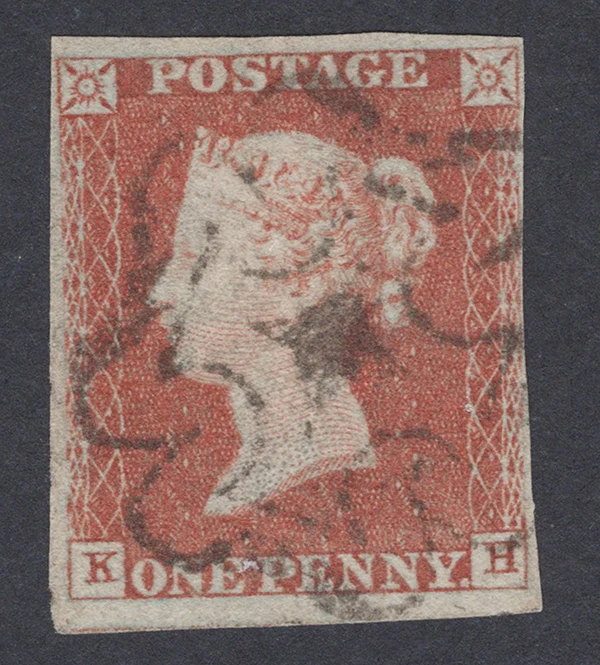
The same physical feature can be a defect in one collecting system and evidence in another.
Cancelled to order sits awkwardly between mint and genuinely used
CTO stamps carry cancellations applied without ordinary postal use, often for collectors. They look used and have lost postal validity, but they may lack the postal journey that traditional used collectors value.
They are neither pristine mint objects nor evidence-rich postal survivors.
They can be affordable, cleanly cancelled, visually attractive and useful for thematic completion.
In some modern areas, genuinely postally used examples are scarcer than CTO material.
Invisibility is the danger
Philately does not operate on the simple rule that nothing may ever be repaired. The stronger norm is that intervention must not be mistaken for originality.
New or improved perforations can remove faults, change centring or imitate a scarcer variety.
Replacement gum can make an unused stamp appear closer to original condition than it really is.
Ink may be reduced or removed to make a used stamp appear unused.
Colour, paper or surface appearance can be manipulated to imitate a rare shade or error.
Thins, tears and missing paper can be repaired so skilfully that the object appears materially better than it survives.
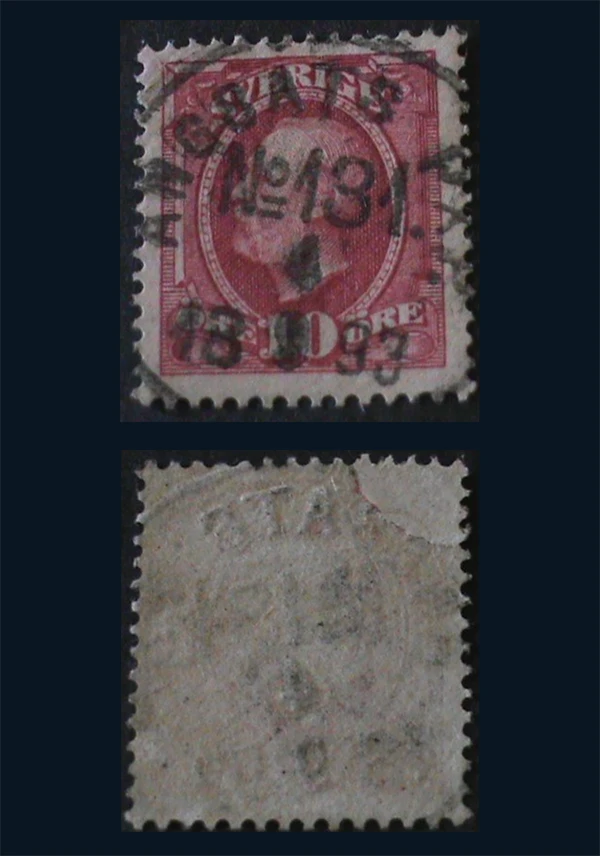
Has the object been preserved, or has its apparent originality been reconstructed?
A genuine stamp can still be a fraudulent collectible
Many philatelic deceptions do not begin with a counterfeit object. They begin with a genuine common stamp altered to resemble a scarce perforation, shade, overprint, unused example or postal variety.
Is the stamp itself genuine?
Is the claimed shade, watermark, perforation, plate flaw or error genuine?
Original, improved, reperforated or trimmed?
Original, disturbed, redistributed, partial or replaced?
Contemporary and genuine, or added later?
Genuine, forged, removed, altered or cancelled to order?
Did this stamp genuinely originate on this cover?
Do rate, route, date and markings support the claimed journey?
"Authentic stamp" can be an incomplete answer.
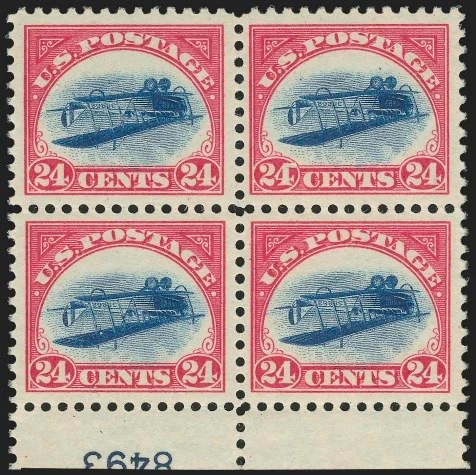
Microscopic differences can carry enormous consequences
A rare stamp may differ from a common one through printing error, perforation gauge, watermark orientation, plate flaw, overprint type, missing colour, paper, shade or a tiny design retouch.
The strongest specialists learn the expected relationships between design, paper, gum, perforations, cancellation and sheet format. Expertise becomes anomaly detection.
Do not ask only "what is this?" Ask "what evidence would have to be true for this to be what it appears to be?"
Rare in what state?
Philately has an enormous supply of old material and a very narrow peak of highly specific scarcity. Age alone means almost nothing. A common issue may become genuinely difficult once a collector demands the right centring, gum, postal use, cancellation, route, cover or unaltered state.
How many exist?
How many survive like this?
How many collectors care?
Rarity only becomes meaningful when collectors also understand demand and survivor condition.
Usually irrelevant. Occasionally decisive.
Most ordinary stamps do not become more meaningful because their ownership chain is known. At the top end, however, provenance can help establish identity, authenticity, plate position, discovery history, alteration history or pedigree through a famous collection.
"Ex-" a major collection can situate an important object within generations of specialist ownership and scholarship.
Old auction catalogues can reveal when a fault first appeared, how an item was described previously and whether later alterations changed the object.
Authentication is embedded more deeply than universal numerical grading
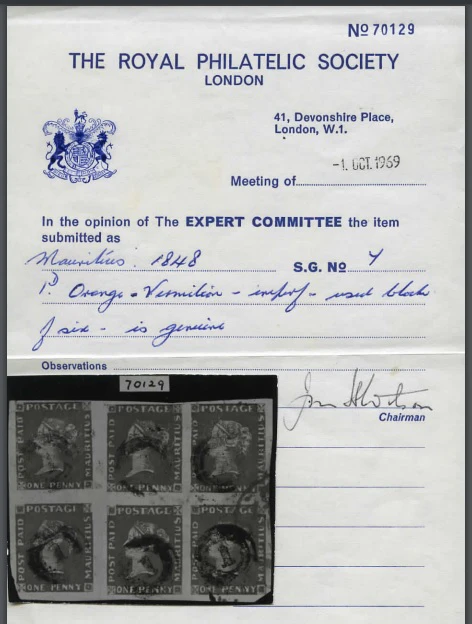
Difficult and valuable philatelic material has a long tradition of third-party expert opinion. Certificates may address identity, genuineness, gum, repairs, perforations, cancellations, postal use and catalogue classification.
Numerical grading is more uneven. High-end US collecting may place great weight on grades such as 90, 95 or 98, especially where centring drives value. British and European traditions often retain stronger emphasis on descriptive condition, certificates and specialist judgement.
Does a number efficiently communicate quality, or compress too much object-specific evidence into a score?
Stamp collecting is an umbrella over several distinct cultures
Different branches of philately are often defined by which evidence the collector considers most important.
Country or period collector
Builds around one nation, reign, issuing authority or defined historical period.
Traditional specialist
Studies how stamps were manufactured - plates, papers, watermarks, perforations, shades, printings and flaws.
Postal historian
Collects evidence of rates, routes, means and marks, often valuing the whole postal artefact above the loose stamp.
Thematic collector
Uses philatelic material to construct a narrative around a subject rather than following country or catalogue order.
Cancellation specialist
Collects postmarks, offices, dates, routes and cancellations that may be more important than the underlying stamp.
Research collector
Builds knowledge through plating, census work, route reconstruction, forgery study and specialist literature.
The catalogue can stop being the organising principle
A thematic collector may build around birds, railways, medicine, architecture, astronomy or almost any other subject. At its most developed, thematic philately is not a pile of stamps showing the same thing. It is a structured argument built from appropriate philatelic material.
"Every stamp depicting an elephant."
"Use philatelic material to tell the story of elephants."
Completeness can mean enough evidence to tell the story properly.
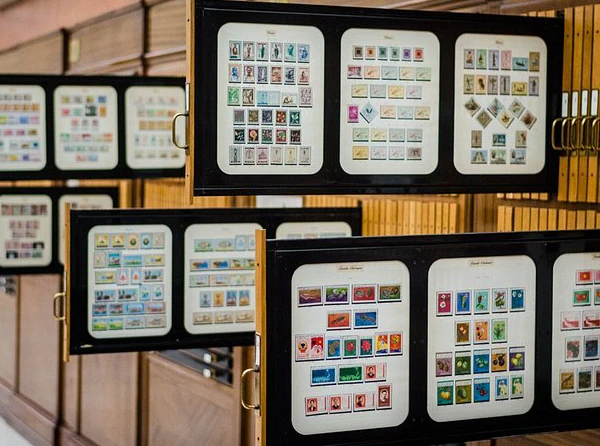
An exhibit is an intellectual object built from other objects
Competitive philately rewards selection, treatment, research, knowledge, rarity and presentation. An advanced collector may acquire something because it fills an evidential weakness in an exhibit, not because it is beautiful or expensive in isolation.
"An advanced collector may value an object because it completes an argument, not because it is beautiful or expensive in isolation."
Apparent damage can become the evidence
Perfins
Businesses perforated initials or designs through stamps to deter internal theft. To an outsider, the holes look like damage. To a specialist, they can identify an organisation, usage or commercial history - especially when an intact cover proves attribution.
Cinderellas
Charity seals, poster stamps, propaganda labels, exhibition labels and other stamp-like objects sit outside conventional postal validity, yet can support serious specialist collecting. "Was it valid for postage?" becomes a boundary question, not a universal admission test.
Touching is part of the risk
Stamps are small, thin and vulnerable. Handling, moisture, light, unsuitable plastics, acidic paper, pressure, mould and adhesive migration can all alter condition in ways that matter disproportionately to collectors.
Stamp tongs reduce oils, moisture and accidental edge damage from fingers.
Stock books, archival sleeves, hingeless mounts and conservation-approved materials protect fragile surfaces and covers.
Humidity can alter paper and gum so distinctly that terms such as "tropical gum" become part of philatelic condition vocabulary.
The specialist eye is trained by repeated comparison
Serious collectors learn from genuine examples, common examples, known forgeries, different papers, gums, shades, perforations, postal routes and specialist literature. Eventually knowledge becomes partly visual and tactile pattern recognition.
A blue stamp, used, slightly off-centre.
Which shade? Which paper? Which watermark? Which gauge? Genuine straight edge or trimmed? Plate position? Regummed? Thinned? Reperforated? Genuine cancel? Contemporary? Postal use or CTO? Correct rate? Certificate needed?
Expertise is partly knowing what should be present - and noticing when it is not.
Knowledge can outrank ownership
A collector can make a serious contribution without owning trophy rarities. Identifying an undocumented postmark, reconstructing a route, plating a printing or recognising a previously unknown variety may create more specialist respect than simply buying an expensive object.
At its most specialised, philately begins to resemble scholarship as much as collecting.
Is the collector documenting a postal system - or consuming products made for collectors?
Commemoratives, miniature sheets, presentation packs, first-day products and collector-targeted issues blurred the line between postal necessity and philatelic product.
There is no neutral dividing line. The disagreement reveals what different collectors believe stamps are for.
The technology that displaced the letter made philatelic research easier
Everyday encounters with adhesive postage have declined, while digital tools have made high-resolution comparison, auction research, census building, remote expertise and global specialist communities dramatically more accessible.
The physical source material may be disappearing from ordinary life while the research network around it becomes more connected.
Stamps can record regime, territory and power changes without a history book
Sovereigns, occupations, annexations, independence, currencies, languages, territorial claims and political imagery can all appear in stamp sequences and overprints. Philately therefore crosses directly into imperial, colonial, post-colonial and political history.
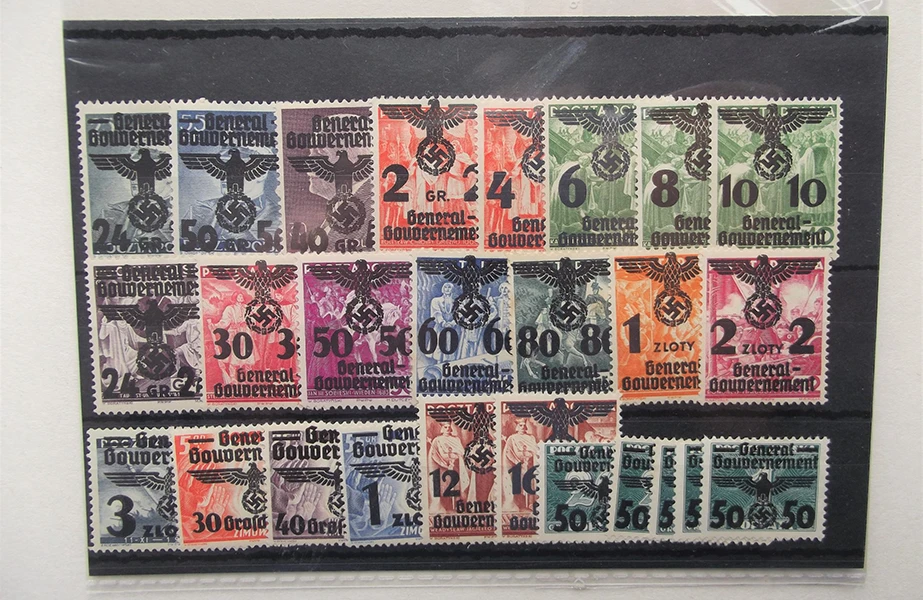
The stamp is often a documentary layer attached to something larger
Postal history
Letters, rates and routes overlap with manuscript and social history.
Printing
Dies, plates, proofs and colour trials move directly into printing history.
Graphic design
Engraving, typography and miniature art connect with design and fine art.
Aviation
Airmail, first flights, Zeppelin and crash mail connect to aviation collecting.
Military history
Field post, censored mail, POW correspondence and forces post overlap with militaria.
Ephemera
Cinderellas, poster stamps and labels cross into propaganda, advertising and ephemeral print culture.
Philately rewards looking twice
The experienced collector learns to distrust the first interpretation. A rare imperforate may be a trimmed perforated stamp. A pristine mint example may be regummed. A spectacular colour may be chemically altered. A rare cover may contain a genuine stamp added later. A damaged-looking perfin may be the important object.
What must be true for this stamp to be what it appears to be?
The most revealing conversations are about judgement, not the rarest object owned.
Go deeper into the practices behind the object
Condition, paper preservation, authentication, restoration, provenance, valuation and document handling all become more useful when separated from the specialist collecting culture that gives them context.
Explore the Knowledge Center →