
Collecting World
Sports
The object matters because it was close to the moment.
Sports collecting is not simply the collecting of sporting things. It is the pursuit of physical connections to athletes, teams, events and memories - where a shirt, ball, bat, glove, card, ticket or programme can become important because of what it witnessed.
A commercial replica and a match-worn shirt may look similar to an outsider. To a collector they can occupy completely different universes.
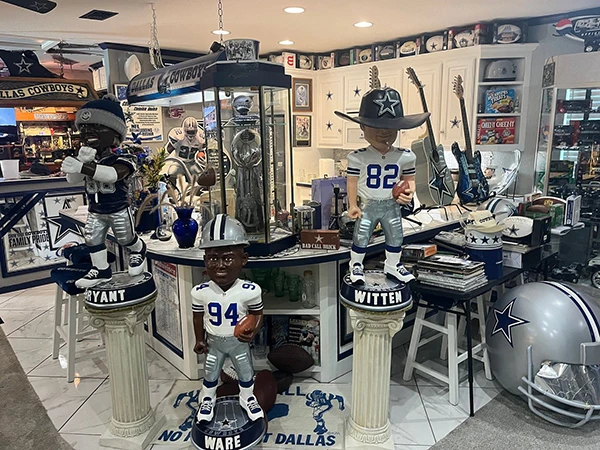
Sports objects rarely exist in isolation. They become part of relationships with players, teams, places and remembered moments - sometimes eventually forming an archive of the collector's own sporting identity.
Stoney Kersh has transformed his Dallas Cowboys collection into a home museum, bringing together decades of memorabilia and fandom in one intensely personal space. His Dallas Cowboys Museum Project now welcomes visitors for guided tours - a striking example of how sports collecting can become not just a collection of objects, but an expression of identity and belonging.
The defining feature
Sports collecting is a hierarchy of proximity
In many collecting worlds the object type is the starting point. In sport, the more powerful question is often: how close was this particular object to the event?
The climb from replica to player issue, from game-used to photo-matched, is not mainly a climb in manufacturing quality. It is a climb towards historical contact.
The strongest sporting objects do not just represent sport. They participated in it.
Commercial object that represents the sport, athlete or team but has no direct event relationship.
Officially made, often higher quality or period-correct, but still sold as merchandise.
Made to the kind of specification used by players, without proof it reached one.
Supplied for player or event use, but not necessarily worn or used in play.
Actually used in competition, training or event context.
Linked to a specific game, fight, innings, race, stage or tournament.
Recognisable in imagery or evidence from a defining incident, record or result.
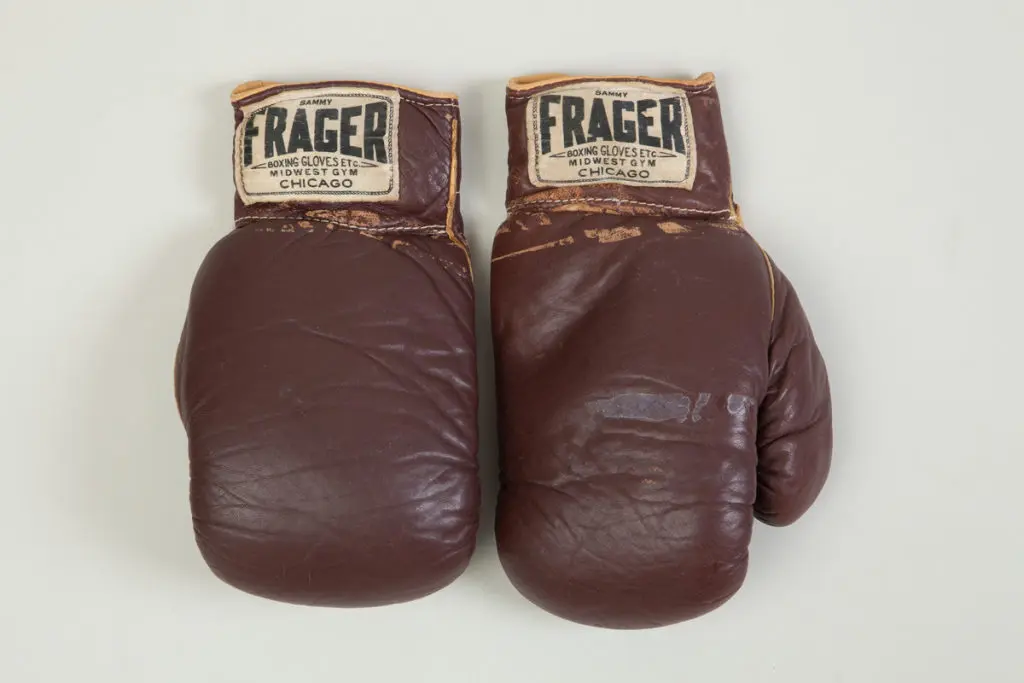
Condition works backwards
The ideal card may look untouched. The ideal match-used object may look unmistakably touched.
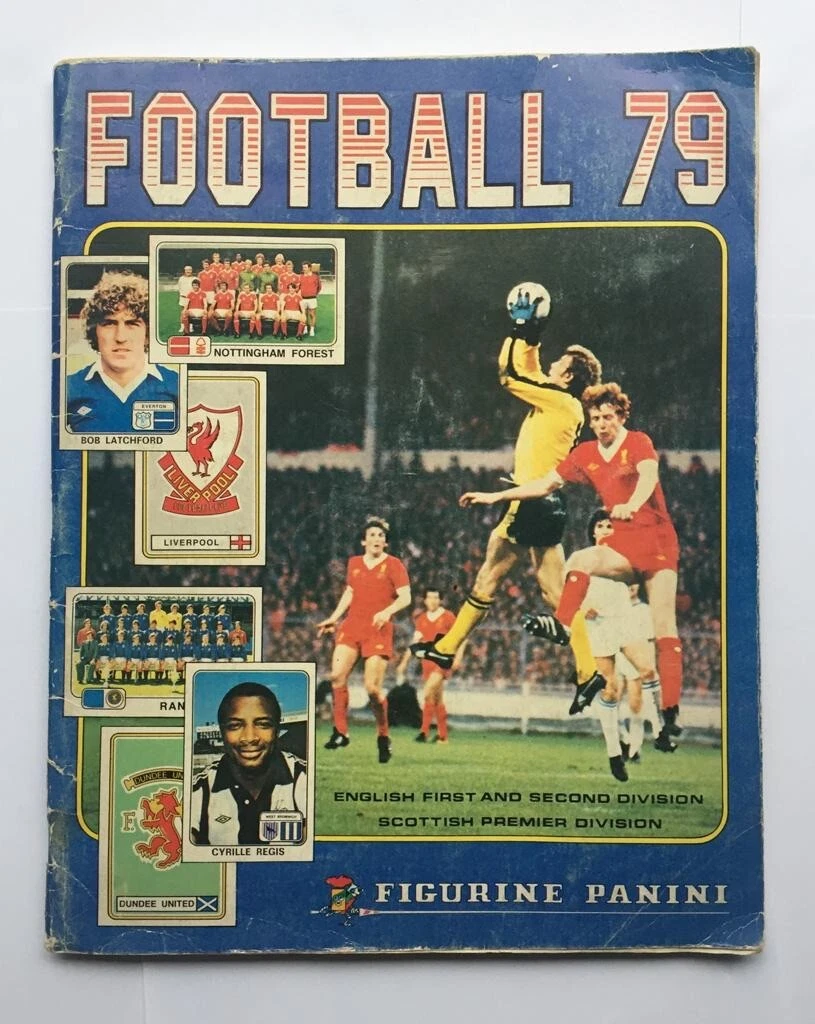
Sports collecting contains two very different condition cultures living side by side. Modern cards and stickers often reward technical perfection: corners, centring, gloss, surface, print quality and untouched edges. Game-used objects can reward almost the opposite.
Grass stains, sweat, mud, repairs, tape, ball marks, impact marks, pine tar, puck marks, scuffs, cracks and torn fabric may be defects in a household sense, but evidence in a collector sense.
Cards, stickers and sealed products often reward sharp corners, centring, gloss, surface quality and untouched state.
A shirt, bat, glove, ball, boot or bicycle may gain meaning from mud, sweat, repairs, scuffs, cracks, tape or impact marks.
Tickets and programmes sit between the two systems: cleanliness matters, but use, attendance and survival can matter more.
Cleaning can improve appearance while destroying the biography of the object.
Preservation versus improvement
Washing, polishing and repair can remove the very reason the object matters
A shirt with mud from a famous match, a bat with ball impressions, a trophy with old tarnish, or a ticket stub torn at the gate may carry use evidence that conventional cleaning would weaken.
The sophisticated collector separates deterioration from evidence. Stabilising a jersey so it does not decay is conservation. Removing the stain that helps establish when it was worn may be historical destruction.
Does this intervention preserve the object, or does it erase the proof that it was there?
Worlds within the World
Sports is too broad to behave as one collecting culture
A football programme completist, a cricket archivist, a modern basketball-card breaker, a boxing poster specialist and a collector of race-used bicycles may all collect sport while sharing surprisingly little practice. This page provides the common framework, but within it sit collecting cultures substantial enough to support their own future explorations.
Cards and stickers
Checklists, rookies, parallels, grading, population reports, sealed product, breaks and speculative chase culture across multiple sports.
Football shirts
Replica, authentic, player issue, match issue, match worn, namesets, patches, sponsors and competition variants.
Programmes and tickets
Runs, postponed fixtures, obscure friendlies, cup finals, used stubs and documentary paper trails across many sports.
Cricket memorabilia
Bats, caps, sweaters, scorecards, Wisdens, tour material, signed miniature bats, photographs and deep archives.
Baseball memorabilia
Game-used bats, balls, jerseys, gloves, autographs, milestone material and highly developed league authentication.
Basketball memorabilia
Game-worn jerseys, sneakers, balls, championship material, player collections and an especially strong crossover with cards and fashion.
American football memorabilia
Game-used jerseys, helmets, footballs, rings, signed equipment and team or player material where event association can be decisive.
Boxing memorabilia
Fight-worn gloves, trunks, robes, boots, belts, posters and programmes where exact bout association can transform meaning.
Cycling and machinery
Race-used bicycles, frames, jerseys, numbers, helmets and components where sport meets technical-object collecting.
Motorsport memorabilia
Race-worn helmets and suits, trophies, programmes, signed material and vehicle components where engineering history meets event provenance.
Olympic material
Medals, torches, tickets, badges, uniforms, posters and participation material spanning nations, sports, host cities and eras.
Golf and tennis
Clubs, rackets, balls, clothing, tournament ephemera and player-used equipment where individual careers and major events define scope.
The shared principle is witness and identity. The specialist evidence changes by sport, object and market.
Cards and engineered scarcity
Sports cards are almost a separate collecting world
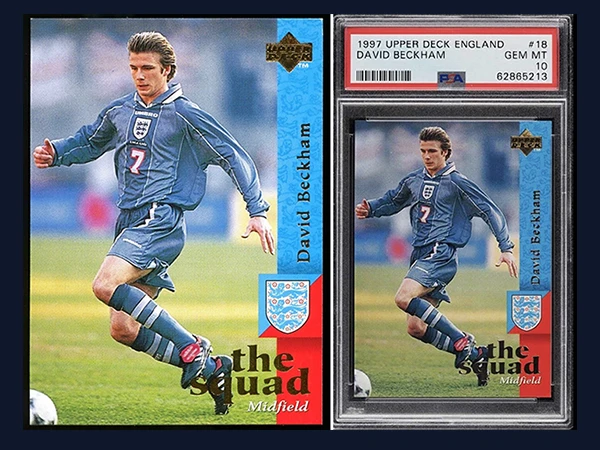
Cards and stickers carry sport into a manufactured collecting system. Sets, rookies, parallels, refractors, numbered cards, autographs, relics, sealed boxes, grading, population reports and set registries create a culture that behaves very differently from match-used memorabilia.
Older scarcity often came from survival: children handled cards, albums were filled, corners wore, paper was discarded. Modern scarcity is often designed at the factory: /499, /99, /25, /5 or 1/1.
Few survived because no one knew they would matter.
Few exist because the product was engineered to create chase value.
Authenticity
Authentic is not one claim. It is a stack of claims.
Sports collecting is full of partially true descriptions. A shirt can be official but not player issue. A bat can be period-correct but not player-used. A signature can be genuine on the wrong object. A jersey can be match-issued but never worn. A card can be real but trimmed.
Was the object genuinely produced by the claimed maker, club, league or card company?
Does it belong to the season, tournament, issue or era being claimed?
Retail, authentic retail, player-spec, player-issued or match-prepared?
Is there credible evidence that it was actually worn, handled, struck, signed or played?
Can it be tied to a fixture, fight, race, innings, stage, series or tournament?
Can the object be connected to the precise incident, record, goal, home run, fight or finish that gives it power?
Are the signature, patch, nameset, relic fragment, inscription or paperwork genuine and correctly associated?
Does custody history support the claim, or is the story simply repeated by the market?
The serious market does not ask only whether the object is real. It asks which part of the story is proven.
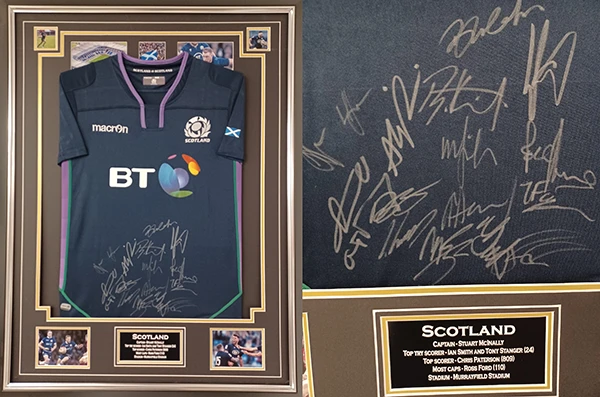
Photo matching
The best evidence can be visual, tiny and exact
Photo matching has transformed elite sports memorabilia. Instead of asking whether an object is the right type, specialists compare it with photographs and video from the claimed event.
Stitch alignment, fabric grain, number positioning, stains, repairs, loose threads, lettering imperfections, scratches and creases can all become evidence. A tiny irregularity can shift an object from plausible to persuasive.
Authentication is evidence, not magic. Even expert opinion is strongest when the object, image and provenance support one another.
Completeness
A complete sports collection begins by inventing the universe
Nobody can complete sport. Collectors create a boundary first, then pursue completeness inside it: every home programme, every Topps card in a set, every World Cup final ticket, every card for a player, every shirt from a season, or every object around one event.
Every card, sticker, programme or issued object in a defined checklist or run.
A club, franchise or national side across seasons, competitions, stadiums, managers or eras.
Every meaningful object connected to one athlete - sometimes impossibly broad in modern cards.
The programme, ticket, shirt, ball, photographs, autographs and participant material around one match, fight or tournament.
Every parallel or numbered version of one modern card, including the engineered scarcity variants.
Object plus the documents, photographs and context needed to make the sporting history legible.
In sport, complete is not a natural condition. It is a collector's rule set.
Programmes, tickets and paper evidence
The disposable record can outlast the event
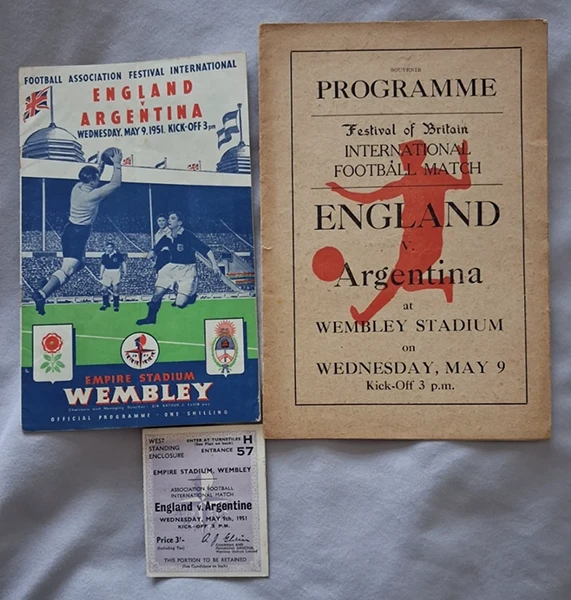
Programmes, tickets, stubs, scorecards, team sheets, fixture lists, passes, menus, fanzines and supporter literature are often the documentary skeleton of sports collecting. They can make a collection historical rather than merely celebratory.
Famous finals can be common because many were printed and saved. A low-attendance friendly, postponed match or obscure reserve fixture may be far harder to find. Once again, historical importance and rarity are not the same thing.
Cleaner, intact and often visually stronger.
Torn or punched, but physically records attendance.
Provenance
Provenance is strongest when it begins on the field
Sports can create unusually direct provenance chains: athlete to opponent to family, club to charity auction to collector, league authenticator to database to buyer, player to coach to descendants.
Modern sport can even manufacture provenance in real time. League authentication, club auctions, holograms, NFC tags and photographic archives can document objects while the sporting history is still unfolding.
Future memorabilia may be better documented than older material, but less mysterious. Some detective work disappears when provenance is built into the product from day one.
Identity and memory
Sports collections often become identity archives
Sport attaches to club, city, nation, school, family, generation and hero. A shirt can stand for childhood, music, fashion, friends, national mood, a tournament summer or a father who kept every season ticket.
That gives sports objects emotional density. Selling a duplicate card is one thing. Selling a parent's programme run or a childhood sticker album can feel like disposing of lived memory.
The object can hold personal memory, communal memory and sporting history at the same time.
Rarity versus desirability
Rarity without demand has limited power
Sports collecting is unusually dependent on recognition. A one-of-one card of an obscure athlete may be unique but thinly desired. A common-looking object tied to Muhammad Ali, Babe Ruth, Pelé, Michael Jordan, Lionel Messi, Diego Maradona or Don Bradman can carry global demand because the athlete and moment are culturally legible.
Who is it connected to?
Which game, fight, race or tournament?
Did something memorable happen?
Was this close enough to the action?
Can the claim be believed?
Modern market
Collecting and speculation sit very close together
Sports markets can move with debut, transfer, injury, retirement, scandal, Hall of Fame election, championship, record or death. Modern cards make this especially visible because the athlete's future performance can become part of the collectible's present price.
Sometimes the object is collected. Sometimes the athlete's future is being priced.
Breaks and entertainment
The opening of product has become its own culture
Livestream breaks, random-team breaks, case breaks, repacks, vault storage and immediate grading have turned parts of card collecting into social entertainment with speculative tension.
The chase can become as collectible as the object.
Fragments and relics
Sports can destroy one object to manufacture many collectibles
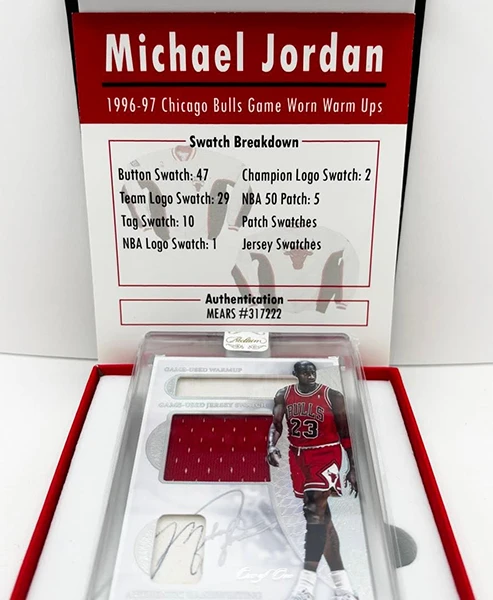
Relic cards and memorabilia products can incorporate fragments of jerseys, patches, bats, balls or stadium material. This democratises access to physical history, but also raises a preservation problem.
A historically coherent object may be cut into hundreds of fragments so each fragment can become a new collectible. For some collectors that is exciting access. For others it is commercialised loss.
The fragment carries contact, but the whole object carried context.
Insider language
Small terms separate completely different claims
Sports collecting has a vocabulary because outsiders often collapse categories that insiders keep separate. The language is a defence against vague claims.
PC
Personal collection - material separated emotionally or practically from stock intended for trade or resale.
Raw / slabbed
Unencapsulated versus graded and sealed by a third-party grading company.
Pop report
The count of examples certified at a grade by a grading company, useful but not the same as true rarity.
Rookie
A contested collector category, not always a simple first appearance.
Relic card
A card incorporating a fragment of jersey, bat, ball, patch or other material.
Clubhouse signature
A signature added by someone other than the named athlete, historically common on some team-signed balls.
Photo-matched
A specific object visually matched to photographs or video through irregularities, marks, stitching or wear.
One-of-one
A unique manufactured object - powerful only when demand and significance exist as well.
Expertise
The specialist sees the claim hidden inside the object
Expertise grows through comparison: labels, stitching, number fonts, sponsor changes, card stock, print defects, programme printers, bat models, signature evolution, equipment specifications, auction archives, period photographs and known examples.
The collector is often not asking whether the object is attractive. They are asking whether every visible detail agrees with the claimed player, season, competition, event and history.
An old football shirt.
Correct manufacturer, wrong sponsor for the competition, retail specification, later nameset, plausible age, but no match-use evidence.
Sports connoisseurship is the ability to separate a real object from a real object with the wrong story.
Collector judgement
Questions that reveal expertise
Collectaneum principle
Sports exposes the difference between object data and event data
The same manufactured object can be ordinary, player-issued, match-worn, photo-matched or tied to a famous moment. A registry has to preserve both the physical description and the claim structure around use, event, evidence and custody.
What is it? Who used it? Where was it? How do we know?
That is why sports naturally feeds future pages on provenance, condition, authentication, restoration, valuation and identity.
Collecting Intelligence
The strongest interviews will come from specialist subcultures
Sports is ideal for interviews with shirt collectors, card graders, programme completists, cricket archivists, boxing specialists, authentication researchers, club historians and collectors who can explain where the general sports story breaks into its own domains.
Explore Collecting Intelligence →Knowledge Center
Go deeper into the practices behind the object
Condition, provenance, authentication, preservation, restoration, documentation and valuation become much more useful when the sporting claim structure is separated from the object itself.
Explore the Knowledge Center →Sports as a Collecting World