
Collecting World
Music collecting begins when sound becomes physical.
The collectible might be the recording, a particular release of it, an individual copy, an object used to make the music, evidence of a performance, or something that passed through the hands of the artist.
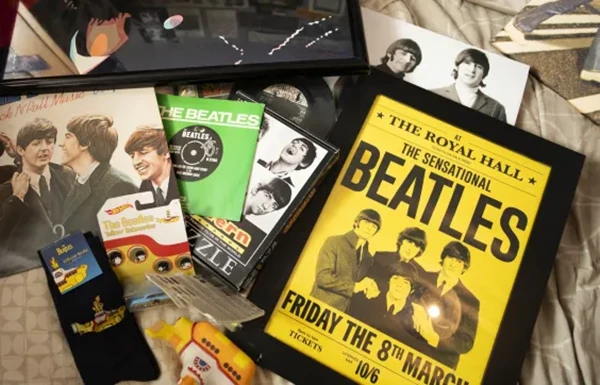
That permeability is what makes music distinctive. The same cultural world can contain a first pressing, a test acetate, a concert ticket, a handwritten lyric, a battered stage guitar and a fan-club letter - each preserving a different relationship to something fundamentally intangible. And unlike many object-led collecting worlds, the organising boundary may be an artist, a scene, a venue, a city or an entire cultural movement rather than a single class of thing.
The central distinction
Owning the music is not the same as owning the object
Streaming can provide the same recording to millions of people at once. Collecting begins when one manifestation becomes more meaningful than another.
A UK first pressing and a modern remaster may contain substantially the same performance. A Japanese issue with obi, a white-label promo and an acetate can all point to that same piece of music while occupying entirely different collecting positions.
Music is infinitely reproducible. Music collectibles gain meaning by making particular manifestations of it non-reproducible.
Release identity
Record collecting is partly forensic identification
To a newcomer, two records can look identical. To a specialist, the useful evidence may sit in tiny print, paper stock or the ungrooved area around the label. Catalogue identity is built from multiple clues rather than from the cover alone.
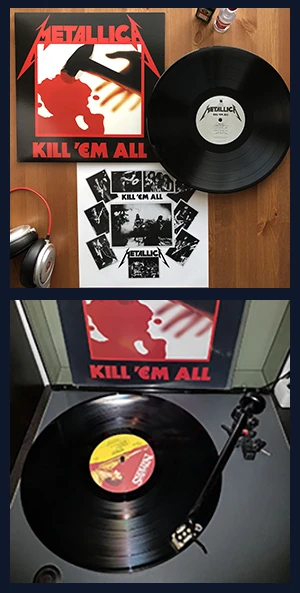
The newcomer sees an album. The experienced collector sees country, catalogue number, label state, matrix, lacquer cut, pressing plant, sleeve state, inserts and condition.
First is not always best
Historical primacy and sonic primacy can point to different copies
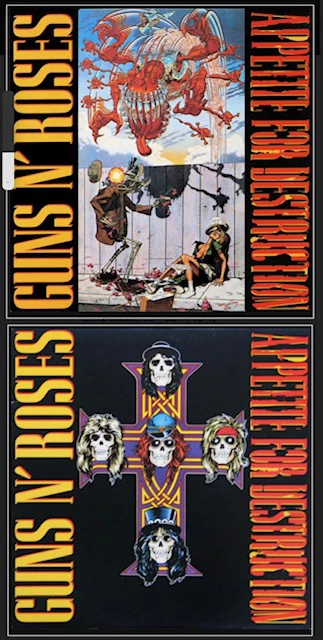
"First pressing" sounds simple until territory, pressing plant, lacquer, matrix, label and sleeve chronology begin to diverge. An original issue may be a family of objects rather than one universally superior version.
Some collectors want the version available when the record first appeared. Others prefer a later cut because it sounds better, uses a favoured mastering engineer or preserves a mix unavailable elsewhere.
I want the version closest to the moment of release.
I want the version that reproduces the recording best.
The hierarchy of identity
Work, recording, release, pressing, copy, provenance
Music collecting becomes easier to understand when these layers are separated. Two objects can contain the same recording yet differ at every physical level beneath it.
The song or composition as an intellectual creation.
A specific captured performance or studio production.
A particular commercial or promotional issuance of that recording.
A manufacturing instance or distinguishable production route within that release.
The individual object, with its own condition, completeness and marks of use.
The biography that can make one otherwise ordinary copy culturally unique.
"I own this album" and "I collect this album" can describe completely different levels of attention.
Condition
At least two objects are being judged at once
Physical recordings separate the playable carrier from the packaging around it. A copy can be excellent in one dimension and compromised in another, while missing paper components can create a third condition problem: incompleteness.
Carrier
Scratches, groove wear, warp, surface noise, pressing faults, damaged centres or tape deterioration.
Packaging
Ring wear, seam splits, creases, fading, stains, laminate lift, writing, water damage and sticker loss.
Completeness
Correct inner sleeves, posters, booklets, hype stickers, obis and promotional components may matter materially.
Playback
A visually strong copy can still disappoint sonically; an apparently modest copy can play far better than it looks.
One grade cannot adequately describe both the thing that plays and the thing that contains it.
Use versus preservation
The collectible can still perform
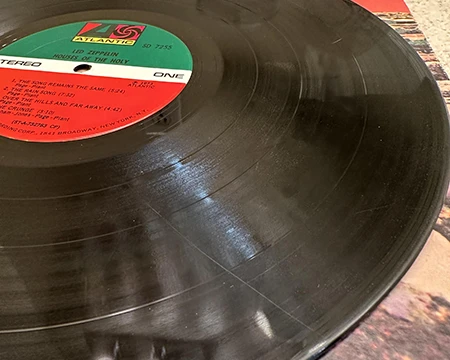
Records, tapes, cylinders and instruments are unusual historical objects because their intended function can remain available. The owner can still play the record or produce sound from the instrument.
But playback is contact. For an ordinary modern LP, the risk may be trivial. For a unique acetate, fragile lacquer, cylinder or deteriorating tape, access can consume the evidence being preserved.
Serious preservation therefore separates two activities that casual collecting often treats as one: preserving the carrier and preserving the sound.
Limit wear, stabilise materials, store appropriately and retain original physical evidence.
Transfer the sound so repeated access does not require repeated wear to the source.
At what point does listening stop being use and start becoming loss?
Intervention
Music has no single restoration culture
The acceptable treatment depends on what the object is and which part of its meaning the collector is trying to preserve. "Original is always best" breaks down quickly across the field.
Cleaning is usually normal and can improve playback while reducing abrasive contamination.
Heavy cosmetic restoration may reduce desirability, even when it improves appearance.
Specialist treatment can be necessary simply to recover the recording before further deterioration.
Conservation may be preferable to invisible alteration because wear can be part of the biography.
Replacement parts fitted during working life can become historical evidence rather than losses of originality.
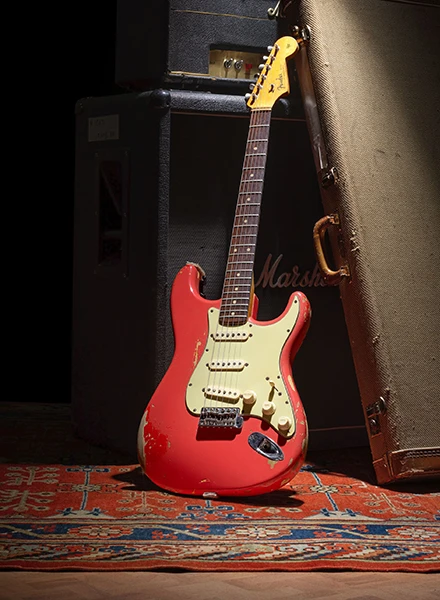
For an ordinary vintage instrument, replacement parts may reduce originality. On an artist-used working instrument, the same changes may document how the object actually made history.
Iconic Guitarist Gary Moore's Fender Stratocaster which has a set of well documented changes.
Which part of the object's meaning are we trying to preserve?
Provenance
Provenance can move from irrelevant to dominant in one step
Nobody normally cares who owned an ordinary commercial LP before them. Change the relationship and the object can become something else entirely: an artist's own copy, a producer's acetate, a DJ's promo, a stage-used setlist or a guitar used during a famous recording.
Establishes association.
Establishes participation.
Connects the object to a historically important event.
A battered object can become more desirable than a pristine equivalent when the wear helps prove that it was there.
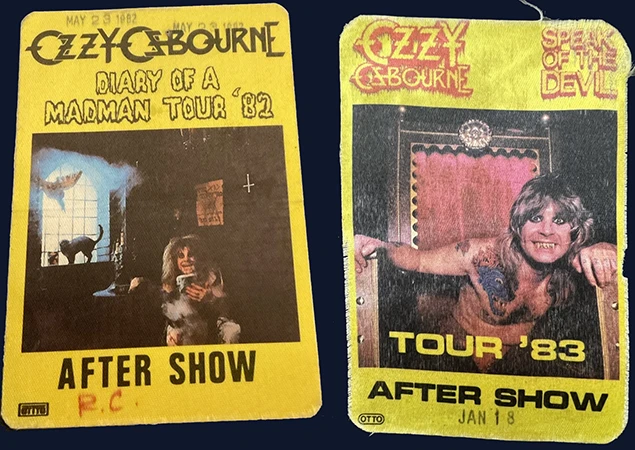
The importance of there
Some objects matter because they witnessed the event
A ticket is not collectible simply because it contains printed information. Its significance can come from having entered the venue on that night. A setlist can preserve the planned performance, late changes, song order and the physical stage at once.
Music memorabilia is particularly rich in this form of archaeological evidence. The object does not merely depict or describe history - it physically participated in it.
Anonymous damage usually lowers condition. Documented performance wear can strengthen the object's biography.
Authenticity
Authenticity is a claim about relationship, not one universal test
A matrix check, handwriting analysis and a chain of ownership are all authentication practices, but they answer different questions. Music collecting rewards the collector who first identifies which claim is actually being made.
Release identity
Is this genuinely the claimed pressing, territory, label state or edition?
Signature
Is the autograph genuine, period-correct and credibly obtained?
Ownership
Did the artist, producer, DJ or other claimed person actually own it?
Use
Was the object merely owned, or demonstrably used in performance, recording or touring?
Unofficial history
Is the bootleg or counterfeit itself an authentic historical example of that unofficial object?
Unofficial objects
Fake does not always mean historically meaningless
Bootlegs, pirates and counterfeits are not interchangeable categories, even if language varies between communities. More importantly, old unofficial releases can themselves become evidence of fan networks, circulation, censorship, demand and alternative distribution.
A counterfeit never becomes an authentic example of the release it copied. It can, however, become an authentic historical example of that counterfeit.
An object can be inauthentic as one thing and authentic as evidence of another.
Artist as collecting universe
A serious artist collection can stop looking like a record collection and start looking like an archive
For some collectors, the artist is not merely a subject within the collection. The artist defines what belongs. Recordings sit at the centre, but the boundary can expand through touring, promotion, fan culture, clothing, print, associated musicians and the material life around the band.
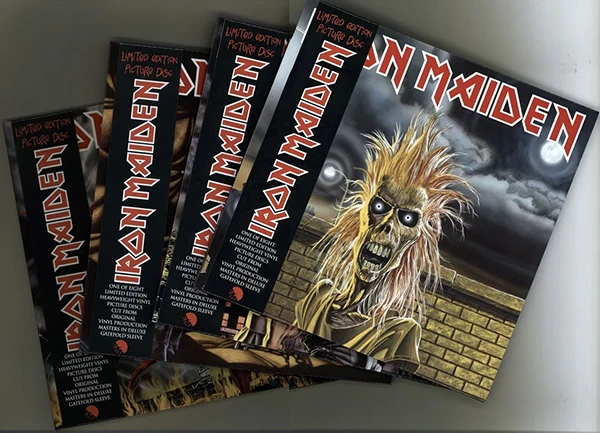
A deep Iron Maiden collection, for example, need not be understood as vinyl plus memorabilia plus magazines plus clothing. The collector can experience all of it as one coherent documentary universe because each object records a different part of the same cultural subject. The same behaviour appears around much smaller bands with committed followings, where collectors may preserve material that formal archives have barely documented.
This changes the meaning of completeness. The project can radiate outwards from official recordings into territorial variants, promotional issues, bootlegs, tour programmes, tickets, backstage passes, fan-club publications, shirts, badges, posters, photographs, books, press cuttings, guitar picks and objects connected with former members, side projects or related bands.
The collection no longer inherits the taxonomy of the objects inside it. The artist provides the taxonomy.
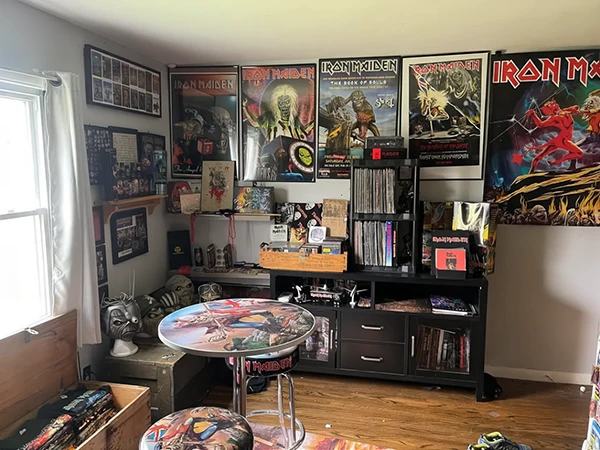
Official releases, pressings, promos, demos, acetates, bootlegs and territorial variants.
Tickets, programmes, passes, setlists, tour clothing, flyers and venue material.
Fan-club magazines, newsletters, membership material, correspondence and collector-produced documentation.
Former members, side projects, associated bands, labels, local history, publications and other relationships the collector decides belong.
The smaller the formal archive, the more important the specialist collector can become as historian, discographer and custodian.
Beyond the artist
Sometimes even the artist is too narrow a boundary
Punk, Northern Soul, rave, goth, reggae, hip-hop, metal and regional movements can generate collections whose organising subject is a cultural ecosystem rather than any individual performer. Records belong beside flyers, clothes, badges, magazines, photographs, club material, correspondence, record-shop ephemera and objects connected to promoters, labels and venues.
A NWOBHM collection, for instance, can legitimately move between major bands, obscure private-press singles, demo tapes, fanzines, patches, local gig posters, early magazine coverage and objects tied to the venues and labels through which the movement formed. None of those categories needs to stand alone if the collector is documenting the movement itself.
Sound + people + venues + fashion + print culture + labels + geography + memory can become one coherent collection.
This is one of music collecting's most revealing traits: the collection can be defined by participation in a world rather than resemblance between the things collected.
Collections do not have to inherit the taxonomy of the things they contain. A movement, place or community can provide the ontology instead.
Completeness
A complete collection begins by deciding what the universe is
Music offers almost no natural endpoint because collectors can choose the kind of boundary they are completing. An artist collection can stop at studio albums or expand until it becomes an archive of releases, performances, fan culture and associated people. A label, scene, club, format, venue, city or movement can define an equally legitimate universe.
Official recordings may be only the inner boundary. Tours, fan-club material, associated musicians, publications and ephemera can extend the universe almost indefinitely.
A catalogue-number range, period, subsidiary or format can become the boundary.
Records, clothing, flyers, venues, magazines, labels and local ephemera can reconstruct a cultural network rather than a single discography.
Every 8-track, cassette, 78 or MiniDisc within a chosen subject creates a finite-looking but research-heavy project.
A DJ or genre collector may define completeness by what was actually played, influential or culturally canonical.
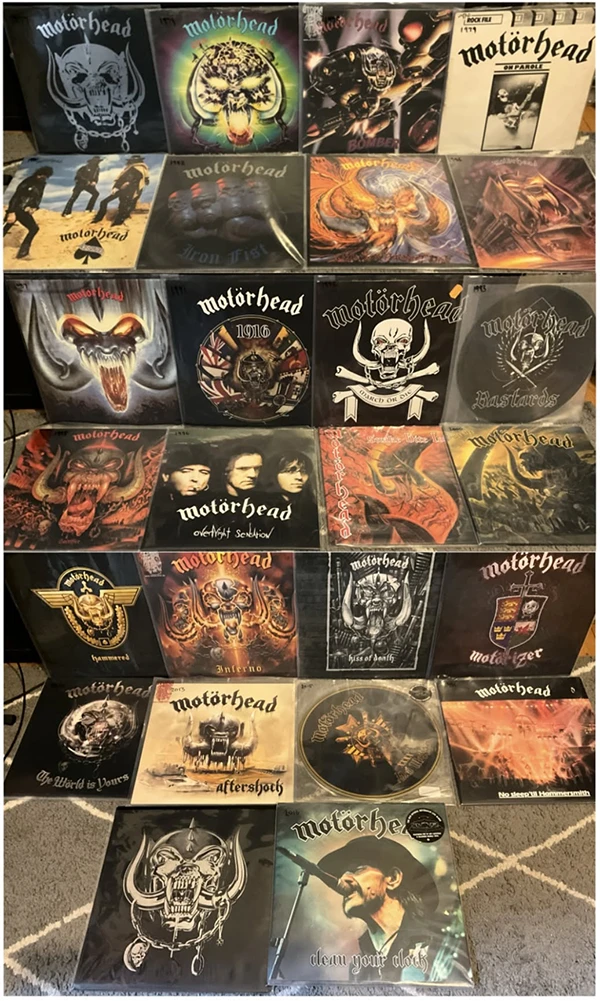
Before the collector can buy the final object, they may first have to establish whether the checklist itself is complete.
Scene collecting
Sometimes the collection is a culture rather than an object type
Music can organise collectors around clubs, towns, labels, DJs, subcultures and moments in social history. Northern Soul, punk, rave, reggae, hip-hop, metal and other scenes demonstrate how records can become evidence of participation in a network larger than any one artist.
Northern Soul makes the mechanism unusually visible. DJs competed to discover obscure American soul records that rival DJs did not possess. Rarity could create status and temporary exclusivity on the dance floor.
Records unsuccessful in their original market could become culturally important precisely because so few had been bought. The collector community did not merely preserve an existing canon - it helped create one.
How many survive?
Does the scene believe this record matters?
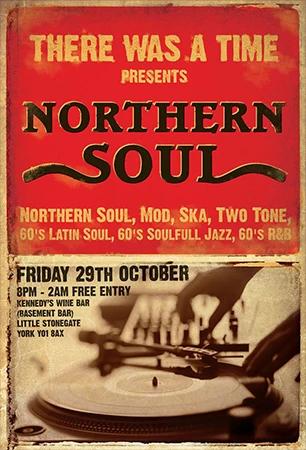
A rare record nobody wants remains obscure. A rare record a scene decides it needs becomes mythology.
Scarcity
Modern music increasingly manufactures the condition collectors used to discover
Discovered rarity
A failed local single, withdrawn release, test pressing, flyer or acetate becomes scarce because few were made, few survived or nobody cared enough to preserve them at the time.
Manufactured scarcity
A modern release may be designed as collectible from day one through numbered runs, coloured vinyl, alternate covers, retailer exclusives and signed inserts.
Declared edition size is not the same as long-term rarity. Five thousand carefully preserved collector copies may remain plentiful decades later, while a cheap flyer made to be discarded can become genuinely scarce through survival.
Contemporary pop collecting makes the tension especially visible: the record can now be sold simultaneously as music, collectible object, identity token and displayable proof of fandom.
Limited is a marketing description. Rare is a condition of survival and demand.
Generational tension
Records to hear versus records to own
The physical revival is not adequately explained by sound quality alone. Some contemporary collectors value coloured editions, alternate covers, signed inserts and artist-store exclusives because the physical object performs visible fandom and identity.
That does not make the collecting system less real. It simply prioritises different evidence from the collector who cares about lacquer cuts, pressing plants and analogue mastering.
Visual identity, artist relationship, variant completeness and display.
Mastering lineage, production history, playback quality and historical primacy.
Format archaeology
Obsolescence can create collecting worlds rather than destroy them
Vinyl, CDs, cassettes, MiniDiscs, 78s, cylinders and tape can all pass through technological life cycles in which ordinary utility disappears and material specificity becomes more interesting.
Preserving obsolete media can also mean preserving the ability to retrieve what they contain. A cylinder without suitable playback knowledge, or a reel of tape without viable machinery, is a surviving object whose cultural content may be practically inaccessible.
New technology → ubiquity → obsolescence → disposal → nostalgia → rediscovery → collectability
Collector archetypes
Different collectors are often preserving different kinds of evidence
The discographer
Builds order from editions, variants, catalogue sequences and release completeness.
The crate digger
Values discovery itself, often moving towards obscure labels, local scenes and forgotten artists.
The audiophile
Collects mastering choices, pressing quality, cutting engineers and the best-sounding route to a recording.
The artist archivist
Lets one artist become the collecting universe, extending from recordings into touring, fan culture, associated musicians, merchandise, publications and documentary ephemera.
The scene collector
Collects a cultural network - labels, clubs, DJs, flyers, records, clothes and local histories can belong together.
The memorabilia collector
Moves from recordings towards instruments, clothing, manuscripts, awards and objects connected to the artist.
The historian
Values fanzines, correspondence, session material, photographs, reels, business records and documentary evidence.
The DJ collector
Collects partly for use. What works in a room can matter more than what looks impressive on a shelf.
Expertise
The expert sees evidence before price
Databases have made obscure release information searchable, but they have not removed the need for judgement. They shift expertise towards interpreting evidence correctly, recognising contradictions and knowing when a difference is meaningful rather than incidental.
A Beatles record.
Which country? Which label state? What is in the runout? Which sleeve? Is the inner correct? Which mastering? Is anything supplied? Does the copy's story change the object?
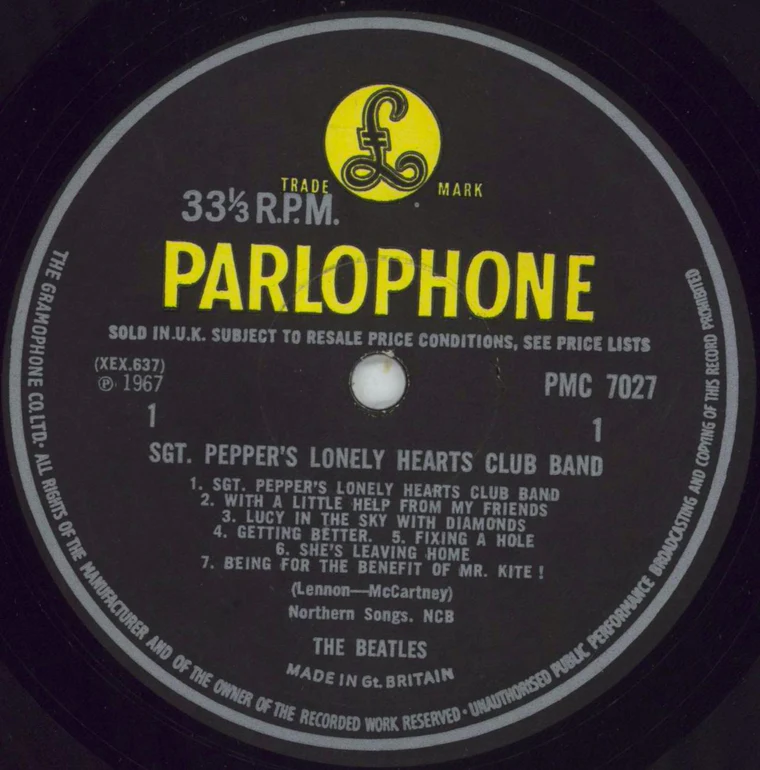
Expertise is less about memorising prices than knowing which evidence matters.
Discovery
Databases optimise searching. Crate digging optimises surprise.
Find the object you already know exists.
Find something you did not know existed.
For many collectors, discovery is not merely a route to ownership. It is the core experience of the hobby, historically carried through shops, fairs, dealers, DJs, club nights and other collectors.
Identity and biography
A music collection can become a personal chronology
Music often attaches to identity unusually early: first records, parents' music, first concerts, clubs, bands, scenes, relationships and places. A collection can therefore document cultural history and private biography at the same time.
Someone collecting the records played in a club they attended in 1982 may be rebuilding their own life as much as assembling a discography.
The market
Crates and celebrity memorabilia barely behave like the same economy
Ordinary record collecting is often database-driven, comparative and highly sensitive to release identity and condition. High-end artist memorabilia can behave more like a market for relics, trophies and historical artefacts.
Once celebrity association becomes strong enough, the intrinsic value of the underlying object can become almost secondary to the strength of the story and the specificity of the connection.
Where collectors disagree
The arguments reveal what each community thinks the collectible actually is
First pressing or best pressing?
Historical authenticity and sonic superiority do not always coincide.
Sealed or playable?
Perfect packaging can preserve object condition while preventing the collector from experiencing - or even confirming - the record inside.
Original vinyl only?
Some DJ cultures treat original issues as part of performance ethics; others place the music and dance-floor effect first.
Conservation or intervention?
The treatment that saves a tape may be unacceptable on a poster, sleeve or stage garment.
Modern variants or engineered exploitation?
One collector sees legitimate contemporary completeness; another sees scarcity manufactured to monetise fandom.
Databases or mystery?
Searchable knowledge democratises expertise but can reduce the serendipity and information asymmetry once central to collecting.
Streaming did not make physical music meaningless. It removed the need to own sound in order to hear it - and left collectors free to decide what physical ownership should mean instead.
Worlds within a world
Music can fragment by object type - or cohere around an artist, movement or cultural world
These subcultures use different evidence, different condition standards and different ideas of authenticity. What unites them is not simply format. Music lets collectors build coherent worlds around sound, people, scenes and memory, then decide which physical traces belong inside them.
Artist Worlds & Fan Archives
A single artist or band can generate a collecting universe spanning releases, tours, fan clubs, merchandise, publications, associated musicians, artwork and ephemera.
Vinyl & Physical Recordings
Pressings, matrices, labels, mastering, variants, condition and discography form a deep collecting world in their own right.
Recorded Sound Archaeology
78s, cylinders, acetates, tape, private recordings and obsolete formats bring preservation and playback technology to the foreground.
Music Memorabilia
Stage wear, personal possessions, photographs, awards and artist-linked material move the focus from recording to biography.
Instruments & Equipment
Vintage instruments, provenance guitars, amplifiers, studio hardware and artist modifications create a different originality culture.
Concert Ephemera
Posters, tickets, passes, setlists, programmes and tour material preserve the physical archaeology of live performance.
Autographs & Manuscripts
Signatures, lyrics, notebooks and correspondence make handwriting, provenance and creative process central.
Scenes & Subcultures
Northern Soul, punk, rave, reggae, metal, hip-hop and other scenes can define collections across objects, places and social identity.
Collecting Intelligence
Questions that expose judgement
The strongest Collectaneum lens
The physical object can preserve content, evidence, biography and participation at the same time
A record preserves sound. A ticket preserves attendance. A setlist preserves a performance plan. A guitar can preserve both working modifications and the act of making music. A bootleg can preserve fan circulation even when its relationship to authorised release is problematic.
The collector's task is not simply to decide whether something is original. It is to decide what kind of originality, relationship or evidence matters for this object.
Collecting Intelligence
The strongest stories sit between the release and the life around it
Music is especially suited to conversations with collectors, DJs, archivists, dealers, engineers and scene specialists because expertise can move from microscopic manufacturing detail to lived cultural memory in the same object.
Explore Collecting Intelligence →Knowledge Center
Go deeper into the practices behind the object
Condition, provenance, authentication, preservation, restoration and valuation all become more useful when separated from the collecting culture that gives them context.
Explore the Knowledge Center →Music as a Collecting World