
Collecting World
The object can stay the same while everything collectors believe about it changes.
Fine Art collecting rarely stops at the physical object. A work can also be an attribution, a material history, a provenance trail, a scholarly proposition, a cultural object, a legal asset and a financial one.
Change the accepted artist, provenance, catalogue status, restoration history or institutional context and the same painting, drawing, sculpture or print can occupy an entirely different place in the collecting world.
The central idea
Knowledge can alter the identity of the collectible
A work can be physically unchanged yet move from "circle of" to "attributed to", enter a catalogue raisonne, acquire a documented provenance, reveal extensive overpaint or become the subject of a restitution claim.
Metadata can become ontology.
In Fine Art, information is not merely attached to the object. It can change what the collecting world accepts the object to be.
Collector behaviour
Fine Art collectors often curate rather than accumulate
Serious collections are commonly defined by an organising idea. The important decision is not only what to acquire, but what deliberately does not belong.
Artist-led
One artist, a pivotal period, works on paper, preparatory studies or a tightly defined series can become the organising principle.
Movement-led
Old Masters, Impressionism, German Expressionism, Pop, post-war British art and many other schools create historical collecting boundaries.
Medium-led
Prints, drawings, photography and sculpture each develop specialist languages that can matter as much as the artist's name.
Geographic
Nation, region, diaspora, city, academy or artistic community can define a collection and challenge older canonical boundaries.
Conceptual
Identity, migration, ecology, materiality, politics or technology can make the collection itself feel like an argument.
Relationship-led
Some collectors build around artists they know, institutions they support or ideas they want to live alongside rather than a fixed category.
A smaller collection can be considered better than a much larger one if the works speak to one another with greater intelligence.
Completeness
Fine Art replaces "complete set" with coherence and sufficiency
Literal completion is often impossible. Too many works exist, many are permanently held by museums, some are lost and others may never return to market. Collectors therefore define completion around representation, depth and intellectual coherence.
A recognised print portfolio, catalogue raisonne range or tightly bounded body of work can still support conventional completion.
The collection reaches a point where another acquisition would add nothing genuinely new to the argument.
Does this acquisition deepen the collection?
Attribution
"By" is not the same claim as "attributed to"
Fine Art contains one of collecting's most consequential vocabularies. These phrases are not decorative catalogue language - they describe different claims about authorship, workshop involvement and historical relationship.
How much of the master's hand is actually present in the work?
Connoisseurship
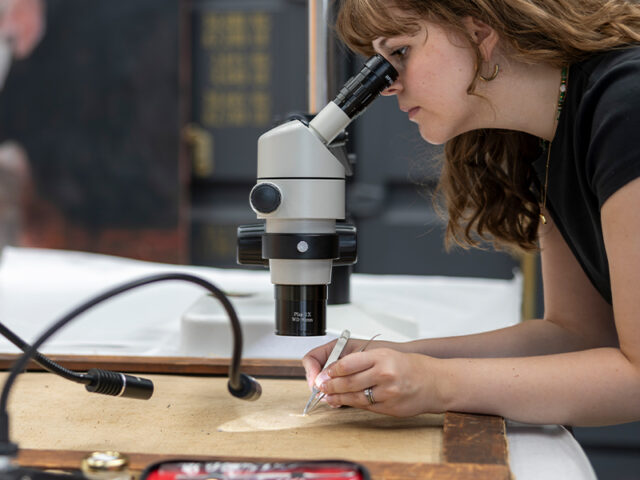
The trained eye now works beside documentary and technical evidence
Fine Art expertise still prizes repeated looking: handling of paint, drawing habits, palette, motifs, supports and changes across an artist's career. But modern attribution increasingly combines three kinds of evidence.
The strongest attribution emerges when the eye, the archive and the laboratory point in the same direction.
Signatures
A signature is evidence, not proof
Signatures feel authoritative because they appear to connect artist and object directly. Collectors learn that the relationship can be much less straightforward.
A genuine signature may be contemporary with the work or added later.
Dealers, studios or later owners can add names or inscriptions for identification or saleability.
A convincing signature cannot rescue an attribution unsupported by the object and surrounding evidence.
The important question is not simply "Is there a signature?" but "What is the relationship between this signature, this object and the evidence surrounding it?"
Rarity versus desirability
The rarest work is not necessarily the work collectors want most
A unique painting by an obscure amateur is rarer than a Picasso print from an edition of one hundred. That tells us almost nothing about relative desirability.
Fine Art value is constructed from artist, quality, period, subject, medium, scale, recognisability, historical importance, exhibition history, provenance, institutional validation and market fashion. Even within one artist's career, collectors develop hierarchies of pivotal periods and important bodies of work.
Who made it?
Is it a good example?
Recognisability
Sometimes "typical" can outperform rare
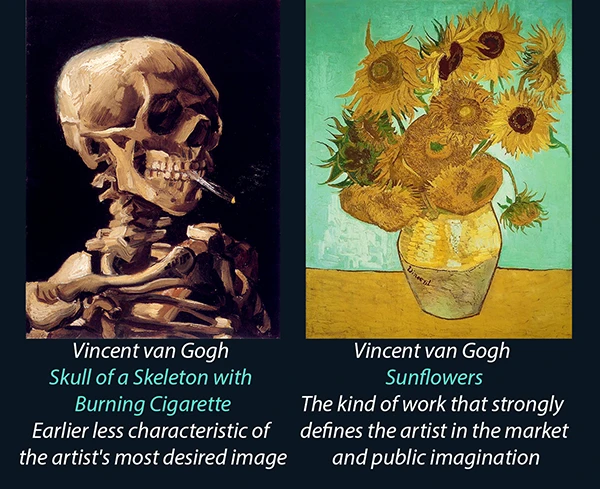
Collectors often pay premiums for works that embody their visual idea of an artist. An unusual work may be objectively scarcer but less desirable because it sits outside the period, subject or style for which the artist is most valued.
Museums, books, exhibitions and auction records help establish signature imagery. Collectors pursue it. Strong prices reinforce its apparent importance. The market can therefore reward rarity within recognisability rather than rarity alone.
Are collectors recognising an artist's most important work - or helping create the hierarchy that later appears natural?
Multiples
Same image. Same model. Different collectible.
Fine Art repeatedly defeats the assumption that visual sameness means collecting equivalence. Prints, sculpture and photography make the problem especially visible.
Prints
Collectors can distinguish state, impression, paper, watermark, margins, proofs, printer, publisher and lifetime versus posthumous printing. A number such as 17/100 is only part of the story.
Sculpture
Model, foundry, casting date, artist supervision, edition, mould history and patina can separate individual bronzes that all represent the same artistic work.
Photography
Image date and object date can diverge. A vintage print, later artist print and estate-authorised print may show the same image but occupy different collecting positions.
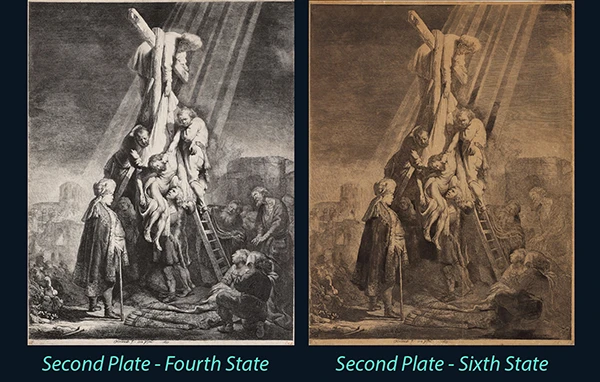
Rembrandt's The Descent from the Cross: Second Plate, shown here in its fourth and sixth states. The underlying composition remains recognisable, but changes to the same printing plate create distinct collectible states.
Visual identity and object identity can separate.
Two objects can look almost identical while carrying different production histories, authority and market meaning.
Provenance
Provenance is biography, evidence and liability at the same time
Few collecting worlds ask provenance to do so many jobs simultaneously. A distinguished ownership history can strengthen cultural significance and market desirability; a troubling gap can make a work unsaleable.
Identity
Where has this object been, and how does that history help define it?
Authenticity
Does its ownership and exhibition history support the claimed authorship?
Legal title
Did previous owners have legitimate title, and are there restitution or ownership risks?
Cultural biography
Was it part of an important collection, exhibition, archive or historical event?
Market desirability
Can an important provenance make one otherwise comparable work materially more desirable?
"From the collection of..." can become part of what the work means, not merely a footnote to ownership.
A provenance gap during a period of looting, forced sale or contested ownership can outweigh relatively minor physical defects.
The expanded object
Where does the artwork stop?
A newcomer may see the painting. A collector may see painting, frame, labels, inscriptions, stretcher, mounting, certificates, exhibition history and correspondence.
That does not make every associated component equally important. It means the boundary of the collectible can be wider than the image itself.
It may be later decoration - or original, artist-designed, historically documented, made by an important frame maker or visible in old exhibition photographs.
Labels, inventory numbers, stamps, inscriptions, canvas makers' marks and transport records can preserve evidence invisible from the front.
Certificates and artist instructions can be indispensable to the identity and future installation of some contemporary works.
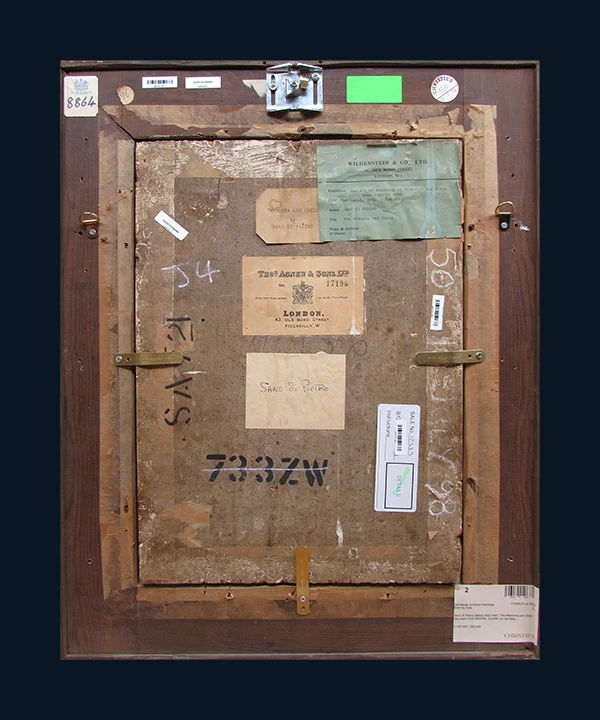
If removing a component changes what we can know about the artwork, was that component merely accessory?
Condition
Condition is interpreted, not reduced to a number
Fine Art has no universal equivalent of a comic grade or coin number. Condition is read diagnostically and in context: structural stability, visual integrity, ageing, restoration and historical evidence all matter.
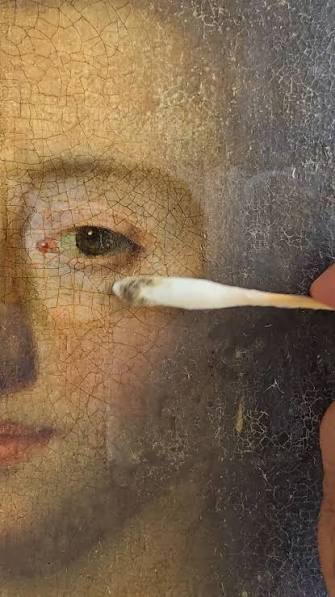
In older, scarce or fragile material, collectors may compare an object not with a theoretical mint example, but with what has realistically survived from the same period, material or production context.
Evidential condition
The visually imperfect work may be the historically more intact one
An old varnish can obscure colour while preserving evidence of historic treatment. Craquelure can reveal how a surface aged. Historic repairs, labels and mounting evidence can help reconstruct provenance and object history.
Aggressive improvement can therefore create a conflict between visual integrity and evidential integrity. A brighter, cleaner object is not automatically a more truthful one.
How coherent and readable does the work appear?
How much physical evidence of the object's history still survives?
Condition is not simply the amount of damage an artwork has suffered. It is the surviving relationship between original material, ageing, intervention and evidence.
Conservation
Conservation can reveal, preserve or rewrite
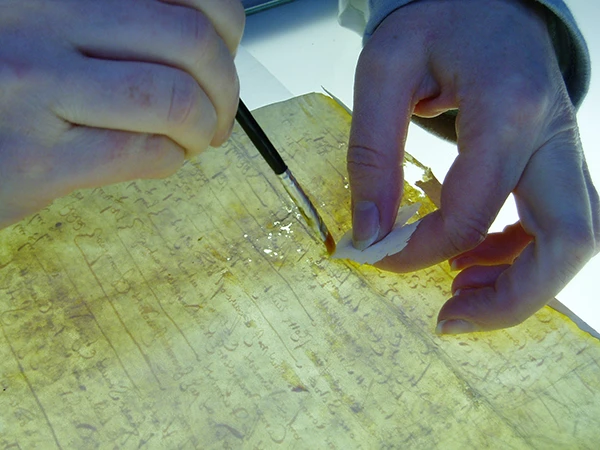
Conservation can stabilise flaking paint, mend torn canvas, consolidate fragile supports, remove damaging materials and restore visual coherence. It can save an artwork.
But Fine Art also carries deep memories of overcleaning, excessive relining, flattened impasto, speculative reconstruction and treatment that made damaged objects appear more complete than the surviving original justified.
The meaningful distinction is therefore not simply restored or unrestored, but what was done, why it was done, how much original material remains and how legible the intervention is.
Has this intervention preserved the work - or rewritten too much of its history?
Preservation
Living with art can damage the thing you love
Works on paper, watercolours, pastels, photographs and other sensitive media can be damaged by the very act of continuous display. Light exposure accumulates, colours can fade, paper can deteriorate and poor historic mounting can become acidic.
A collector may therefore own something because they love looking at it - and deliberately keep it out of view for much of its life. Works can be rotated, windows controlled and vulnerable objects stored in darkness.
Ownership does not automatically mean continuous access.
Authenticity
Authenticity does not always require material continuity
An authorised print, bronze cast, photograph printed later, conceptual work defined by instructions or software artwork migrated to new hardware can all be authentic while complicating ordinary ideas of originality.
What exactly must survive for the artwork to remain the same artwork?
The market
The market sells access as well as objects
The same work can move through very different systems of access, reputation, pricing and visibility depending on whether it is being sold for the first time, resold or institutionally validated.
Primary market
Artist to gallery to collector. Prices may be opaque, relationships matter and access can be controlled. Having enough money does not always mean being allowed to buy.
Secondary market
Auction, private dealer, broker and resale introduce public comparables, market momentum and the possibility of speculation or price instability.
Institutional layer
Museums, exhibitions, catalogues raisonnes, estates, foundations and scholarship can influence both cultural importance and market confidence.
In the primary market, having the money may not be enough. Access, reputation and the collector's intended behaviour can become part of the price of entry.
Auction literacy
The public result is not the whole transaction
Auction databases create an impression of transparency. Experienced collectors read the structure around the number before treating it as meaningful evidence of value.
A guide to expected bidding, not a guarantee of value.
The confidential minimum below which the work will not normally be sold.
The winning bid before buyer's premium and other charges.
The buyer's additional charge, which can make published totals look very different from hammer prices.
A minimum financial outcome can sometimes be arranged before the sale.
An unsold work can be as informative as a spectacular headline result.
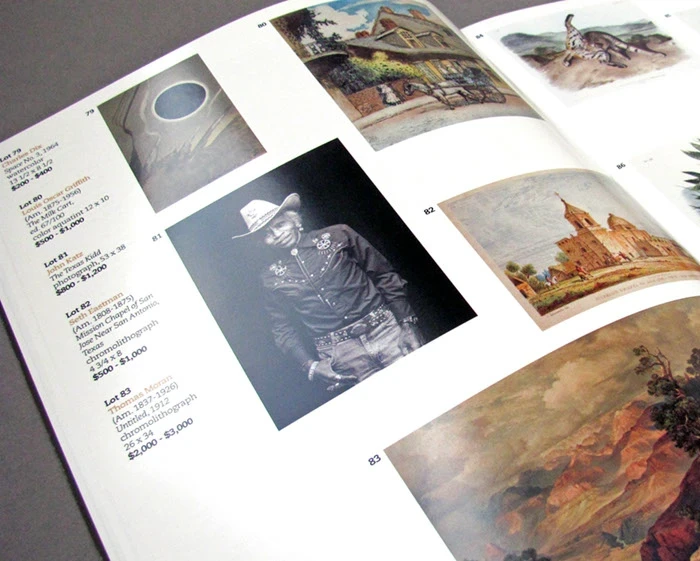
Public price information is data. It is not automatically knowledge.
Scholarship and value
Information can create value - or destroy it
A work can become more significant because it is newly attributed, rediscovered, included in a catalogue raisonne, connected to an important collection or identified as a study for a major work.
The reverse is equally powerful. If a work moves from "Claude Monet" to "Follower of Claude Monet", the physical painting has not changed. Its accepted market identity has.
Scholarship is not merely metadata about the collectible.
In Fine Art, the evidence surrounding a work can become part of the thing collectors believe they own.
Expertise
The trained collector learns by looking
Collectors learn through museums, exhibitions, auction previews, galleries, fairs, catalogues, catalogues raisonnes, studio visits, dealers, conservators, curators and physical comparison. Repeated exposure gradually builds visual memory.
A Picasso.
Which period? Which medium? Is it characteristic? How important is it within that period? Where is it published? Has it been exhibited? What is the provenance? What restoration has occurred? Why is it available now? What should be present that is missing?
Expertise is partly the ability to recognise evidence - and partly the ability to notice absence.
Discernment
Money buys art. It does not automatically buy judgement.
Collections can communicate wealth, taste, education, intellectual curiosity, cultural affiliation and social belonging. Serious collector cultures nevertheless distinguish financial capacity from discernment.
Buying an obvious blue-chip artist demonstrates capacity. Recognising an exceptional work before general market recognition communicates something different.
Discovery
Discernment becomes part of collector identity
Among insiders, the story "I bought this before almost anybody was paying attention" can carry more cultural weight than simply acquiring the most expensive available name.
An expensive collection and an intelligent collection are not automatically the same thing.
Patronage
Collectors can help create the history they collect
Fine Art collectors can move beyond acquisition into patronage. They may fund artists, commission work, lend to museums, sponsor exhibitions, finance publications, support catalogues raisonnes, sit on museum boards, create foundations or ultimately donate collections.
Acquires and selects.
Supports production and careers.
Shapes what institutions can show.
Can influence what enters public history.
At what point does collecting stop recording the canon and begin helping to create it?
Passion and speculation
"Price is not the point" can be both sincere and incomplete
Fine Art collectors speak about living with works, supporting artists, building knowledge and responding emotionally. Yet auction results, museum exhibitions, gallery representation, scholarship and market demand continually influence one another.
No one part of the system completely controls the others. None is entirely independent.
Where collectors disagree
The arguments reveal what Fine Art collecting is really about
Connoisseurship or science?
Conservation or patina?
Cultural stewardship or private ownership?
Restitution or settled ownership?
Passion or speculation?
Collecting Intelligence
Questions that expose judgement
The emotional engine
Collections are partly designed and partly autobiographical
Collectors talk about falling in love with a work, returning repeatedly to see it, regretting the one that got away and occasionally buying against their own rules.
An anomalous acquisition can eventually create an entirely new branch of the collection.
Rules organise collections. Exceptions reveal the collector.
Nostalgia and identity
Fine Art's emotional drivers are not always nostalgic
Nostalgia certainly exists, but it is often less dominant than in comics, toys, trading cards or entertainment collecting. Aesthetic revelation, intellectual discovery, historical connection, identity, cultural belonging, patronage and the desire to live alongside particular ideas or images can be stronger drivers.
Nostalgia becomes more visible at the boundaries - illustration art, street culture, photography, original comic art, music-related imagery, popular prints and entertainment art.
When collecting worlds collide
The boundary of Fine Art has never been stable
Photography, prints, artist books, design, furniture, ceramics, textiles, fashion, manuscripts, street culture, comics, digital work and architecture can all cross into Fine Art depending on maker, context and collecting intent.
When does a functional, documentary or reproducible object become Fine Art?
Worlds within a world
Fine Art contains several collecting cultures inside itself
They differ enormously in material, market and specialist language. What connects them is the persistent negotiation between object, authorship, evidence, context and accepted identity.
Old Masters
Attribution, workshops, connoisseurship, technical analysis and provenance form an entire specialist culture.
Prints & Editions
States, proofs, impressions, paper, printers, publishers and catalogues raisonnes justify a world of their own.
Fine Art Photography
Image date, print date, process, edition and photographic conservation create a distinct collecting grammar.
Sculpture & Bronzes
Models, foundries, casting dates, editions, posthumous casts and patination raise their own authenticity questions.
Contemporary Art
Primary-market allocation, galleries, living artists, installations and speculative cycles create a markedly different environment.
Digital & Time-Based Art
Ownership, replacement, migration, software and certificates challenge the assumption that identity lives in one physical object.
Collecting Intelligence
Judgement lives between the catalogue and the object
Fine Art is particularly suited to conversations with collectors, dealers, conservators, scholars and curators because so much expertise depends upon accumulated looking and context.
Explore Collecting Intelligence →Knowledge Center
Go deeper into the practices behind the object
Condition, provenance, authentication, preservation, restoration and valuation become more useful when separated from the collecting culture that gives them context.
Explore the Knowledge Center →Fine Art as a Collecting World