
Collecting World
Ephemera
It was made to disappear.
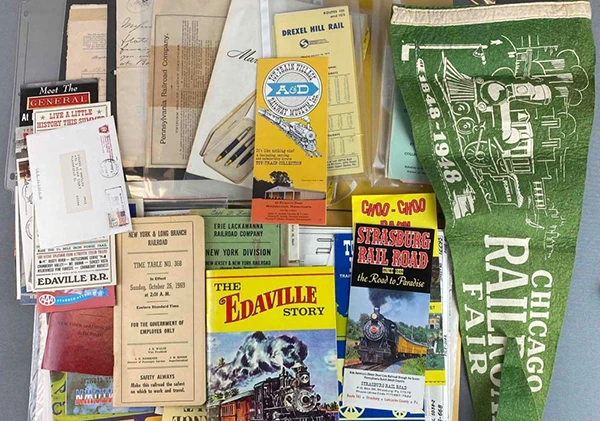
Tickets, menus, timetables, leaflets, labels, receipts, programmes, catalogues and handbills were normally produced to perform a temporary job. They admitted, advertised, instructed, persuaded, recorded or informed - and then they were expected to be thrown away.
Collectors reverse that intention. What survives can become evidence of commerce, taste, politics, travel, entertainment, design and ordinary lives, sometimes preserving information that survives nowhere else.
The defining paradox
Survival is part of the object's identity
Many collecting worlds begin with objects intended to endure. Ephemera begins with the opposite assumption. Its material was routinely cheap, temporary, handled, folded, pinned up, written on and discarded.
That means rarity, condition and provenance cannot be understood without asking how this particular piece escaped the disposal process that removed almost everything around it.
Ephemera becomes collectible precisely because it survived a disposal process it was never designed to survive.
A porous world
The boundary is deliberately fuzzy
There is no universally agreed inventory of ephemera. A railway ticket sits comfortably inside the category. Packaging, postcards, souvenirs, photographs, badges, cigarette cards and substantial periodicals can sit closer to the edges or migrate into collecting worlds of their own.
The ambiguity is not a weakness. Ephemera often occupies the gaps between books, art, manuscripts, advertising, design, archives and conventional antiques. Its permeability is part of how the world works.
Was this object created for a short-lived practical purpose - and does its survival now tell us something beyond that original purpose?
Collector behaviour
Serious collectors rarely collect "ephemera" in general
They construct a narrower universe. The same paper object can belong to a form collection, a subject collection, a local history collection, a design collection or an event archive depending on the question the collector is trying to answer.
Form
Tickets, menus, labels, programmes, timetables, trade cards, letterheads, catalogues or another document type become the boundary.
Subject
Railways, brewing, magic, fashion, aviation, sport, punk, politics or a thousand other subjects make the paper form secondary.
Place
A town, high street, station, hotel, factory or vanished shop can turn otherwise modest scraps into uniquely local evidence.
Event
The collector reconstructs a concert, campaign, coronation, exhibition, dinner, sporting fixture or protest through its surviving paper trail.
Design and print
Typography, letterpress, lithography, chromolithography, engraving, paper stock, printer and illustration become the collecting subject.
Contemporary evidence
Some collectors deliberately save today's receipts, flyers and disposable print because retrospective recovery may be impossible later.
An elaborate Victorian trade card may be less important to a local historian than an ugly receipt proving that one obscure shop existed on one street on one particular day.
Object versus evidence
Beauty and importance are not the same value system
Some ephemera is collected because it is beautiful: chromolithographed advertising, striking travel graphics, elegant menus, typography, illustration and celebrated design.
Other pieces matter because they are specific. A timetable can establish a route. A catalogue can preserve the only image of a product. An election leaflet can capture rhetoric missing from official records. A receipt can date a business, address and transaction with almost forensic precision.
Visual quality, famous designer, rarity, condition, colour, printing and decorative appeal.
Information, specificity, context, uniqueness, association and the ability to prove that something happened or existed.
This 1966 Studio Jeunesse invoice is visually little more than routine commercial paperwork: a floor stand, cassette tapes and flashbulbs. Its significance changes because the customer recorded at the top is J. Lennon. Nothing about the form itself was designed for preservation or display. What survives is a fragment of an ordinary transaction attached to an extraordinary biography.
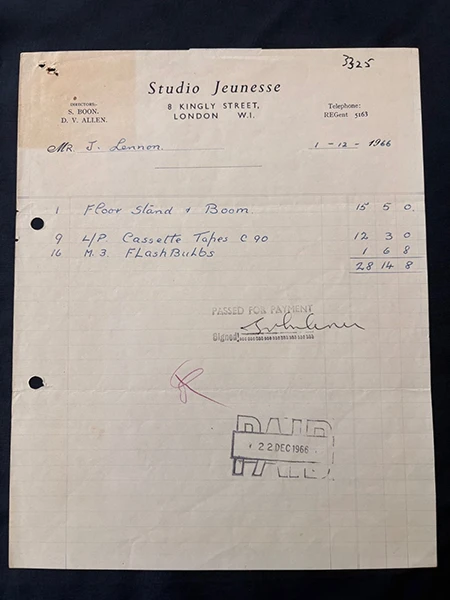
The collector is often preserving not the important object from history, but the ordinary object around which history happened.
Survival rarity
Millions printed can still become almost unobtainable
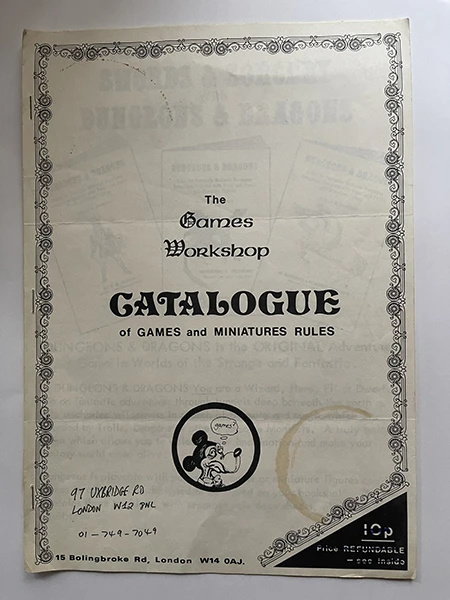
Ephemera forces collectors to separate production quantity from survival. Election leaflets, tickets or flyers may have been printed in huge numbers and then almost universally discarded. By contrast, attractive trade cards were often saved in albums and may survive much more commonly than their age suggests.
Age does not prove rarity. Print run does not prove availability. Survival is its own history.
Condition
Damage can also be evidence
Ephemera still suffers ordinary paper defects: foxing, toning, tears, fading, staining, brittleness, pinholes, water damage, tape, glue, insect damage and loss. But condition becomes more complicated when an object was designed to be used.
A punched ticket records travel. A folded programme may show that it was carried at the event. A handwritten price correction can establish how the document functioned. An unused example may be visually cleaner while a used example is historically more complete.
Deterioration may be expected, but severity and relationship to the paper stock matter.
A flaw on one object can be evidence of ordinary use on another.
A used ticket may be historically richer than an unused survivor.
An annotation can be damage, provenance, event evidence or all three at once.
Old repairs and mounts can stain, embrittle or remove original surface when disturbed.
Apparently neat edges may conceal missing information, printers' marks, margins or original format.
Is this mark deterioration - or surviving evidence of what the object did?
Completeness
The collector often has to invent the universe before completing it
There is no meaningful way to collect all ephemera, and many narrow subjects lack authoritative catalogues. A collector may therefore become the person who discovers what was issued, maps the chronology and decides where the boundary should sit.
Every known item in a documented list.
An uninterrupted chronological sequence.
Every wording, colour, printer, format or production change known.
Enough examples to map the important forms without pretending every object can be known.
Ticket, programme, invitation, advertisement, map, menu, correspondence and other evidence around one occasion.
A group remains meaningful because the objects survived together and explain one another.
In ephemera, research does not merely help fill the checklist. Research may create the checklist.
Relational completeness
Sometimes the collection is the relationship between the pieces
A ticket, programme, invitation, photograph and hotel bill may be individually ordinary. Retained together, they can reconstruct one person's experience of an event with a precision none of the objects carries alone.
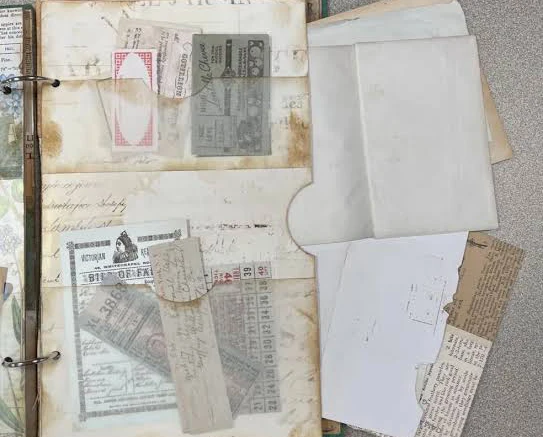
Scrapbooks, albums, campaign files and family archives make this especially visible. Breaking the group apart can improve the saleability of each item while destroying evidence of why the objects belonged together.
Provenance asks who held an object. Association can ask what other objects it historically sat beside. Ephemera makes that second relationship unusually important.
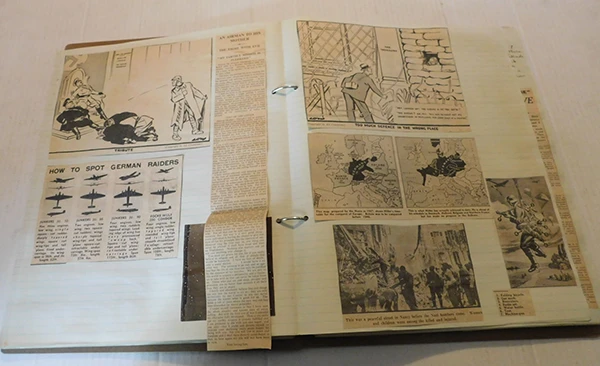
Is the history contained in each object - or in the fact that these objects survived together?
Variants
Tiny production changes can reconstruct a chronology
Two trade cards, leaflets or timetables may look identical until a specialist notices a changed address, printer, colour, price or line of wording. Some differences represent deliberate issues. Others expose separate production runs or a business changing around the printed object.
What looks like duplicate material can become a sequence once several examples are compared side by side.
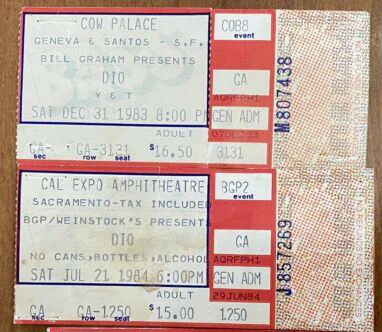
In the image you see what at first glance, look to be the same concert tickets for rock legend Dio. On further inspection you can see they are different years, locations, promoters and one ticket includes the support act Y&T.
Authenticity
Authenticity usually lives in production history
Most low-value everyday ephemera does not justify sophisticated forgery. But authenticity becomes far more important where material intersects with famous events, politics, entertainment, advertising, design or notable people.
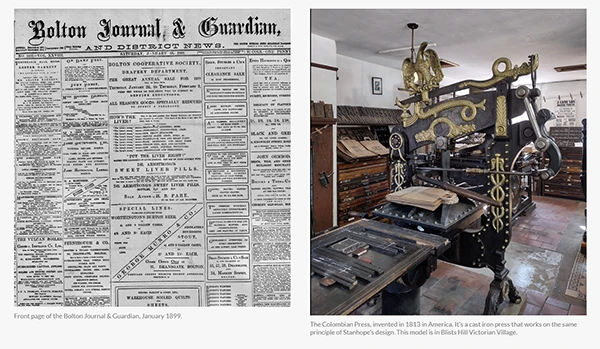
Serious judgement may come from paper, ink, typography, process, printer, format and context rather than a universal third-party authentication system.
An expert may identify how an object was printed before deciding what the subject printed on it claims to be.
Restoration and intervention
Improvement can destroy the reason an object matters
Surface cleaning, flattening, washing, deacidification, tape removal, Japanese-paper repair and careful loss support can stabilise fragile material. Professional treatment may be essential where deterioration threatens the object.
But dirt, fingerprints, annotations, folds and old mounting can also be historical evidence. Cosmetic improvement is therefore never neutral. The correct question is not simply whether a piece can be made cleaner or flatter.
What information or originality will be lost if I improve this?
Minor damage may be better stabilised through appropriate housing than treated for visual perfection.
Linen backing and restoration can be normal in vintage poster markets, but that convention should not be imported uncritically into all ephemera.
Preservation
"Paper" is not a conservation category
Acid-free and lignin-free housing is a good starting point, but ephemera can combine acidic paper, photographs, unstable colourants, pressure-sensitive tape, coated stock, inks, ribbons, metal fasteners and other materials with conflicting preservation needs.
Rag, wood pulp, coated paper and other stocks age differently.
Some pigments and printing processes are far more light-sensitive than others.
Tape, pressure-sensitive labels, scrapbook glue and mounting materials can become the dominant conservation problem.
Photographic ephemera may require different humidity, light and enclosure choices from ordinary print.
Metal fasteners, ribbons, samples, textile swatches and mixed-media components complicate storage.
The material was often manufactured cheaply because nobody expected it to survive. The collector inherits that engineering decision decades later.
Rarity versus desirability
Unique does not automatically mean valuable
An obscure local invoice may be the only surviving example and still attract little commercial demand. A widely distributed poster or ticket connected to a major designer, event, destination or cultural movement may be far more desirable despite having many known survivors.
How difficult is it actually to find?
How many collectors care about this topic, place or event?
Does the object carry graphic or decorative power?
Does it document a precise person, place, date or action?
Does the object connect to a meaningful event or change?
What survived, and what was lost or altered?
Does association materially change the object's meaning?
Has collector attention shifted toward the subject?
Rarity can be accidental. Desirability has to be socially created.
Provenance
Provenance can move from irrelevant to transformative
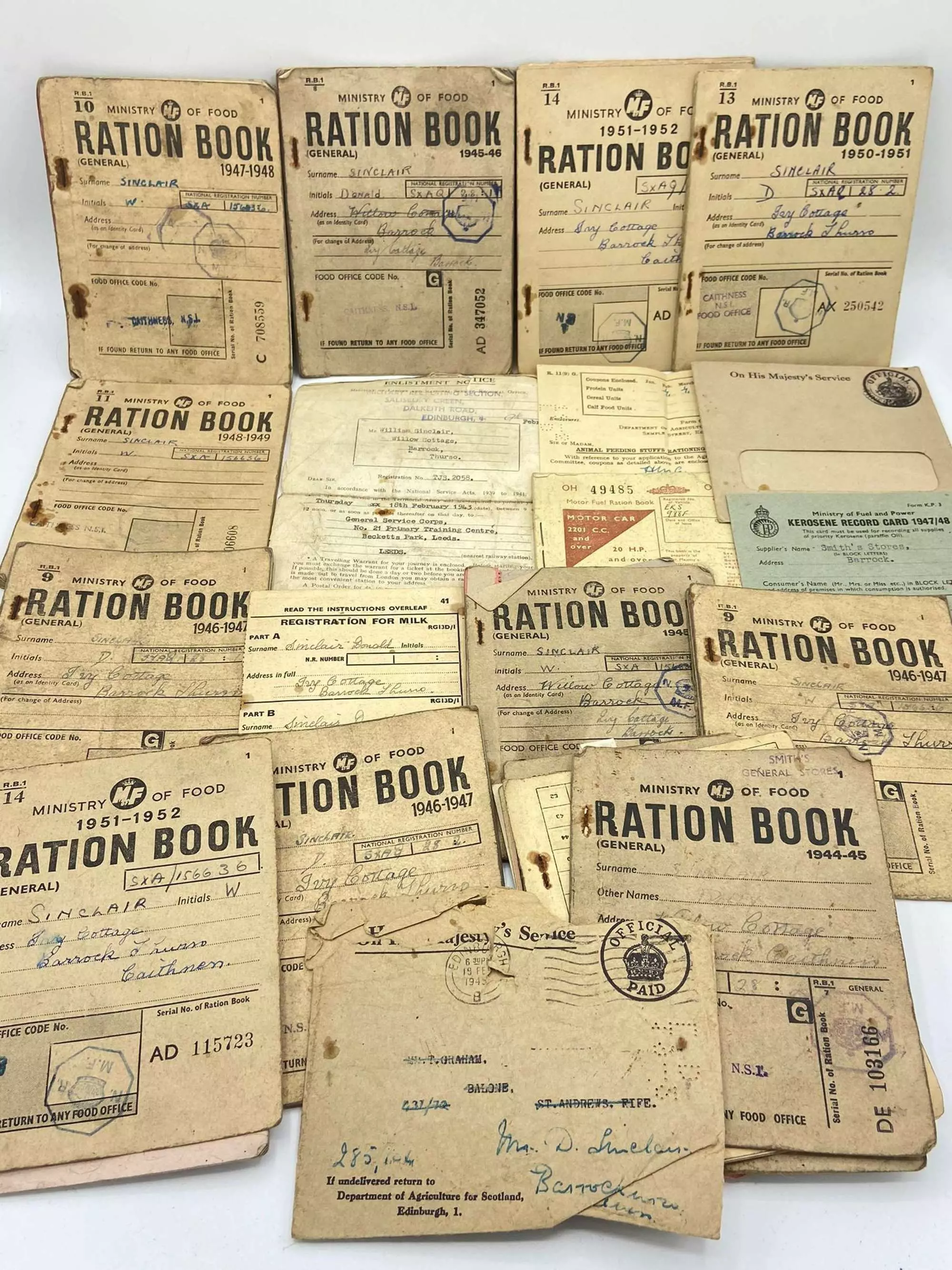
The ownership history of a common unused trade card may matter very little. The same cannot be said of a theatre programme carried and annotated by a performer, campaign literature retained by an activist, or travel documents kept together by the person who made the journey.
Ephemera is unusually fertile ground for association because it so often survives inside personal records. The physical object may be ordinary while its relationship to a person or event changes its evidential identity.
Generic programme, leaflet, menu or ticket with no surviving association.
The copy with annotations, correspondence, related photographs or an intact archival context.
Grading and description
The field resists one universal number
Ephemera has no universal slab-and-number system. Posters have developed their own specialist grading and restoration conventions, while adjacent areas such as postcards, autographs, sports tickets, stamps or currency may use separate authentication structures. General ephemera remains heavily descriptive.
When condition can include meaningful use, a single universal grade would often conceal more than it explains.
The market
Discovery still matters because the market remains decentralised
Ephemera can move from a few pounds in a mixed box to thousands in a specialist sale. There is no universal price guide because the field combines too many forms, subjects, places and markets for one hierarchy to make sense.
Mixed paper, subject files and inexpensive stock still reward patient looking and specialist recognition.
Ephemera overlaps with rare books, maps, antiques, postcards, local history and specialist paper fairs.
Searchability exposes more material while poor descriptions can leave discoveries hiding in plain sight.
Important posters, political material, entertainment ephemera and historic documents can migrate into high-value adjacent markets.
Family papers, company records and mixed boxes may preserve context that disappears once items are split.
The expert advantage is often not access to a better price guide. It is knowing what an under-described object actually is.
Expertise
Ephemera knowledge develops sideways
A railway collector learns companies, routes and stations. A menu collector learns hotels, restaurants and dining conventions. A design collector learns printers and processes. A local-history collector learns addresses, businesses and ownership changes.
Mature collectors therefore become hybrids: collector, social historian, bibliographer, archivist and detective. The paper is only one route into the knowledge.
An old menu.
Which establishment? Which address? Which date? Who printed it? Is the paper right? Was it generic or event-specific? Was it used? Has anything been removed? Is the fold original? Is the illustration attributable? Was it part of a larger archive? Why did this particular piece survive?
Ordinary lives
The field recovers what formal history often fails to preserve
Official archives naturally privilege institutions, decisions and records deemed important enough to retain. Ephemera can capture the opposite: everyday prices, local businesses, entertainment, campaign rhetoric, commercial language, travel, food, clubs, organisations and the routines of ordinary people.
Some of the most historically valuable ephemera is valuable precisely because nobody at the time thought it was history.
Contemporary ephemera
Today's rubbish is tomorrow's archive
Some modern collectors and institutions now save mundane material before it disappears. That changes the traditional survival mechanism: rarity is no longer produced only by accidental retention after mass disposal.
The collector can deliberately recognise evidence before the culture around it realises that evidence will matter.
If a collector deliberately saves every disposable object, is it still ephemera - or has the act of preservation changed its nature?
The digital problem
The disposable object is becoming a temporary digital state
Airline tickets become QR codes. Restaurant menus become websites. Concert tickets live inside apps. Invitations arrive by email. Shop receipts go electronic. Campaigning moves through social platforms. The evidence still exists, but not necessarily as a physical object that can be put in a drawer and rediscovered fifty years later.
Survival is often accidental, material and visible. The object itself carries folds, wear, ink, annotations and use.
Survival depends on formats, platforms, permissions, captures, software and preservation systems that may fail without leaving a physical residue.
What happens to ephemera collecting when the disposable object no longer exists as an object?
Worlds within a world
Ephemera behaves like connective tissue between collecting categories
Its cross-category character is part of its identity, but several areas are large enough to support their own specialist cultures and eventually their own Collecting World pages.
Advertising and commercial ephemera
Trade cards, catalogues, labels, packaging, letterheads, invoices and point-of-sale material.
Posters and graphic ephemera
Designers, printers, printing processes, restoration conventions and a developed auction market.
Political and campaigning ephemera
Elections, protest movements, propaganda, underground publishing and activist material.
Transport and travel
Tickets, timetables, luggage labels, route maps, airline literature, hotel material and tourism.
Entertainment and performance
Theatre, cinema, circus, concerts, festivals, nightlife and the paper around live experience.
Menus and hospitality
Restaurants, hotels, ships, airlines, events, design, social history and changing taste.
Collecting Intelligence
Questions that expose collector judgement
The emotional engine
Nostalgia often begins the collection, but curiosity makes it serious
Old travel brochures, shop catalogues, cinema programmes and advertising can create an immediate emotional connection with a vanished world. Experienced collectors often move beyond recognition into questions about language, prices, printing, representation, addresses, institutions and change over time.
Recognition - nostalgia - curiosity - research - collecting system.
Why discovery remains alive
The field still contains material nobody has properly mapped
No universal registry, census, price guide or master catalogue contains the world. Large quantities remain in houses, archives, dealer boxes and mixed lots. Local histories are under-researched. Variants are undocumented. Survival rates are uncertain. That makes expertise unusually productive.
A serious ephemera collector can still discover not merely a rare object, but a fact, variant, chronology or relationship that nobody had documented before.
Collecting Intelligence
The interesting judgement sits between object and context
Ephemera is particularly suited to interviews with collectors, archivists, dealers, local historians, designers and specialist researchers because so much expertise is embedded in knowing why an apparently ordinary object matters.
Explore Collecting Intelligence →Knowledge Center
Go deeper into the practices behind the material
Condition, preservation, provenance, restoration, authenticity, variants and valuation become especially useful when they are interpreted against the temporary purpose for which an ephemeral object was originally made.
Explore the Knowledge Center →Ephemera as a Collecting World