
Collecting Worlds · Comics
A story to read. An artefact to preserve. A market object to classify.
Comics collecting begins with something deceptively simple: a mass-produced paper object made to be read, handled, traded and often discarded. Collector culture then adds layers of meaning - printing, variant, condition, completeness, restoration, signature, provenance, certification and historical significance.
The result is a collecting world in which the same issue can be a childhood memory, a missing run number, a first appearance, a 9.8 census entry, a favourite cover or simply the copy someone refuses to replace.
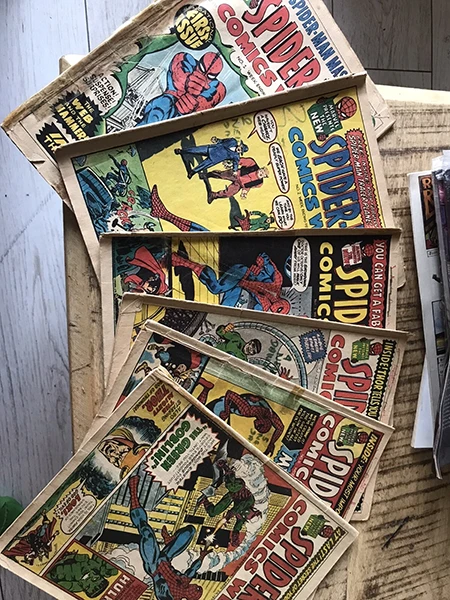
The collecting world
The fundamental unit is not simply “a comic”
An outsider may see a title and issue number. A specialist can see a chain of bibliographic, physical and market distinctions. Those distinctions are not academic decoration; they determine whether two superficially similar copies are collector-equivalent.
Identity is bibliographic, physical and market-created at the same time.
Collector behaviour
People can own the same comics without collecting the same thing
Comics collecting is fragmented less by subject than by behaviour. The organising principle might be completion, significance, condition, creator, scarcity, nostalgia or accessibility.
Run builders
The satisfaction is in closing gaps. A low-value issue can matter enormously because it completes a sequence, creator run or personally defined span.
Key hunters
The collection concentrates around first appearances, landmark covers, significant stories and issues the market has collectively decided matter.
High-grade collectors
Condition becomes part of identity. Two copies of the same issue can occupy very different collector and market positions because of grade and eye appeal.
Variant collectors
Printing, distribution, regional and deliberately engineered cover differences can become collecting targets in their own right.
Creator collectors
Writers, artists, cover artists, signatures and original art can matter more than title continuity. The person becomes the organising principle.
Reader-collectors
The comic remains a readable cultural work. Ownership includes access, memory and use rather than only preservation and market comparability.
A comic can be a story, an artefact and an asset at the same time - but different collectors rank those identities differently.
The central divide
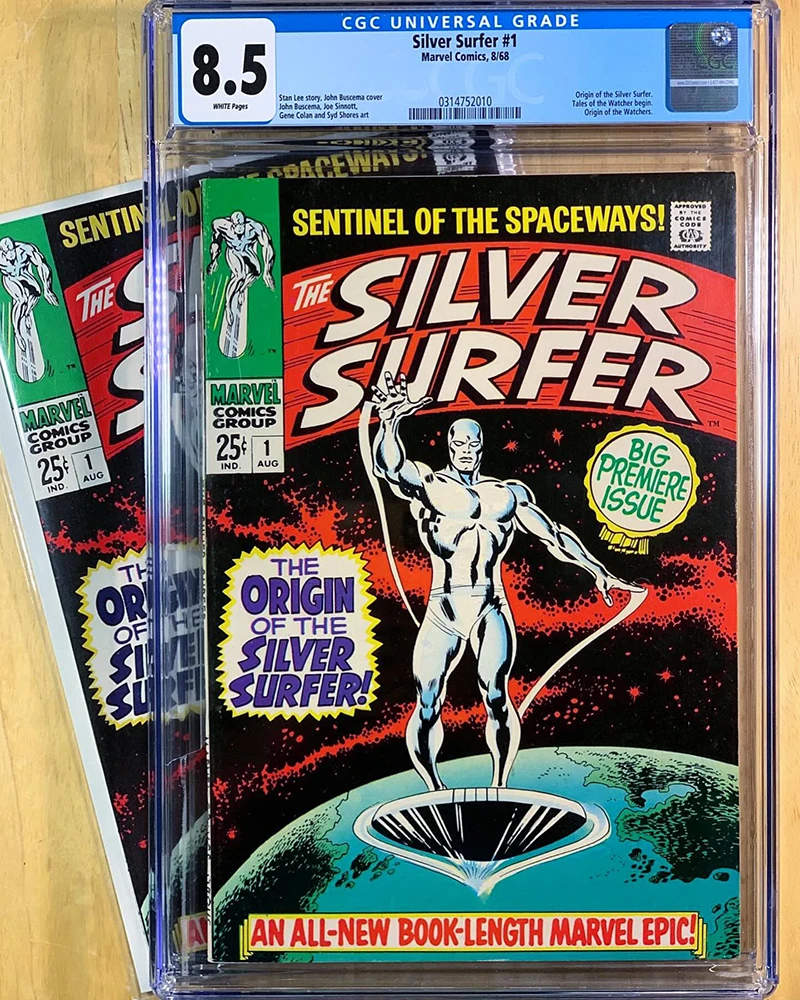
Raw versus slabbed
Third-party grading solved real problems: inconsistent seller grading, undisclosed restoration, signature uncertainty and the difficulty of comparing expensive copies remotely. But it also created something culturally new - a comic that can be traded without being readable.
For one collector, the slab is authentication, protection and market confidence. For another, it turns literature into a sealed display object. Both positions are coherent because they begin with different definitions of what the comic fundamentally is.
Ownership includes access, tactile experience, page turning, smell, adverts, letters pages and the material experience of reading the original object.
The important original can be protected while the story is read through a reprint or digital copy. Certification becomes part of stewardship and trade.
Taxonomy becomes economics
One panel can change the market identity of an entire issue
“First appearance”, “first full appearance”, “cameo”, “newsstand”, “price variant”, “first printing” and similar labels are not neutral language. Collector communities create and debate these classifications, and the market can attach enormous financial consequences to them.
The market can monetise taxonomy.
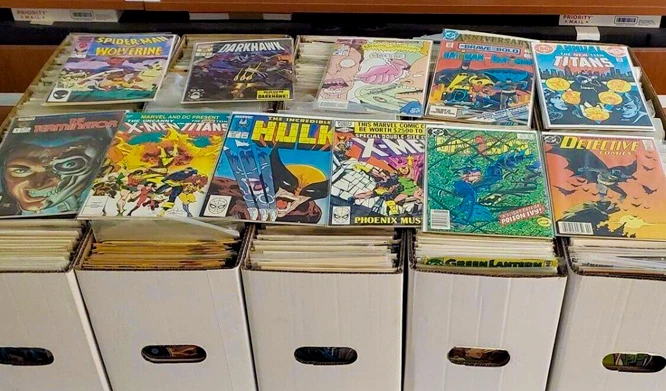
Completeness
“Complete” can describe the comic - or the collector’s universe
Comics have unusually strong completeness questions at both object and collection level. A book can be externally attractive but incomplete; a collection can be complete only because its owner has first declared what counts.
Completeness can be hidden inside
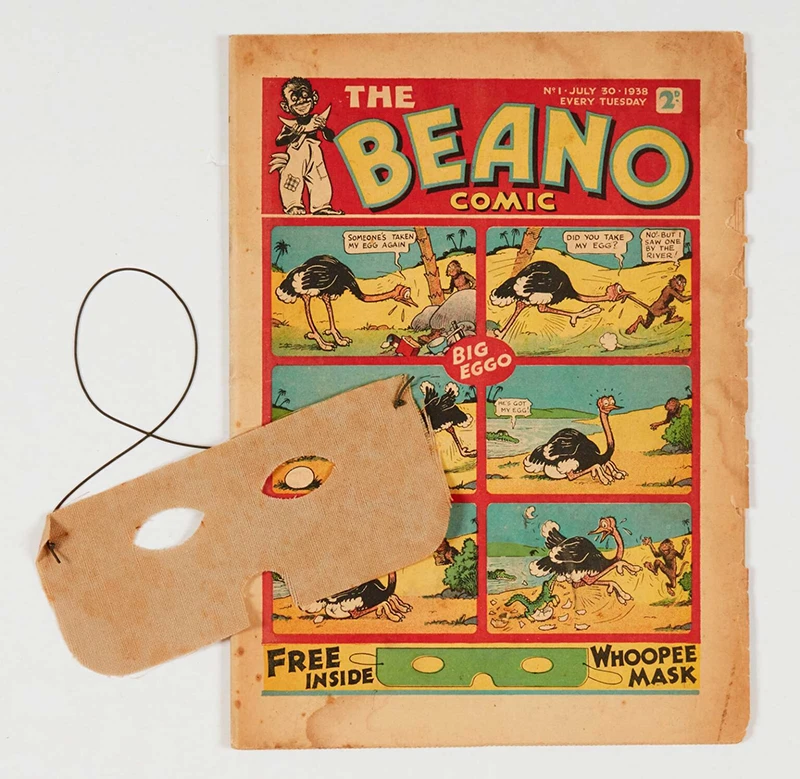
Covers, centre wraps, coupons, inserts, posters, stamps and free gifts can determine whether an apparently intact comic is materially complete.
The owner defines the boundary
“Every numbered issue”, “every first printing”, “every cover”, “every appearance”, “every issue before the Comics Code” - each can be a coherent completeness rule.
Condition literacy
A grade is a summary, not the object
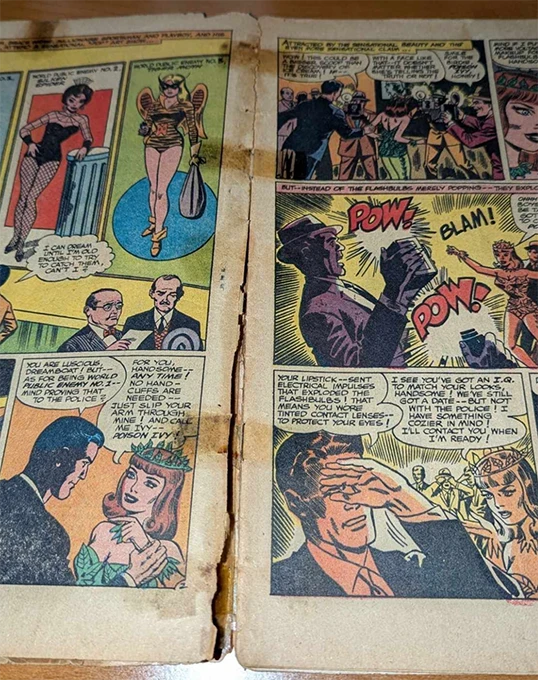
Comics have developed a highly formal condition culture, but experienced collectors still judge the defects underneath the number. Two comics in the same grade can present very differently.
Structure
Surface
Paper
Manufacture
Intervention
Eye appeal
Buy the book, not the grade.
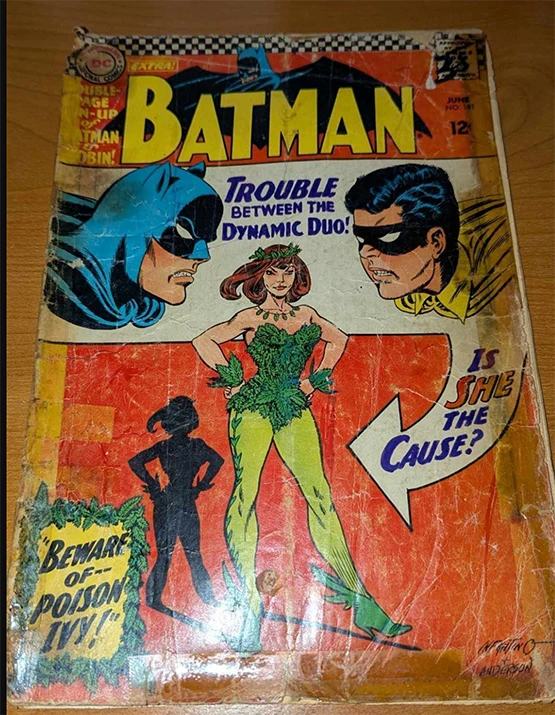
Intervention
Restoration, conservation and pressing form a moral spectrum
Comics have developed unusually specific conventions around intervention. Colour touch, trimming, piece replacement, pressing, dry cleaning and conservation do not occupy the same cultural category - even when all are intended to improve or stabilise the object.
Has the object been preserved, improved, or materially changed?
Collector culture does not place every intervention at the same point on this spectrum, and the boundary can move with purpose, disclosure and severity.
Scarcity and desire
Rare is not the same thing as wanted
Comics expose several different kinds of rarity: absolute rarity, condition rarity, variant rarity, market rarity and perceived rarity. None automatically creates desirability.
Organic scarcity → engineered scarcity
Created collectability is not the same thing as future desirability.
A scarce variant still needs a durable reason for collectors to care.
Where collectors disagree
The arguments are part of the culture
These are not problems Collectaneum needs to settle. They are useful because they reveal what different collectors think the object is for.
Read it or preserve it?
Keys or runs?
Variants or manufactured FOMO?
Improve it or leave it alone?
Beyond the US superhero model
Comics collecting is not one globally uniform market
American grading, key-issue and variant language is enormously influential, but British weeklies, annuals and free gifts, Franco-Belgian albums, manga publishing and regional editions create materially different collecting traditions.
A Collecting World should make those boundaries visible rather than quietly treating Marvel and DC collecting as the universal definition of comics.
When collecting worlds collide
Comics rarely stay inside comics
A collector may follow a character, creator, visual language or cultural movement across object categories. That makes comics one of the clearest demonstrations that collecting worlds overlap rather than sit neatly in folders.
Original comic art
The mass-produced comic leads directly to a unique production artefact: the original page or cover.
Books & bibliography
Printings, editions, publisher evidence, completeness and paper history overlap strongly with book collecting.
Trading cards
Grading, population reports, slabs, variants and speculation increasingly share market language.
Film & television
Screen adaptation can transform demand for decades-old first appearances and characters.
Autographs
Signatures turn writing from a condition defect into authenticated creator provenance.
Social history
Underground, political, war, romance and minority publishing can shift the object from fandom into documentary evidence.
Collector intelligence
Questions that expose judgement
The richest collector conversations are rarely about the most expensive object. They are about the decisions a collector has learned to make.
The deeper idea
Mass culture produces singular objects
Comics begin as reproducible publications. Collectors then progressively individualise them through printing, variant, condition, page quality, restoration, signature, provenance and certification.
At the extreme, the market no longer treats two nominally identical copies as equivalent.
That is perhaps the strongest Collectaneum lesson in comics: the physical object matters, but so does the web of evidence, judgement and meaning attached to that particular copy.
Possible future explorations
Some parts of this world are large enough to become worlds of their own
Original Comic Art
Unique art, creator hierarchy, provenance and a mature high-end market.
British Comics
Weeklies, annuals, free gifts, publisher mergers and distinctly British nostalgia.
Underground & Alternative Comix
Counterculture, censorship, small press and historically different distribution.
Comic Grading & Restoration
Slabbing, pressing, conservation and condition culture across paper collectibles.
Explore further
The world is larger than this page
This page is an orientation to how comics collecting behaves, not an attempt to catalogue every era, publisher, character, variant or national tradition. Future explorations can descend where a collecting culture has enough depth to deserve its own voice.