
Coins
Money is designed to be interchangeable. Collectors spend years proving that it is not.
Date, mint, die, strike, surface, toning, error, provenance and certification can turn two apparently equivalent pieces of currency into radically different collectibles.
At its deepest, numismatics is the study of how a mass-produced monetary object becomes individually legible.
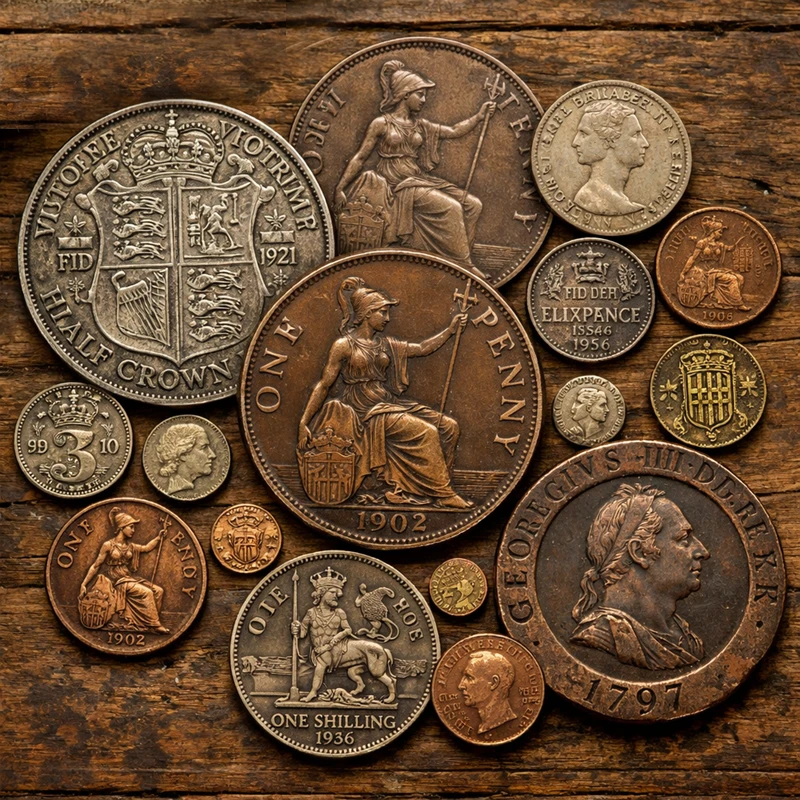
The denomination is only the beginning of identity
Currency begins by suppressing individuality. A pound, dollar, denarius or drachm is supposed to substitute for another of the same value.
Collecting reverses that logic. The serious collector learns to see issuing authority, mint, metal, weight standard, edge, finish, die, variety, strike, surface history and eventually the evidence of one particular specimen.
Expertise begins when the collector stops seeing "a coin" and starts seeing a particular production event.
A collection can become deeper almost without limit
Coin collecting has unusually elastic boundaries. A broad collection of British pennies can become pennies by monarch, then every date, then every mint, then recognised varieties, then die pairings and die states. Scope is not simply an inventory decision - it becomes part of collector identity.
One of each required date and mintmark - apparently simple until key dates and varieties intervene.
One representative example of each meaningful design or coinage type, with constant debate about what counts as a new type.
A historical sequence built around monarchs, emperors, republics, dynasties or issuing states.
A place becomes the organising idea - its output, changing technology, marks and production culture.
Sovereigns, crowns, pennies, dollars, thalers, sestertii or another single monetary form can sustain a lifetime of depth.
Animals, ships, architecture, saints, military imagery, mythology or another visual idea can cross centuries and monetary systems.
The accident itself is the collectible - off-centre strikes, brockages, wrong planchets and other failures of manufacture.
The collector moves below the issue level into repeatable production differences, die pairings and die states.
There is no natural stopping point. Every rule for inclusion can expose another meaningful level beneath it.
A complete collection depends on who defines the universe
A set can be date-complete, date-and-mint complete, type complete, monarch complete, variety complete or complete according to a certification registry. All can be legitimate. None is neutral.
Scholarship can even make a finished collection unfinished. A newly recognised variety, die pairing or subtype creates a new slot without changing any of the coins already owned.
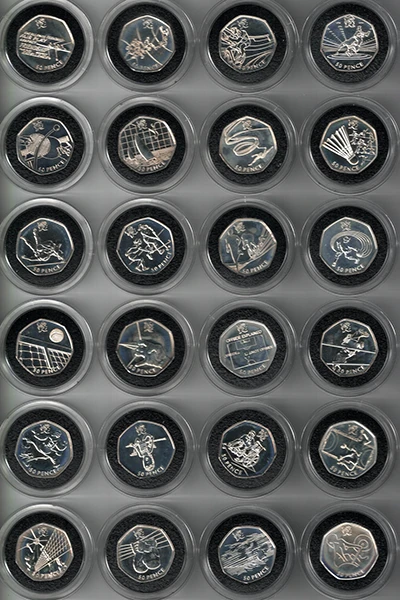
What are the stoppers before you start?
The number is not the coin
Modern grading has pushed coins further toward numerical condition than almost any other traditional collecting world. Yet the number compresses several different judgements that can disagree with one another.
What circulation removed.
How completely the dies transferred the design in the first place.
The optical effect created by metal flow during striking - not simply brightness.
Marks, hairlines, scratches, corrosion, fingerprints, spots and other surviving evidence.
Ageing can be neutral, destructive or highly desirable depending on appearance and presumed origin.
The overall visual judgement that resists complete standardisation.
Two coins can carry the same grade and still be very different collecting objects.
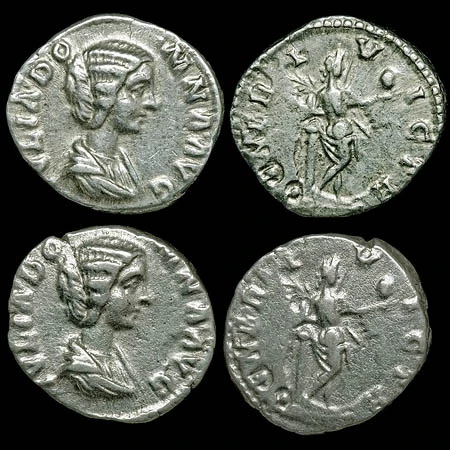
Strike is not wear. Brightness is not lustre.
These are basic insider distinctions because they separate what happened at manufacture from what happened later. A weakly struck coin may have left the mint with incomplete detail. A polished coin may look bright while its original lustre has been destroyed.
Surface marks are also relational. A scratch across a portrait can be far more distracting than a mark of similar size hidden in a busy reverse. Condition is therefore partly technical and partly visual hierarchy.
Strike, metal flow, lustre breaks, cabinet friction, hairlines, old marks, toning pattern, surface stability and whether the apparent problem belongs to manufacture, circulation, storage or intervention.
A technically lower-grade coin can be the better collection coin if its strike, colour, surface quality and overall visual balance are more convincing.
Ancients destabilise almost every neat modern rule
Hand-cut dies, individually prepared blanks, manual striking, uncertain centring, burial, patina and centuries of intervention make a single wear-based hierarchy inadequate. Style, strike, surface and centring can matter independently.
A lightly worn coin with poor centring and an unattractive die may be less desirable than a more worn example with a powerful portrait, complete legends and stable patina. Ancient collectors therefore expose something fundamental: condition is multidimensional rather than a simple ladder.
Do I want the rarer variety - or the beautiful die?
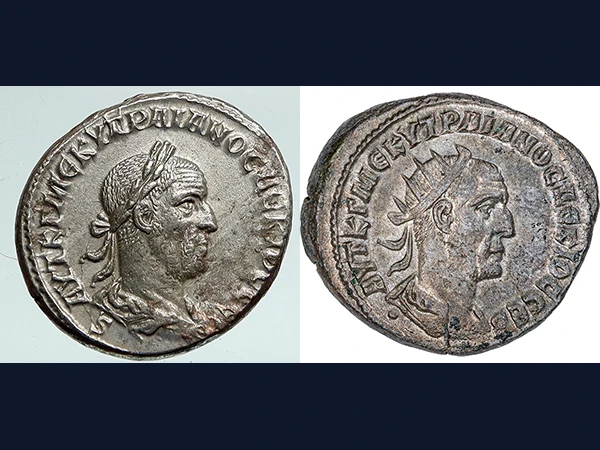
Original surfaces are not chemically unchanged surfaces
Silver tones. Copper darkens. Bronze develops patina. Metals react with storage environments and burial chemistry. Numismatic originality therefore usually means that a surface has developed without unacceptable human intervention, not that it has remained physically static since manufacture.
Stable toning or patina can be aesthetically desirable, evidential and sometimes financially valuable.
Artificially induced colour can imitate the appearance the market rewards while being penalised because the process is judged unacceptable.
The market can reward natural change and punish a successful imitation of the same visual result.
"Never clean coins" is useful advice - but incomplete
The rule exists because amateur improvement so often destroys original surfaces. Abrasive cleaning, polishing and harsh chemical treatment can leave permanent hairlines, altered colour and a false brightness that experienced collectors recognise immediately.
Professional conservation draws a more careful boundary. Removing PVC residue, unstable deposits, glue, haze or other harmful contamination can preserve the object without trying to recreate a preferred appearance.
Intervention intended to stabilise or reveal the surviving object is different from intervention intended to cosmetically rewrite it.
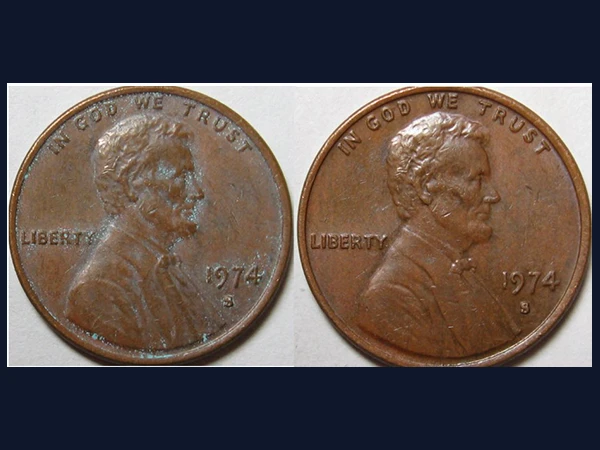
Has the intervention preserved what survives - or manufactured a preferred version of the coin?
"Fake" is too blunt a category
A coin can be wrong in several different ways, and some historically false objects become legitimate collectibles in their own right. The meaningful question is not simply "Is it genuine?" but "Authentic as what?"
The slab created a second object economy
Third-party grading authenticates, identifies, grades and encapsulates a coin, then places that judgement into a searchable certification and population system. This reduces information asymmetry and makes remote trading easier.
But once grade, holder generation, population, registry score and regrading potential affect price, the certification layer stops being neutral packaging. Collectors can end up optimising for the label around the coin as well as the coin itself.
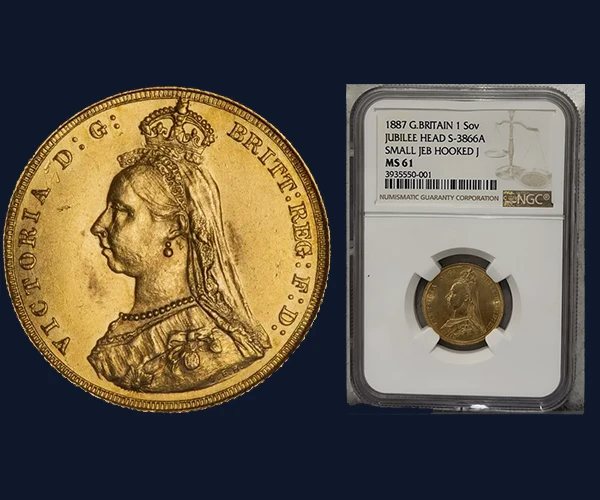
The same physical coin can be resubmitted in pursuit of a different market judgement.
Certification counts are evidence of graded supply, not a perfect census of unique surviving coins.
A complete set can remain permanently unfinished because another higher-graded example exists.
Buy the coin, not the holder - yet the holder now has a market history of its own.
Rarity only matters when somebody cares
Mintage figures seduce newcomers because they look objective. Experienced collectors know that surviving supply, grade distribution, series popularity, historical importance and liquidity can matter far more.
Very few examples survive at all.
Few were originally made.
Many survive, but almost none at a particular grade or preservation level.
The issue may be common while a particular die variety is scarce.
Examples exist, but seldom appear for sale.
Only a small number meet a certification threshold that matters to competitive collectors.
Surviving supply × condition × demand × perceived importance × liquidity
A famous key date can outperform a technically rarer but obscure coin because thousands of collectors need the same recognised object.
Sometimes knowledge creates the collectible identity
A die variety can exist unnoticed for decades. A researcher documents it. A reference assigns a number. Specialists search for it. Grading services recognise it. Registry slots appear. Dealers and auction houses begin naming it. The coin has not physically changed - its informational status has.
Classification does not merely describe collecting markets. Sometimes it helps create them.
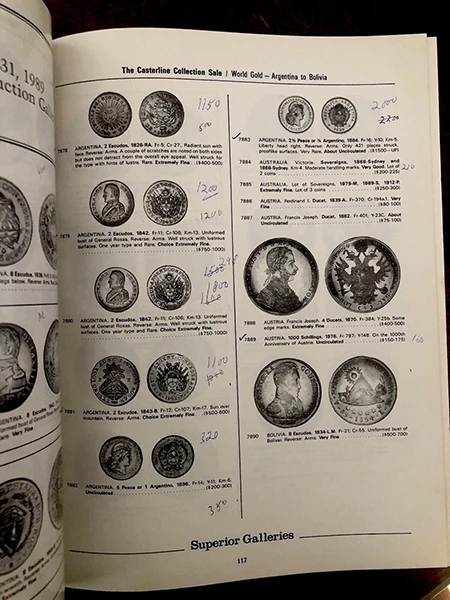
For some coins, ownership history is almost irrelevant. For others, it is central.
A common modern coin rarely becomes more important because a previous owner is known. Important ancient, rare or historically published coins can be different. Provenance may support authenticity, establish famous ownership, connect the object to older scholarship or demonstrate lawful collecting history.
Searchable auction archives are also changing what provenance research looks like. Small cracks, centring and surface marks can allow the same specimen to be recognised across photographs separated by decades.
This coin belonged to an important collector or appeared in a notable sale.
This object has a documented collecting history that matters to lawful ownership and archaeological ethics.
An accumulation can be more informative before it becomes a collection
A hoard was not necessarily assembled according to collector logic, yet intact groups can preserve evidence about circulation, saving behaviour, chronology and geography. Commercial collecting tends to individualise coins; archaeology often values the relationship between them.
Separate the best, rarest or most desirable specimens into individual objects.
Preserve the relationship between coins because the group itself contains historical information.
Metal is durable. Coin surfaces are not.
PVC residue, humidity, sulphur compounds, fingerprints and unstable storage materials can all damage surfaces. Preventive care is therefore simple in principle: stable materials, clean handling, controlled environments and as little unnecessary intervention as possible.
Fingerprints can become permanent chemical evidence on vulnerable surfaces.
The holder itself can become the source of long-term damage if materials are unstable.
Every handling event introduces a small risk to the very surface collectors value most.
The object-centred philosophy
The collector wants direct physical engagement with the coin - weight, edge, scale, surface and the feeling of handling an artefact made to circulate.
The certification-centred philosophy
The collector values authentication, protection, comparability, liquidity and the information system attached to an independently certified object.
The distinctions are where expertise becomes audible
A repeatable production configuration is not the same thing as an accidental manufacturing failure.
Weak detail can be born at the mint rather than lost in circulation.
Proof describes manufacture, not perfection.
A coin can have no circulation wear and still carry substantial marks.
Surface chemistry can be attractive, stable, neutral or actively damaging.
Removing contamination is not culturally equivalent to polishing or cosmetically improving metal.
Production quantity is not surviving population.
Prestigious ownership is one kind of history; lawful and documented object history is another.
A genuine coin can be authentic yet fail ordinary numerical grading because of cleaning, damage or alteration.
Direct physical access and third-party standardisation represent different collecting philosophies.
The catalogue becomes less sufficient as the collector becomes more capable
Collectors learn through handling, specialist books, auction viewing, dealers, coin fairs, clubs, museum collections, certification archives, die studies and repeated comparison. Eventually the question changes from "What is this coin?" to "What evidence does this individual specimen preserve?"
What date, mint and grade is it?
Which dies struck it? Is the weakness from strike or wear? Are the surfaces original? Is that colour natural? Is the attribution correct? Has this specimen appeared before? Is the stated rarity real?
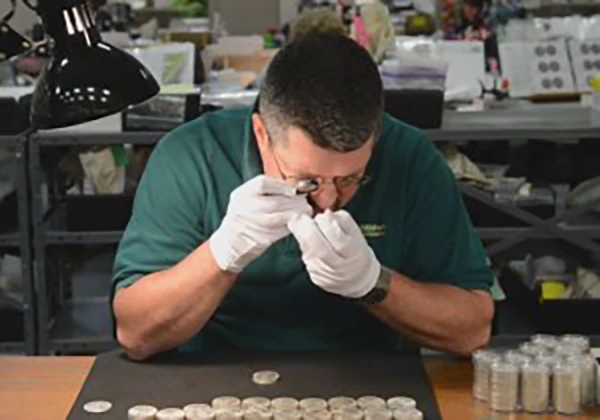
Coins have built an unusually dense information system around the object
Price guides, certification records, population reports, auction archives, catalogue numbers, die-variety databases, registry sets and high-resolution image records allow collectors to compare objects at extraordinary depth. The informational object surrounding the coin can become almost as complex as the coin itself.
Questions that expose judgement
The object can stay the same while what the collector believes they own changes profoundly
A newly recognised die, corrected attribution, recovered provenance, revised grade or better understanding of a surface can alter identity, rarity and value without changing the physical coin.
That principle stands strongly on this page, but it also feeds wider Collectaneum thinking about history, provenance, authenticity, restoration, condition, classification and the information layer around owned objects.
The physical object is finite. The knowledge attached to it is not.
Coin expertise lives in distinctions that photographs and grades only partly capture
Collectors, dealers, numismatists, detectorists and researchers can reveal where catalogue language ends and tacit judgement begins.
Explore Collecting Intelligence →Go deeper into the practices behind the object
Condition, provenance, authentication, conservation, preservation and valuation become more useful when connected back to the collecting culture that gives them meaning.
Explore the Knowledge Center →