
Books
The text is not the object.
A reader may see two copies carrying the same words as equivalent. A collector may see different printings, issues, states, bindings, jackets, papers, inscriptions and histories.
At its most developed, book collecting becomes the study of the physical transmission of texts through objects.
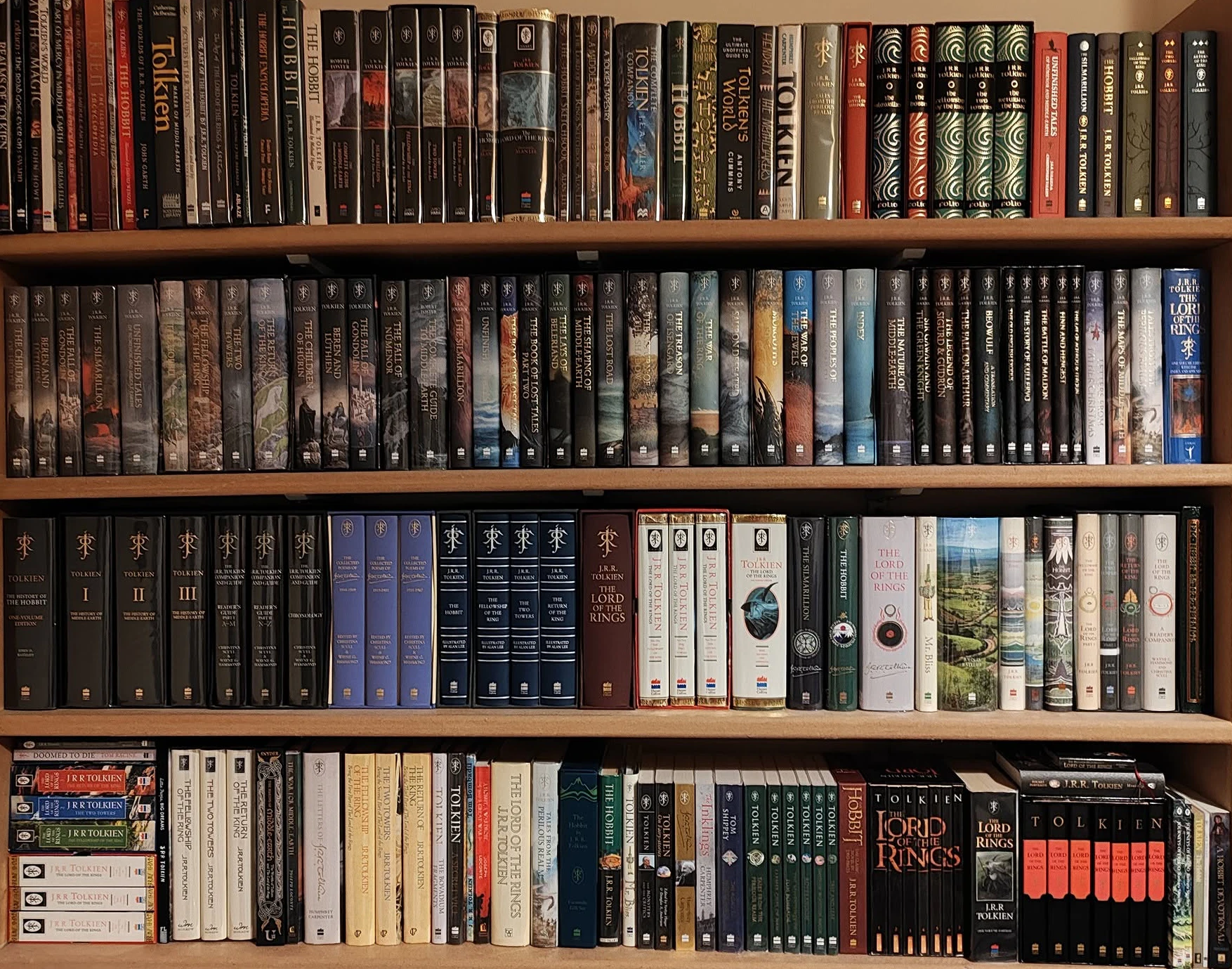
Do I own this book - or which copy do I own?
"Books" is not really one collecting category. It is an enormous family of collecting systems sharing the physical book as their principal medium.
The shift from reading to collecting often begins when title-level identity stops being enough. The collector wants to know which edition, which printing, which issue, which state and eventually which individual copy.
Edition, impression, issue, state and point
Physical differences can arise during production: corrected type, changed bindings, replacement leaves, altered illustrations, different advertisements or substituted title pages. Bibliographers try to establish the sequence, while collectors decide which distinctions matter.
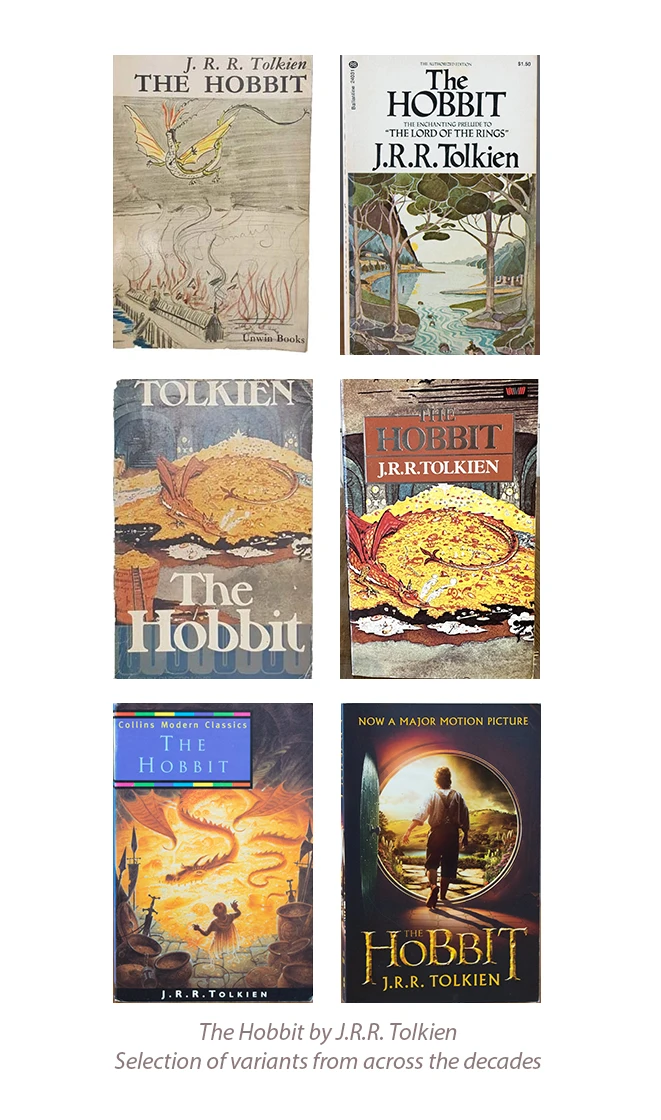
Not every tiny production difference is equally meaningful. Specialists distinguish genuine bibliographic sequence from collector folklore that has acquired market authority.
The strange power of first
Book collectors often value proximity to origin more than textual perfection. A first printing can represent the moment before revisions, success, controversy, censorship or cultural reputation.
But every published book has a first edition. "First" only becomes collectible when significance, demand, scarcity, condition and an identifiable edition hierarchy converge.
Collectors may prefer the technically inferior book because it is historically earlier.
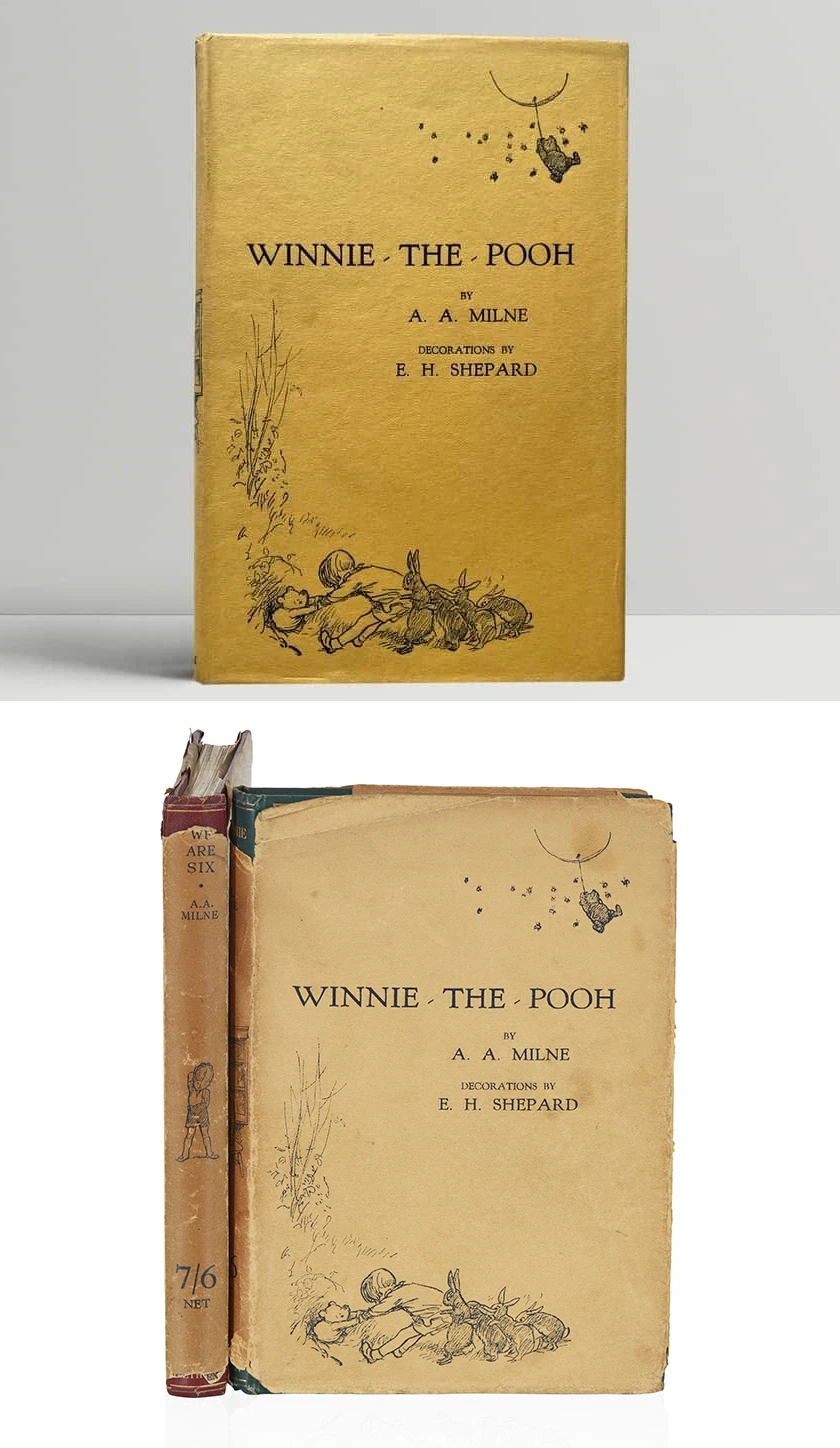
How many were printed is not the same as how many survived
Books disappear in very different ways. Some are read to pieces. Some lose jackets, maps, plates or inserts. Some are rebound when their original bindings fail. Some are marked by children, libraries, schools or generations of owners. Others are stored carefully and survive almost by accident in unusually complete state.
That means original print run is only the beginning of the rarity story.
A title produced in large numbers can become difficult to find in strong original condition if most copies were heavily used, discarded or altered. Children's books are an obvious example. They were often handled repeatedly, scribbled in, repaired, passed between siblings and stripped of the fragile jackets or wrappers collectors now prize.
The reverse can also happen. A smaller edition intended for libraries, institutions or wealthy private owners may survive at a much higher rate because it was protected from ordinary use.
So experienced collectors often ask two different questions:
How many were made?.
How many are likely to survive like this?
A pristine 1980 novel can realistically exist. A 1480 incunable cannot be judged by the same expectation.
Condition therefore depends partly on the surviving population. A copy can show wear, repairs or age and still be exceptional if comparable examples normally survive in worse state.
For scarce material, the benchmark may narrow even further. When only a small number of copies remain, collectors may accept defects they would reject immediately in a common book.
The dust jacket can become the dominant object
Modern dust jackets were largely utilitarian and frequently discarded. Their survival rates can be dramatically lower than the books they protected.
For many important twentieth-century first editions, "with jacket" and "without jacket" effectively describe two different markets. The jacket itself acquires its own hierarchy: unclipped, price-clipped, faded, chipped, torn, restored, backed or supplied.
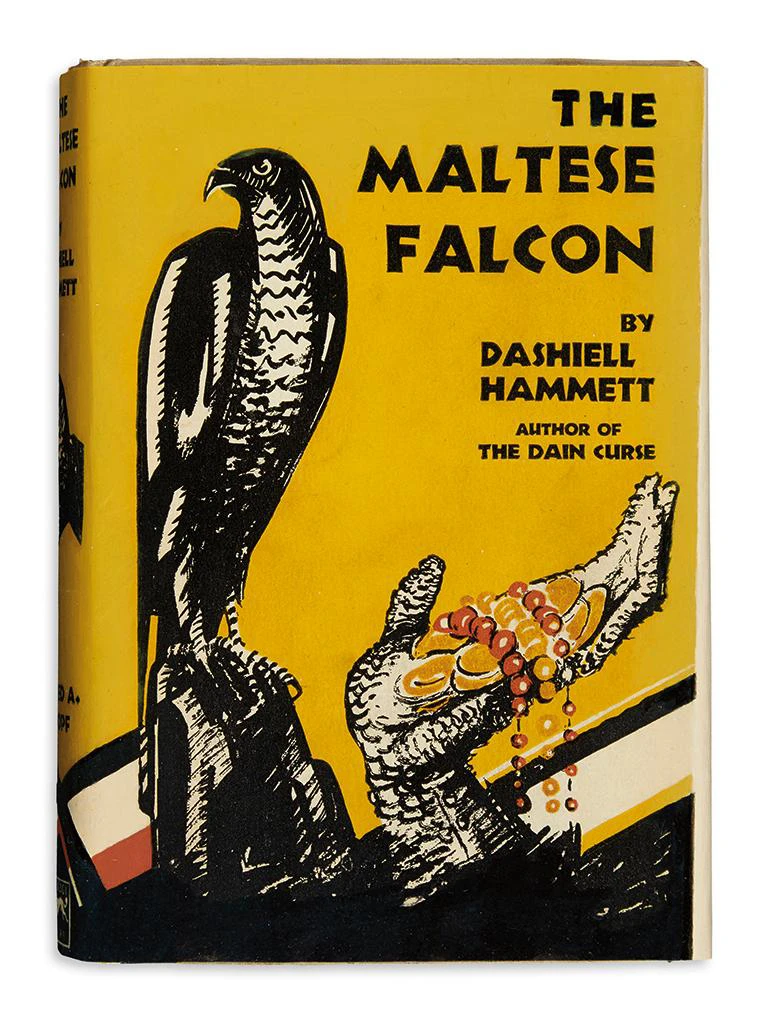
A striking example is Dashiell Hammett’s The Maltese Falcon, first published by Alfred A. Knopf in New York in 1930. The first edition was issued with a distinctive yellow dust jacket. Copies of the book without the jacket can still command substantial sums, but copies retaining the correct original jacket can realise many times more. In this case, much of the premium is carried by the scarcity, originality and condition of the jacket itself.
The disposable packaging can become rarer and financially more important than the durable object it was designed to protect.
Original does not mean the same thing in every period
Before industrial publishing, books often left the printer as sheets and were bound later to the purchaser's taste. Two legitimate copies can therefore carry different contemporary bindings. A twentieth-century novel rebound in expensive leather, by contrast, may be substantially less desirable than an imperfect copy retaining its publisher's cloth.
Originality must be judged against the production and distribution system of the object, not against a universal idea of factory state.
Intervention changes the object - but not always for the worse
Rebacking, recasing, resewing, washing, pressing, paper repair, replaced endpapers and supplied leaves can stabilise a book, restore usability or preserve material that would otherwise continue to deteriorate.
The collector question is not simply whether restoration has occurred. It is whether the treatment was appropriate to the age, rarity and condition of the book, whether original material was preserved where possible, and whether the intervention has been clearly disclosed.
For some material, expert restoration may be entirely acceptable - even desirable - particularly where bindings are failing, paper is unstable or mould and environmental damage threaten further loss.
Material from several copies can be combined into one apparently better book: a title page, plate, binding, leaf or dust jacket. Completeness may improve while the object's biography becomes more complicated.
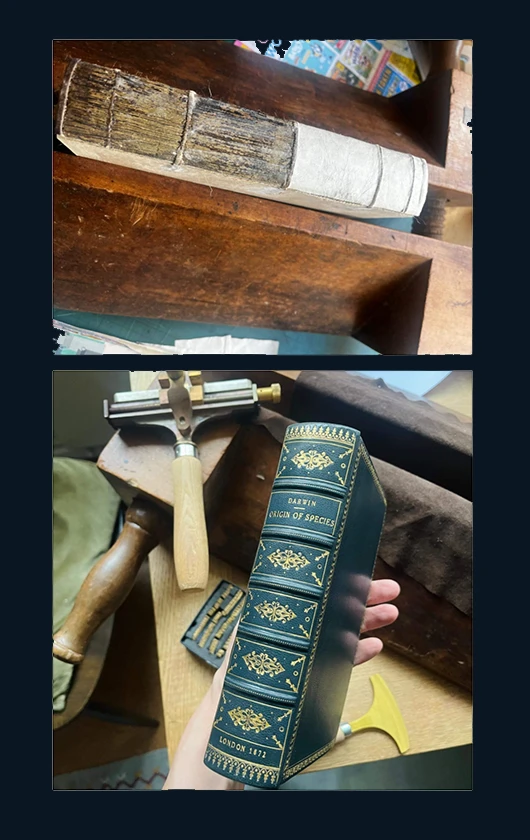
Has the intervention preserved the book, or altered more of its history than was necessary?
Complete can mean several different things
Every required leaf is present.
All intended plates, maps, tables, advertisements, errata and preliminaries are present.
The original binding, dust jacket, slipcase, wrapper or other supplied material survives.
The copy contains the characteristics required for the desired printing, issue or state.
The collector has reached the boundary they defined for the collection itself.
"Complete Tolkien" might mean twenty books to one collector and thousands of objects to another. Completeness is ultimately a negotiated boundary.
Serious collections develop rules - and sometimes a thesis
Different collectors are often solving different problems
Builds a programme around a writer, sometimes extending from first editions into appearances, signatures, manuscripts and correspondence.
Targets culturally important books rather than attempting completeness.
Pursues editions, states, variants, production evidence and the sequence in which books were made.
Values the history of a particular copy and the people, events or ideas attached to it.
Will wait for the strongest surviving example and often values original jackets, bindings and untouched state.
Collects publishers, illustrators, bindings, typography, paper or book arts as much as texts.
Constructs a library around an idea, movement, place, subject or historical question.
Finds pleasure in recognising overlooked editions, inscriptions, variants or provenance before the market does.
Time turns multiples into unique objects
Books begin as multiples. Ownership history can individualise them. A copy may become the author's copy, a presentation copy, an annotated review copy, a famous reader's copy or the copy involved in a historical event.
A signature is one fact. An inscription to someone meaningfully connected to the author, work or ideas can turn the individual copy into historical evidence.
Writing may be damage, provenance, reading evidence or source material. The same physical intervention can decrease or increase significance depending on who made it and why.
Book collecting constantly oscillates between edition-level identity and copy-level identity.
Authenticity is often component-level
Fraud does not require a counterfeit book. An ordinary authentic copy can be enhanced by a forged signature, rare jacket, bookplate, inscription, replacement title page or invented provenance.
Is it genuinely the claimed printing, issue or state?
Original, contemporary, later, restored or reconstructed?
Original to the book, correct for the printing, supplied, restored or facsimile?
Authentic, autopen, secretarial, facsimile or forged?
Contemporary to publication or added later?
Documented or merely asserted?
Do the leaves, plates, maps and other parts belong historically to this copy?
The experienced collector reads the object
Collectors learn by handling copies, reading bibliographies, studying dealer and auction catalogues, visiting special collections and following provenance trails. Expertise often means knowing what should exist, then comparing the copy in front of you against that framework.
The newcomer sees a first edition. The experienced collector asks which printing, which issue, which binding, which jacket, which restoration and which copy history.
Books prefer relatively boring environments
Preventive care dominates: cool, relatively dry and stable conditions, limited light exposure, appropriate shelving and protective enclosures for vulnerable material.
Sunlight can fade bindings and jackets irreversibly.
Excess moisture encourages mould, distortion and insect activity.
Clean, dry hands are often safer than cotton gloves for ordinary paper-based handling because tactile sensitivity matters.
A library can become an autobiography
Books remain objects, texts, ideas, décor and autobiographical markers at the same time. Nostalgia often attaches not simply to a story but to the exact edition remembered - its cover, typography, format and scale. A later reprint containing the same words may feel emotionally wrong.
Printing was designed to make copies alike. Collectors spend enormous effort discovering how they are not alike.
Production errors, bindings, paper, jackets, corrections, provenance, annotations and wear gradually individualise the mass-produced object.
An object's catalogue identity tells you what it is. Its surviving physical evidence tells you what happened to it.
The individual copy is where expertise becomes visible
Books are particularly suited to interviews with rare-book collectors, dealers, bibliographers and historians because so much judgement lives between the catalogue description and the physical object.
Explore Collecting Intelligence →Go deeper into the practices behind the object
Condition, provenance, authentication, preservation, restoration and valuation all become more useful when separated from the collecting culture that gives them context.
Explore the Knowledge Center →