
Board Games
The collectible is also a system that asks to be used.
A board game can be an artefact, a rules system and a social activity at the same time. That makes preservation unusually conflicted: opening, punching, shuffling, writing and handling can reduce pristine condition while fulfilling the reason the object exists.
Serious collecting begins when the title on the box stops being enough. Which version? Which components? Which state of play? Which history?
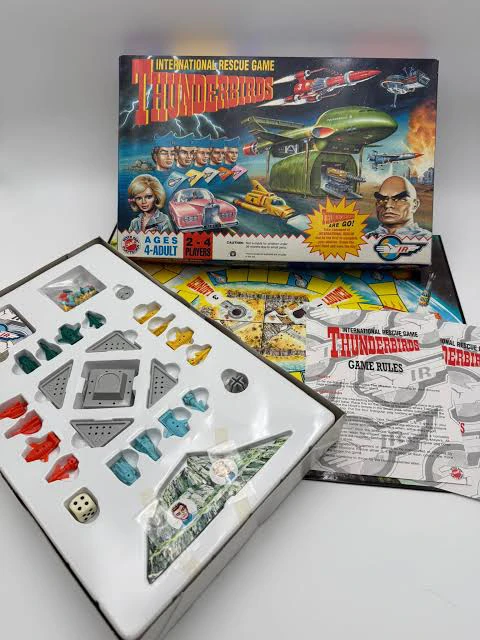
Preserve the object - or let it become the game?
In many collecting worlds, never using an object can be evidence of careful stewardship. Board games are awkward because proper use often changes them physically. Counters leave their sheets. Cards acquire shuffle wear. score pads are written on. Stickers are applied. Boxes are opened hundreds of times.
That creates two legitimate ideas of the best copy: the least altered example, and the example that has most fully succeeded as a game.
Sealed. Unpunched. Original. Untouched.
Opened. Learned. Shared. Played.
A game can lose market condition while gaining the history that makes it personally irreplaceable.
“Board-game collector” describes different kinds of collecting
One person is reconstructing the history of a publisher. Another is building the perfect playable library. Another is chasing convention promos and campaign exclusives. They can own the same title and prefer completely different versions of it.
Early commercial games, social history, publisher chronology, packaging and documentary evidence.
A defined maker such as Avalon Hill, SPI, 3M, Victory Games, TSR or another publishing programme.
Designer, mechanism, series, publisher, award winners, aesthetics or acclaimed games.
A curated playable library built for groups, player counts, mechanisms, moods and occasions.
Deluxe editions, campaign exclusives, promos, stretch goals, upgraded components and all-in pledges.
The world is not literally defined by a board
The useful boundary is the integrated tabletop game: commercially or deliberately produced games where the rules system and its physical components form the primary collectible. That comfortably includes card-driven, tile and dice games even when no conventional board is present.
The edges become porous around trading card games, miniature wargaming, RPGs, puzzles, chess sets and traditional playing cards because those fields develop their own object cultures and specialist practices.
Collect the game as an integrated system here. Split out adjacent worlds when the object, market and specialist language become fundamentally different.
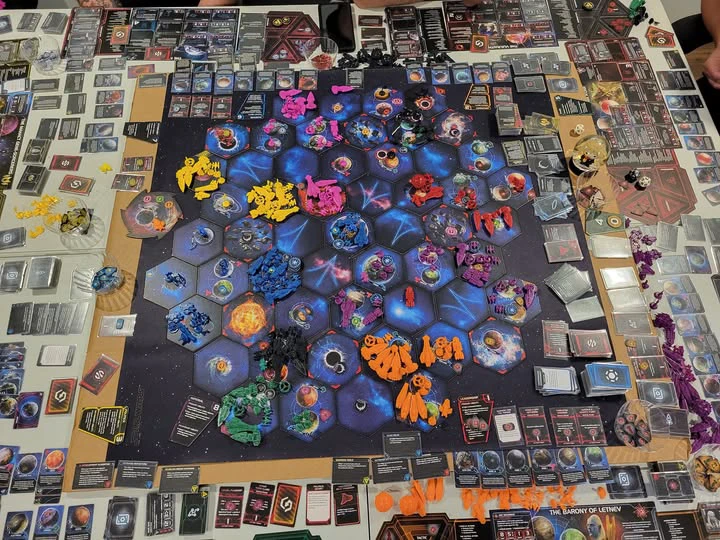
In few collecting worlds does “complete” require so much explanation
One box may contain hundreds of heterogeneous pieces: boards, cards, tokens, counters, dice, wooden pieces, miniatures, stands, money, score pads, stickers, bags, timers, trays, reference sheets and advertising inserts. Experienced buyers do not accept “looks complete”. They inventory.
Everything necessary to play is present. A generic replacement die may be enough.
Every piece listed for the game is present in the required quantity.
Every component is the correct original part for that particular version.
The original packaging, paperwork, inserts and game contents survive together.
Every release inside a declared series, publisher run or game family has been acquired.
Promos, stretch goals, exclusives, upgrades and other peripheral releases are included too.
A game can be present without being complete, complete without being original, and original without being playable.
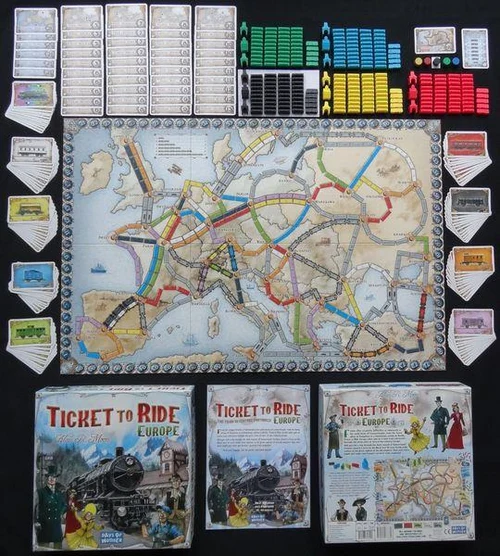
The hardest thing to replace may look insignificant
A rare game can be let down by one missing card, one original die, a correction sheet, an unused score pad or the moulded insert most owners discarded. Mature collector knowledge redistributes value away from the obvious object and towards the component that scarcely anyone thought to preserve.
The box is storage, evidence and display at once
A board-game box does more than contain the object. Its artwork can identify the edition, its construction can indicate publisher and period, and its insert can show how the game was originally organised.
That is why a beautiful box with exhausted contents and a battered box with pristine unpunched contents are different collecting propositions. In this world, external and internal condition often deserve separate descriptions.
Modern players complicate matters further by discarding inserts, consolidating expansions into one box and using aftermarket organisers. Function improves while packaging completeness and publication history can disappear.
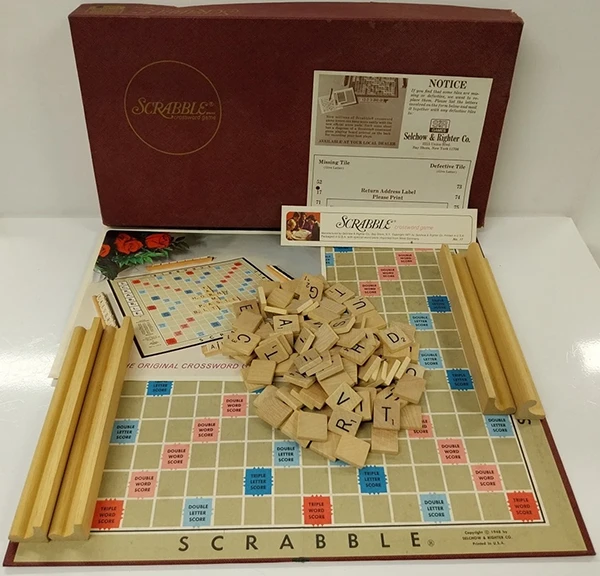
Condition is a matrix, not a single grade
A simple Mint / Excellent / Good scale hides too much. The object contains several materials that age and are used differently, so serious description separates them.
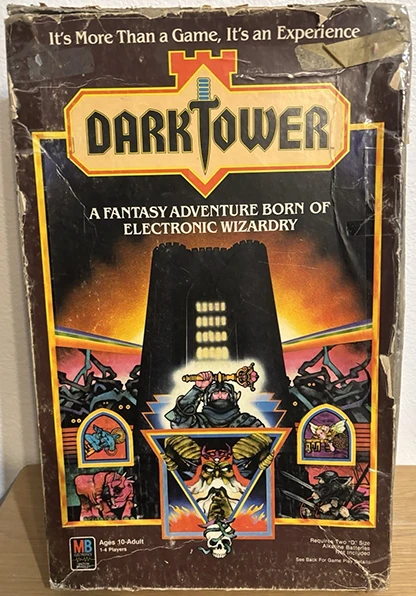
Ordinary wear can be acceptable. Serious mould, damp or smoke contamination can overwhelm otherwise attractive condition and make a game extremely difficult to trade or preserve.
A sealed game can be externally pristine and internally unverifiable.
You cannot inspect factory-sealed contents without destroying the sealed state. Manufacturing errors still happen. “Sealed” and “complete” are not the same claim.
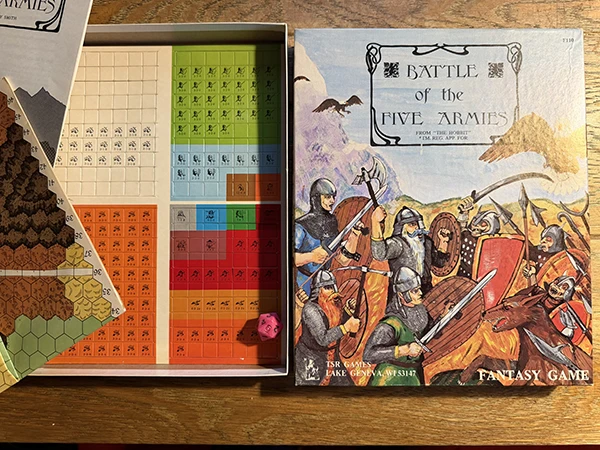
One tiny word can change the collectible: unpunched
In many traditional wargames, counters begin life die-cut on printed sheets. To play, the owner punches them out. Historical collectors may prize the untouched sheets while players see punched counters as completely normal.
Some players go further and clip counter corners for cleaner handling. To one owner that is care and usability. To an originality-focused collector it is permanent alteration.
Does using the component damage the collectible - or complete its purpose?
Some games are designed to destroy their own mint condition
Legacy and campaign games can instruct owners to apply permanent stickers, write on components, reveal sealed material, tear cards or alter the board. Proper play produces irreversible change.
The physically least altered copy may contain none of the history the game was designed to create.
“Which game?” is often only the first identification question
Board games change constantly across publishers, territories and printings. The same title can receive altered artwork, revised rules, different component materials, corrected cards, new inserts, changed miniatures or a different storage format.
First is not automatically best
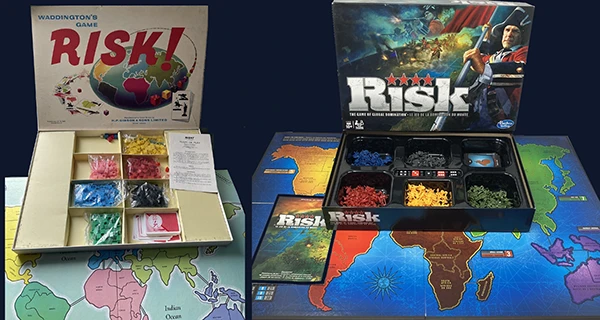
Later editions can contain clearer rules, corrected errors, rebalanced cards, stronger components, improved artwork and integrated expansions. Historical priority and functional superiority can therefore point to different copies.
May want the earliest publisher, artwork and rules state.
May prefer the edition that best resolves the game as a playable system.
Repairing playability is not the same as restoring originality
Split box corners can be repaired. Rules can be photocopied. Missing tokens can be recreated. Dice can be replaced. Boards can be flattened. Cards can be printed. Miniatures can be 3D-printed. These interventions may make a game usable again.
But board games are composite objects. A genuine 1960 game with one later pawn remains a genuine 1960 game while no longer being wholly original. The most useful record is therefore component-level: original, replacement, reproduction, repaired or restored.
The same logic applies to a copy assembled from donors: best box from one, complete cards from another, rulebook from a third. The resulting set may be beautiful and complete without representing one untouched factory history.
What has been preserved: the ability to play, the original material, or both?
Authenticity is granular because the object is granular
A counterfeit does not need to imitate an antique rarity. Popular modern games can be copied with inferior card, thin tokens, weak printing and poor moulding. Reproductions, by contrast, may be openly used to keep a scarce game playable. Disclosure is the dividing line.
Is this the claimed title, edition, printing and region?
Are the cards, counters, dice, miniatures and tokens original to this version?
Original booklet, corrected printing, photocopy or downloaded replacement?
Correct box, correct insert and genuine factory shrink rather than resealing?
Official promo, fan-made aid, licensed upgrade or reproduction presented as original?
Did these parts historically belong together, or has a better copy been built from several donor games?
What is original, what has been replaced, and has it been disclosed?
Crowdfunding moved collecting upstream
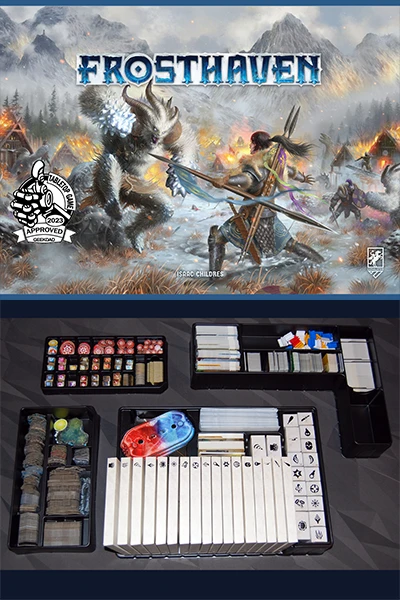
Traditional collectors usually encounter scarcity after publication. Crowdfunding asks collectors to anticipate it before the finished object exists. Campaigns combine timed pledges, stretch goals, exclusives, upgrade packs and all-in tiers into a prospective collecting hierarchy.
That makes fear of missing out structural rather than incidental. A collector may buy now not because an object is rare, but because it has been designed to become difficult to obtain later.
The broadly distributed edition, often the functional baseline.
Premium materials or upgraded production, but the term has no universal standard.
A crowdfunding-specific configuration that may include content unavailable at retail.
A component deliberately restricted to backers, conventions, retailers or another narrow channel.
Content unlocked by campaign performance and folded into the pledge hierarchy.
A pledge intended to capture most or all campaign content at one moment in time.
Scarce because history removed copies
Old, obscure, poorly distributed, fragile or heavily used material can become difficult to find because relatively few examples survive.
Scarce because access was intentionally restricted
A promo miniature, convention card or campaign exclusive can be difficult to obtain because distribution was deliberately narrow from the beginning.
Out of print is a status, not a value judgement
A game can be out of print and common, temporarily unavailable, genuinely scarce, replaced by a new edition or trapped by an expired licence. None of those states guarantees demand.
Board-game value is unusual because people may still strongly want the game as a playable experience. A relatively common title can outperform a rarer one because it is excellent, nostalgic, licensed, required for an expansion or attached to a celebrated designer.
Reprint risk is therefore real. A new edition can destroy the premium attached to simple unavailability while simultaneously creating a new branch for edition collectors.
Old + scarce = valuable
Often the decisive question is much simpler: do people still want to own or play it?
Usually minor - until it changes the category of the object
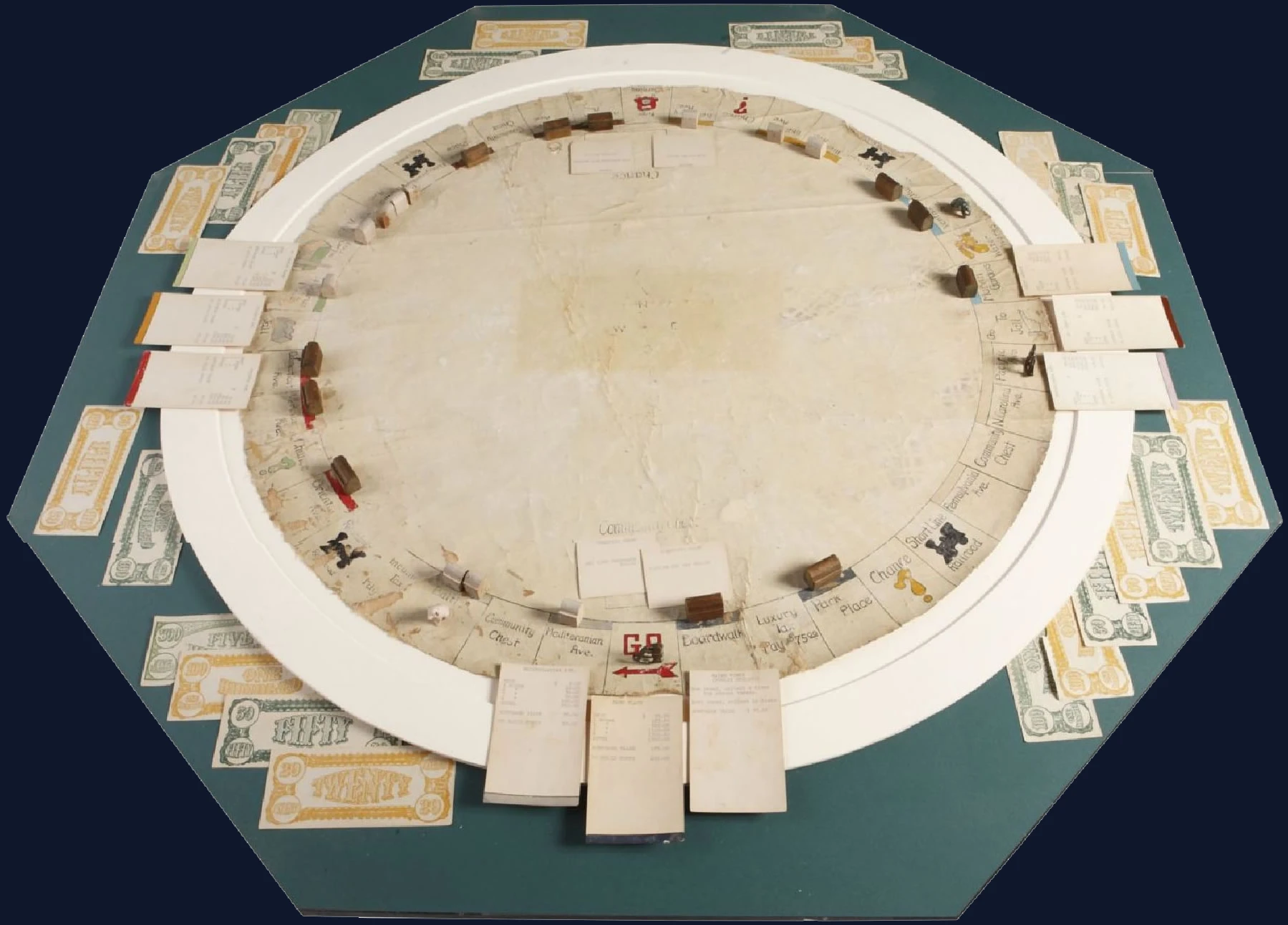
The ownership chain of an ordinary retail game often adds little. The picture changes completely with prototypes, designer copies, publisher archives, development material, presentation copies and historically important examples.
At that point the game may stop being merely a copy of a commercial product and become evidence of design history, publishing history or a larger cultural event.
Ordinary object + extraordinary biography can become the most important version of the object.
Wear can be damage
Names inside lids, pencil marks, taped repairs, written score sheets and homemade pieces usually reduce market condition, especially where clean original copies are available.
The same wear can be biography
Family scores, a grandparent's handwriting, repairs made during childhood and familiar damage can make one poor-condition copy more meaningful than a pristine replacement.
Market condition asks what happened to the object. Emotional provenance asks who was there when it happened.
The collection eventually becomes a physical logistics problem
Board games occupy space. Modern big-box productions can be exceptionally large and heavy, so shelf limits, culling, consolidation and one-in-one-out rules become practical collecting behaviours rather than abstract discipline.
Stable, relatively cool and dry storage protects paper, card and boxes from mould, distortion and fading.
Protects cards from handling wear, but changes feel, appearance and sometimes fit inside original inserts.
Combining expansions can improve setup and storage while erasing packaging completeness and release history.
The expert stops seeing a title and starts seeing a manifestation
Board-game expertise is built through comparison: publisher catalogues, community databases, rules files, component inventories, archived advertising, auction and dealer listings, forum research and repeated handling of variants.
Specialist infrastructure matters here because undocumented printings and small production changes are common. BoardGameGeek functions as a major contemporary identification system, while historical collectors also rely on archival organisations, publisher research and specialist dealers.
A copy of the game.
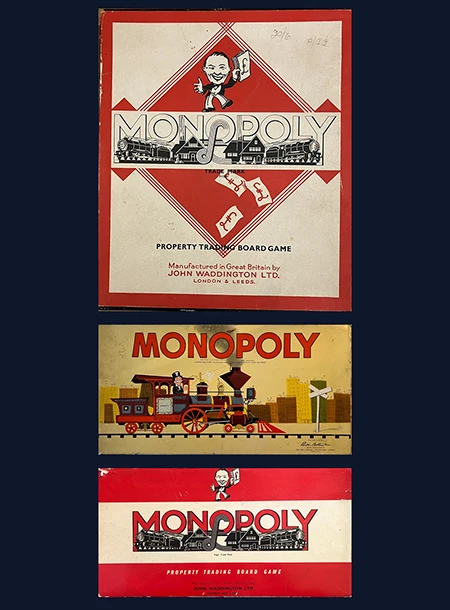
Which publisher? Which version? Which region? Is it complete? Are those the correct pieces? Are counters punched? Is the score pad original? Is the insert present? Does this printing contain the errata? Is the shrink original? Has the box been taped? Is it genuinely out of print or merely between print runs?
A PDF can restore playability without restoring the object
Rulebooks carry publication history. Early printings may contain errors, revised examples, different terminology or discarded mechanisms. Replacing a missing booklet with a download can make the game playable again while leaving the copy materially incomplete.
Replacement information can restore function without restoring artefact completeness.
Often the collector wants the exact box they remember
Board games are unusually strong carriers of social memory. Christmas morning, grandparents, siblings, school, university, a weekly games night or a parent teaching the rules can attach emotion to one specific visual edition.
A later version can play identically and still feel wrong. Artwork, box dimensions, tokens and typography become memory cues. Nostalgia therefore operates at manifestation level, not merely title level.
The same box can belong to several collector identities
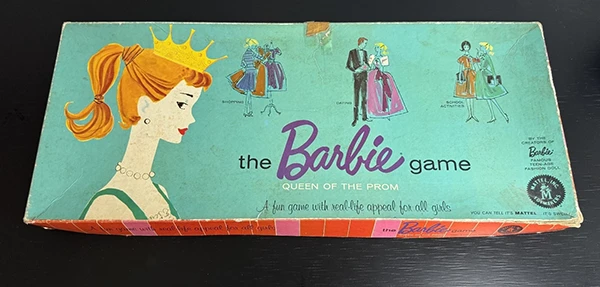
Licensed games connect directly into Disney, Star Wars, Tolkien, television, football, horror, comics, films, music, RPGs and military history. One collector wants the game for its publisher, another for the franchise, another for the miniatures, another because they actually want to play it.
One object can carry several legitimate collecting identities at the same time.
Questions that reveal the collector behind the shelf
If the entire collection disappeared but one game could survive, which one would it be - and why?
The interesting judgement lives between catalogue identity and component reality
Board games reward conversations with collectors, players, designers, publishers and specialist dealers because so much expertise sits in version recognition, component knowledge and the compromises between preservation and use.
Explore Collecting Intelligence →Go deeper into condition, originality and intervention
Condition, provenance, authentication, preservation, restoration and valuation become more useful when separated from the culture of play that gives these decisions their particular meaning.
Explore the Knowledge Center →