
Collecting World
Action Figures
The toy becomes more valuable by remaining unused.
Action figures begin as objects designed to be removed, posed, handled, dressed, equipped and played with. Collectors then build some of the hobby's strongest hierarchies around examples that were never opened at all.
Between those poles sits an unusually sophisticated collecting culture of scale, articulation, cardbacks, bubbles, accessories, variants, factory evidence, restoration, reproduction parts, prototypes, grading and character repetition.
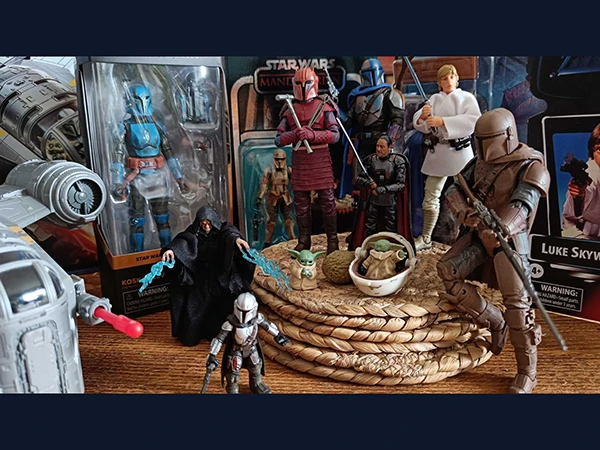
The object boundary
The figure is only part of the collectible
A newcomer sees a plastic character. A collector may see figure, weapon, cape, alternate hands, alternate head, paperwork, insert, backing card, blister, retailer sticker and promotional material as one system.
That means completeness is often component-level. A tiny weapon can carry disproportionate importance because it helps establish whether the object is complete, period-correct and materially original.
A £5-looking accessory can decide whether a high-value figure is genuinely complete.
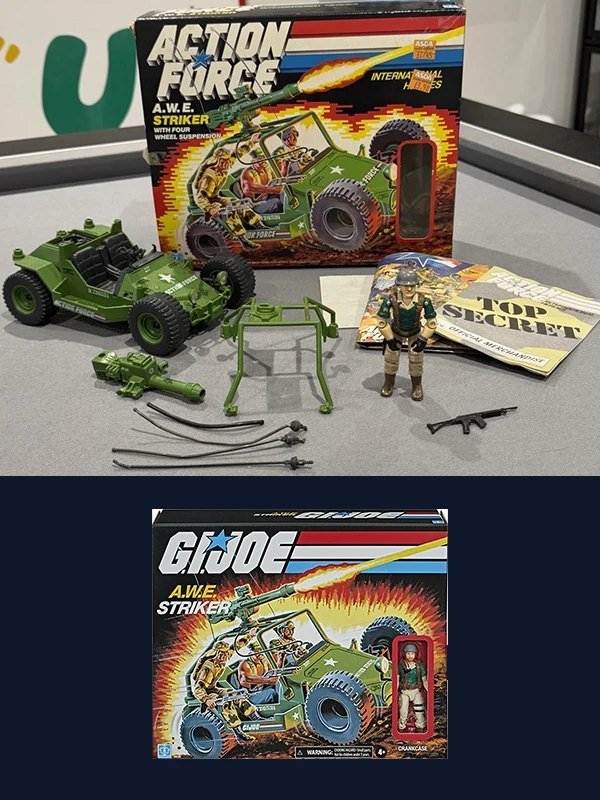
Loose, carded, boxed
Packaging does not simply protect the object - it can create a different object
Loose collectors experience the character and the engineering. Carded and boxed collectors preserve the commercial artefact as it appeared at retail. Some collectors deliberately own both.
Poseability, accessory completeness, sculpt, paint and mechanical condition move to the foreground.
Cardback design, bubble clarity, punch state, seals, stickers and retail presentation become part of identity and value.
Duplication can be rational because the two copies fulfil different collecting functions.
Is the untouched package preserving the toy - or preventing the toy from ever fulfilling its purpose?
Packaging as evidence
Card, bubble and sticker can carry as much information as the figure
Packaging records logos, release order, character checklists, promotional offers, assortment numbers, foreign markets and retailer-specific history. A packaging change can therefore create a new collectible without any meaningful change to the figure itself.
For a sealed collector, the blister is also condition evidence: it reveals the paint application, confirms the visible figure and preserves the retail relationship between object and package.
This is why packaging design changes can provoke collector resistance that makes little sense if the box is treated as disposable transport.
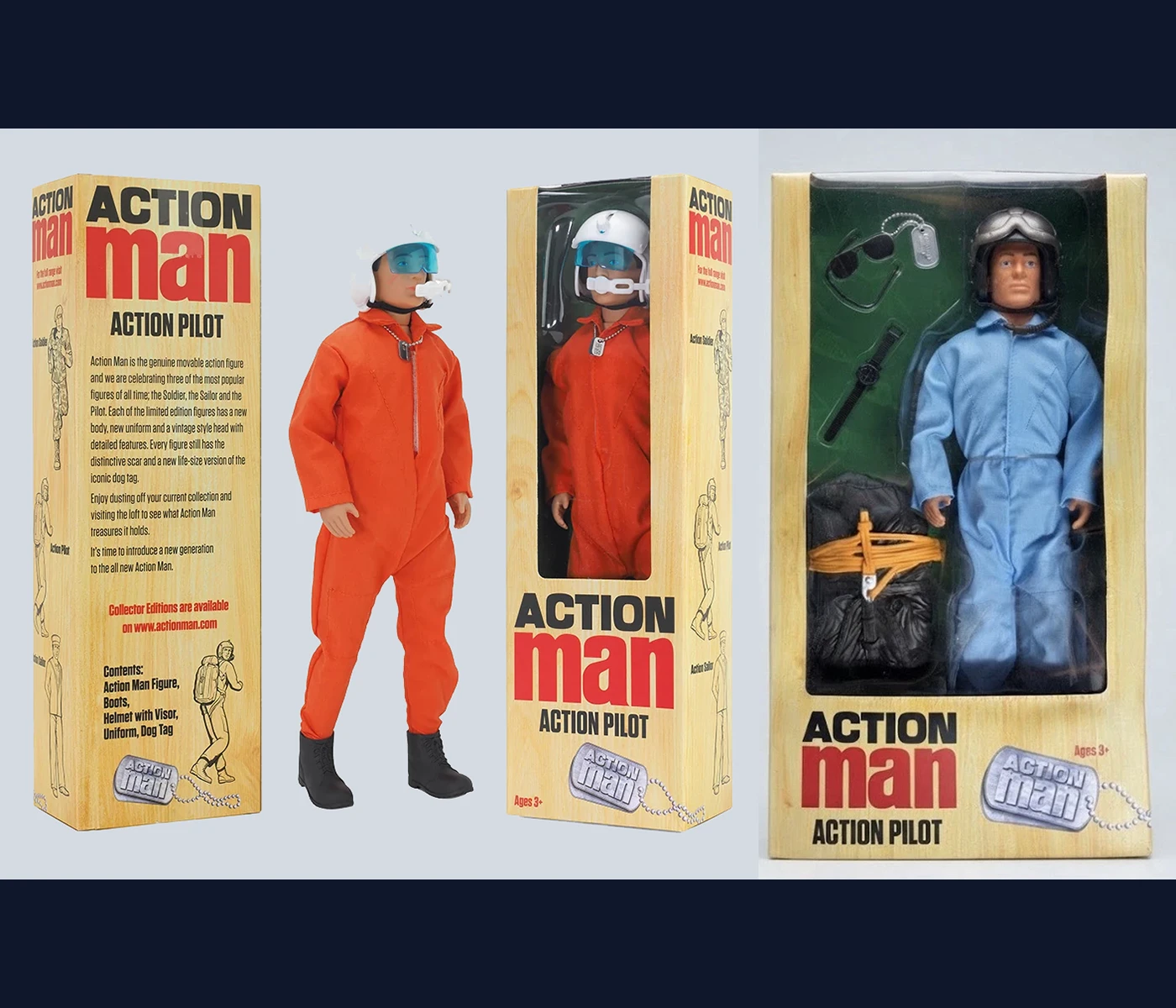
Action figure packaging can be container, authentication evidence, condition evidence, retail history and display surface at the same time.
Scale
Size becomes collecting identity
3¾-inch, 6-inch, 7-inch, 8-inch and 1:6 are not merely measurements. Scale determines compatible vehicles, playsets, display density, articulation, accessory size, price and the visual feel of an entire collection.
3¾ inch / 1:18
Strong vehicle and playset culture, dense displays and deep nostalgia for late twentieth-century mass-market lines.
6-7 inch
A dominant modern collector format balancing sculpt detail, articulation, accessory complexity and shelf presence.
1:6 / 12 inch
Larger bodies, fabric costumes, detailed equipment and display practices that can feel closer to miniature costume and prop collecting.
A collector may admire a modern reinterpretation and still reject it as belonging to the wrong scale system.
Sculpt versus articulation
A better mechanism can make a worse figure
Modern figures are judged as both miniature sculpture and mechanical posing object. Those goals frequently conflict. Extra joints increase range of motion while cutting across silhouette, anatomy or costume design.
Face, proportions, silhouette, source accuracy and visual coherence matter even when articulation is limited.
Butterfly shoulders, ankle rockers, pinless joints, double knees and balance can make the figure function more convincingly in hand.
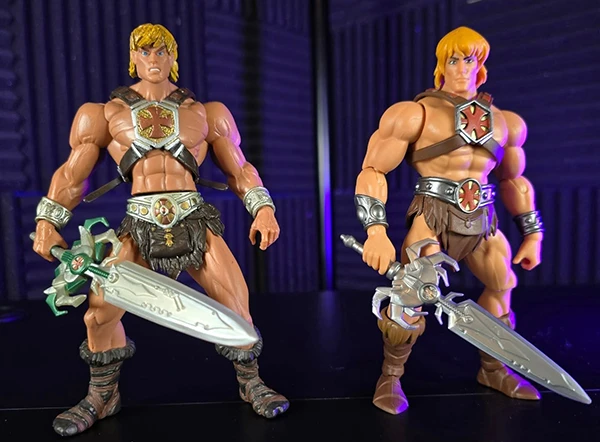
A technically more articulated figure is not automatically a better figure.
Repetition
The same character can become a complete collecting universe
New sculpt, different costume, anniversary edition, film version, cartoon-accurate version, metallic finish, battle damage, retro reinterpretation and premium edition can all justify another acquisition of essentially the same character. Completion is therefore chosen rather than universal.
Every commercially released version of one character.
Every figure issued together in a defined release wave.
A complete manufacturer line or sub-series.
Only 3¾-inch, 1:12, 1:6 or another chosen physical system.
Vintage originals, one childhood period or one sculpt generation.
Cardback, box, foreign release, retailer sticker or offer variation.
Paint, mould, factory, country-of-origin or production-state differences.
One sealed example and one loose example of the same release.
Army building
Multiplicity itself can become completeness
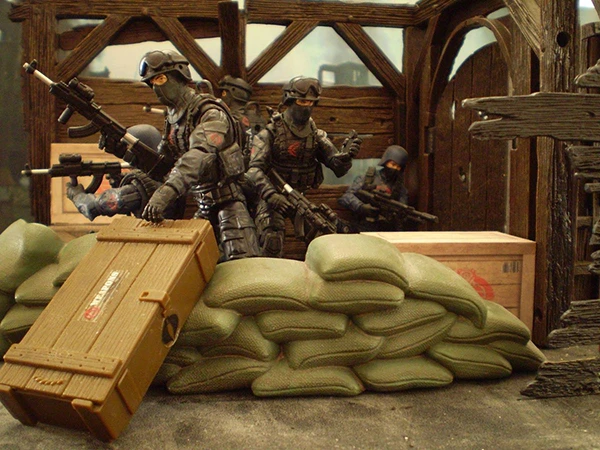
In most collecting systems, the second identical object is redundant. Action figures make duplication culturally legitimate. Generic soldiers, robots, aliens and henchmen gain meaning through quantity because the collection is also reconstructing a fictional world.
The logic is environmental rather than taxonomic: one villain, fifty troops, a vehicle and a diorama may feel more complete than a checklist with one of everything.
Twenty identical figures can be more desirable than one because the object being completed is the scene.
Variants
Mass production creates material for forensic collecting
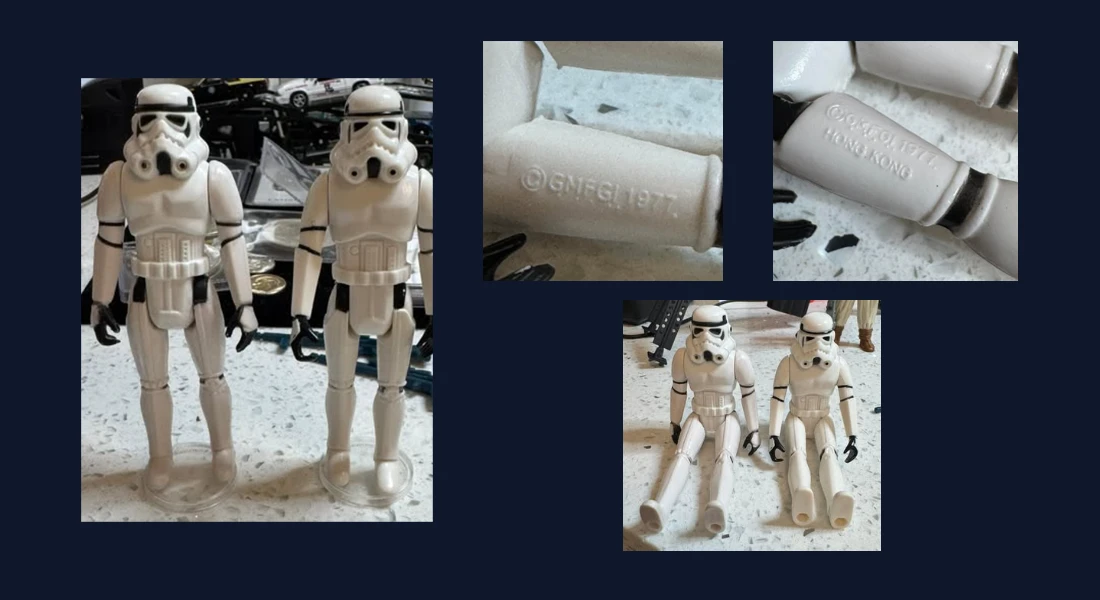
Paint colour, plastic shade, mould revision, country-of-origin stamp, body construction, accessory tooling, package language and factory differences can all become meaningful. At specialist level, the collector stops asking which character the figure represents and starts asking which production pathway created this exact example.
They look the same.
Different tooling, different paint mask, different factory, different accessory mould, different cardback, different production state.
Originality versus visual completeness
The replacement part solves one problem and creates another
Vintage figures routinely lost weapons, capes, stickers and vehicle parts. Reproduction components can restore the intended appearance and make a childhood display feel complete.
The difficulty begins when an unmarked reproduction later re-enters the market as original. Small accessories can now demand the same kind of authentication attention as the figure itself.
Collector preference varies widely, but the ethical dividing line is much clearer: reproduction can be acceptable when disclosed; undisclosed reproduction falsifies the material history of the object.
Would rather leave a figure incomplete than introduce modern replacement material.
Accepts reproduction parts when clearly identified and kept distinct from original material.
Transformation is the point, so period originality is not the governing value.
Completeness and originality are often pulling in opposite directions.
Restoration and intervention
Better appearance can mean less collector integrity
Cleaning, O-ring replacement, joint repair, repainting, whitening yellowed plastic, sticker replacement, bubble reattachment and recarding sit on very different parts of the intervention spectrum.
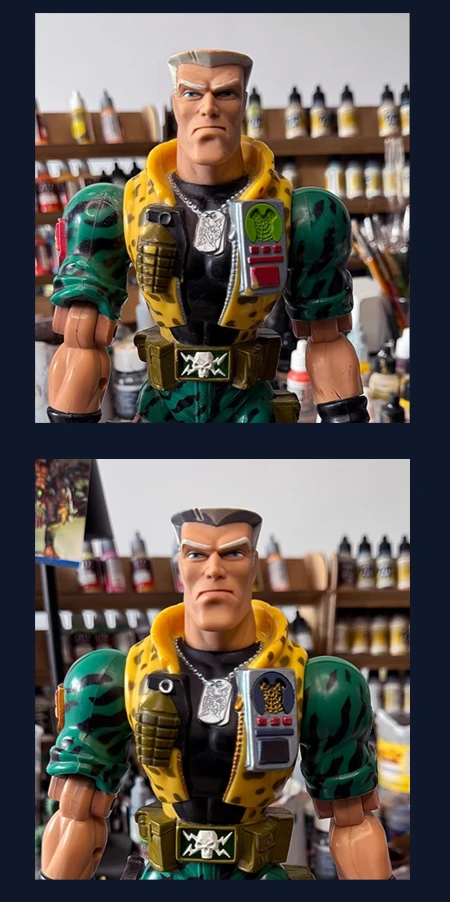
Record intervention as biography. Do not let a visually improved object silently overwrite the history of what was changed.
Condition
"Mint" is too blunt for a multi-part object
A figure can be excellent while its card is poor. A card can be sharp while its bubble has yellowed. A loose figure can look superb while its joints are mechanically tired. Condition has to be read across independent components.
Paint rub, fading, yellowing, stress marks, warped limbs, loose or cracked joints, sticky plastic and fabric condition.
Correctness, completeness, breakage, paint, warping and whether each part is original to the release.
Creases, edge wear, corner wear, punch condition, fading, staining, stickers and surface loss.
Clarity, yellowing, dents, cracks, crushing, lifting and evidence of resealing.
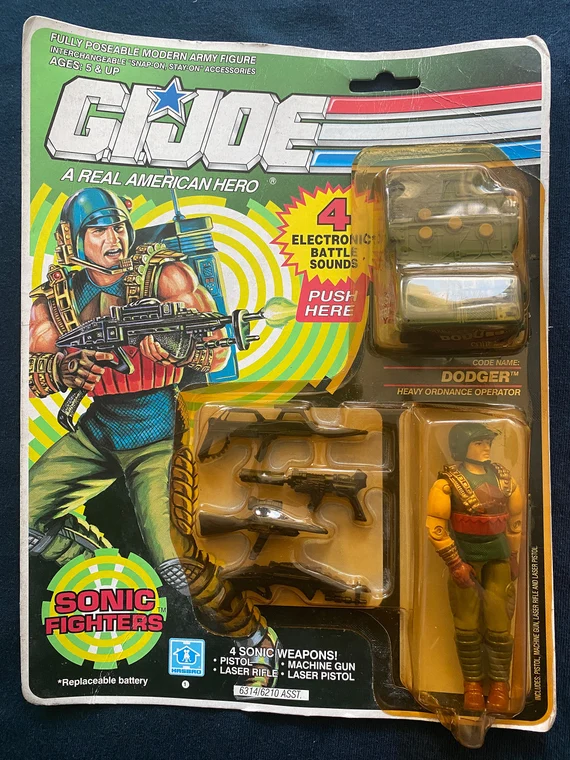
The experienced collector does not ask "Is it mint?" They ask which component is mint.
Plastic is not permanent
The unopened survivor can still be destroying itself
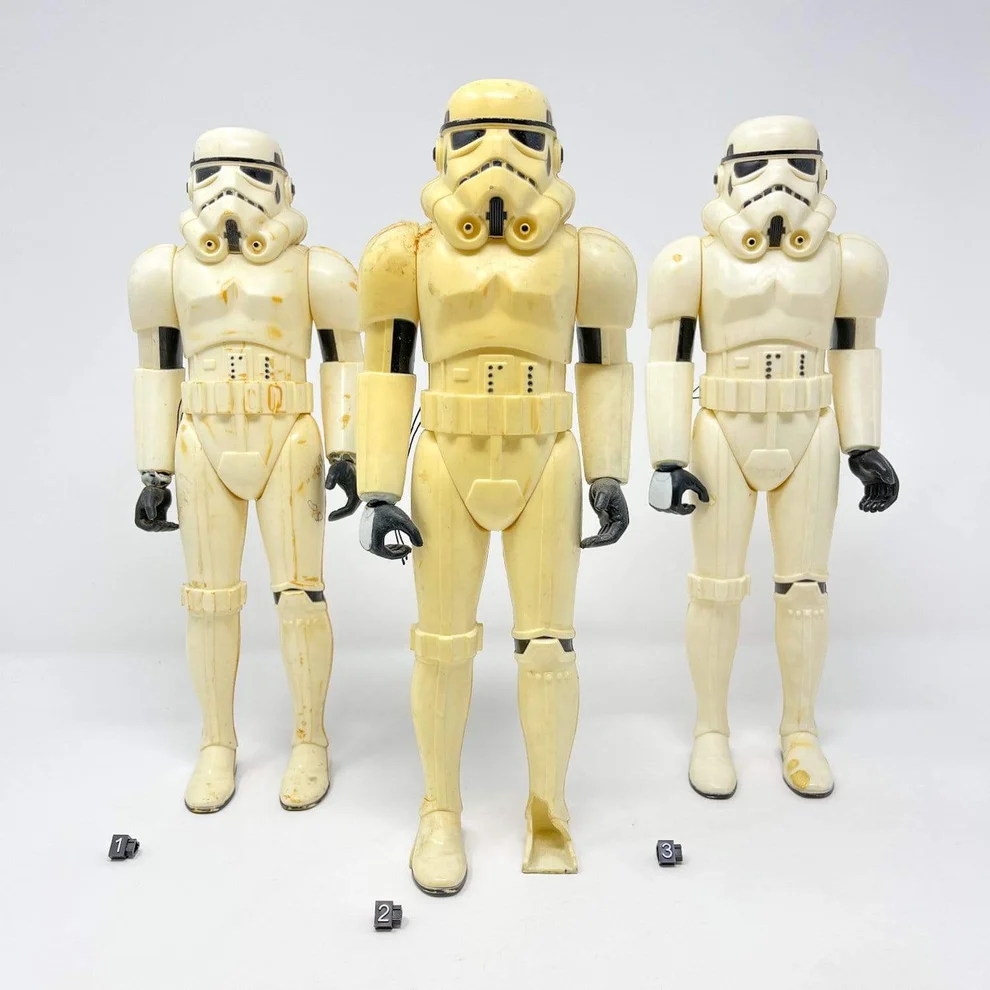
Action figures were rarely engineered as century-long heritage objects. Light, heat, oxidation and material migration can cause yellowing, embrittlement, cracking, stickiness, deformation and hardening even when the object has never been handled.
This produces one of the field's sharpest contradictions: packaging may have protected the figure from play wear while trapping it inside a material system that continues to age chemically.
Untouched is not the same as unchanged.
Rarity
Vintage scarcity and modern scarcity are not the same phenomenon
Short production, weak sales, local distribution, lost accessories, discarded packaging, cancelled products and prototypes create scarcity after the fact.
Timed preorders, convention exclusives, retailer exclusives, limited runs, made-to-order windows and crowdfunded releases build scarcity into the modern commercial model.
Limited is a production description. It is not a guarantee of future desirability.
Rarity versus desirability
Character significance can overwhelm production rarity
An obscure figure may survive in very small numbers and still attract little competition. A mass-produced first appearance, iconic villain or childhood favourite may command much stronger prices simply because many more collectors want it.
Scarce production alone does not create a deep market.
Recognition, nostalgia, character status and set completion can support strong demand despite large original production.
The market pays for motivated demand, not scarcity in isolation.
Grading
Certification can clarify the object - or replace it with a score
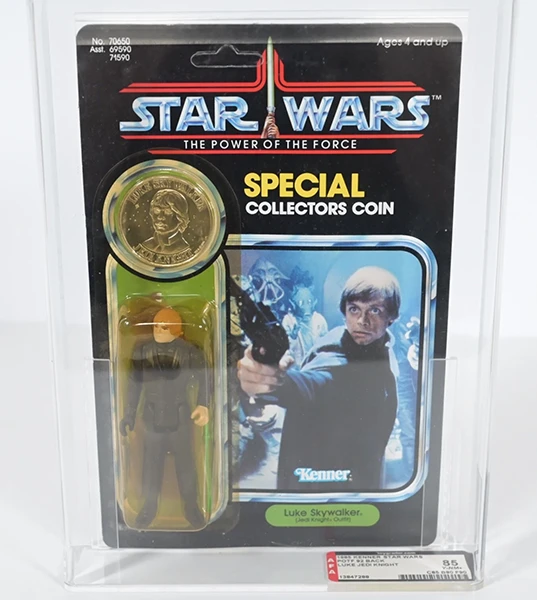
Third-party grading provides authentication, standardised condition language, protective encapsulation and market comparability. At the high end, population rankings and small grade differences can become price-moving facts.
Confidence, authentication, protection, comparability and easier resale.
The figure becomes inaccessible, poseability is frozen and the number can dominate the object itself.
Does certification reveal the object, or replace the object with a score?
Prototypes and pre-production
At the top end, provenance stops being optional
Wax sculpts, first shots, test shots, paint masters, engineering pilots, proof cards, sample packaging and unreleased figures belong to the making of the product rather than its ordinary retail life.
For a common loose production figure, ownership history is usually secondary. For an alleged unique prototype, documentation can be central to identity. The question is no longer merely whether the figure is old, but whether it genuinely occupies the claimed point in a manufacturer's development process.
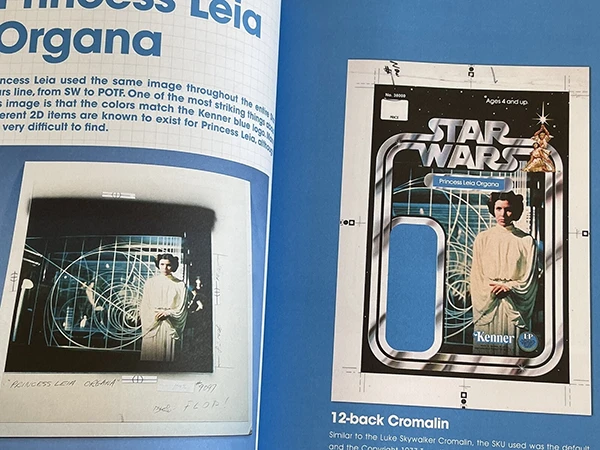
Provenance has a threshold. Below it, history is interesting. Above it, history helps prove what the object is.
Collection as performance
Ownership can become a creative medium
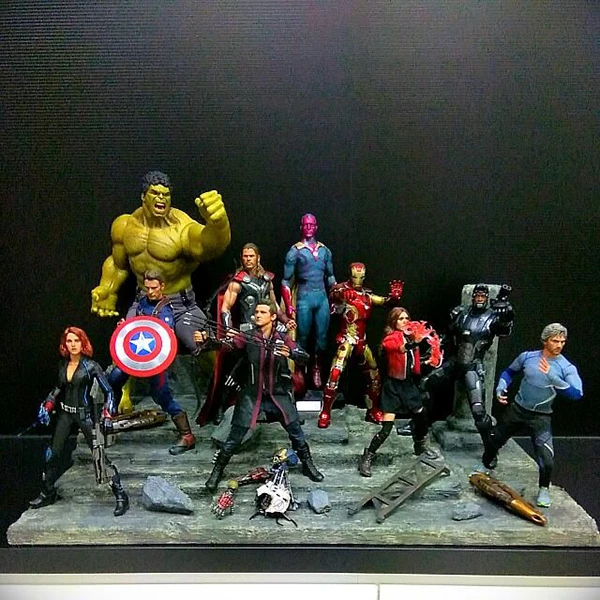
Figures are posed, photographed, customised, kitbashed, repainted, placed in dioramas and used to reconstruct or invent scenes. In these practices the collection is not the finished output. It is the toolkit.
This makes action figures unusually revealing within Collectaneum: preservation is only one legitimate relationship with the object. Manipulation, performance and transformation can also be sophisticated forms of collecting practice.
The collection can become raw material for another creative activity.
Nostalgia and reinterpretation
The modern figure can feel more like childhood memory than the childhood toy did
Vintage collecting often retrieves the physical toy that existed. Modern premium collecting often offers something subtly different: the character as the adult collector remembers imagining it - more accurate, more articulated, better painted and equipped with accessories the original never had.
Material nostalgia.
Retrieval of an unrealised childhood desire.
Adult reinterpretation of the childhood fantasy.
The modern market
The hunt has shifted from discovery to scheduled consumption
Older collecting often meant finding things that had already vanished from shops. Modern collecting increasingly means livestream reveals, preorder windows, convention announcements, crowdfunding deadlines and retailer drops. Scarcity can therefore be experienced before the object even exists.
Can I find one?
Did I order it before the window closed?
FOMO is no longer merely collector psychology. It can be part of the distribution system.
Expertise
The experienced collector learns to read manufacturing evidence
Specialist knowledge is heavily visual and material. It grows through handling, comparison, archived images, forum scholarship, checklists, auction records and communities that have documented production detail far beyond what manufacturers ever recorded for collectors.
The newcomer identifies the character. The specialist identifies the production history.
Where collectors disagree
The arguments define the culture
The deepest question
What are you actually trying to recover?
Action figure collecting can look like product acquisition, but the object may be standing in for something else: childhood play, an imagined character, a lost retail experience, a production history, a fictional world or the desire to build a better version of something remembered.
Do you collect the physical toy you had as a child, or the character you imagined the toy represented?
Collectaneum lens
Action figures expose the boundary between preservation and intervention unusually clearly
Leave the object sealed, stable and materially legible.
Restore function while keeping original material and disclosure central.
Improve visual completeness, accepting a more complicated originality story.
Customise, pose and perform with the object as a creative material.
There is no single correct relationship with the figure. The important collector skill is knowing which relationship you have chosen - and recording what happened to the object because of it.
Collecting Intelligence
Specialist knowledge lives in the small differences
Action figures are particularly suited to collector conversations because so much expertise remains embedded in long memory, factory variation, accessory identification, packaging knowledge and community-built reference systems.
Explore Collecting Intelligence →Knowledge Center
Go deeper into the practices behind the object
Condition, authenticity, preservation, restoration, provenance, grading and valuation become more useful when separated from the collecting culture that gives them meaning.
Explore the Knowledge Center →Action Figures as a Collecting World