
Your toys & games collection. Your way.
Toys & Games Collection Management
Start with the items you own and record the details useful to you.
Keep things simple, or go deeper with franchises, product lines, manufacturers, editions, figures, vehicles, playsets and dolls whenever they matter.
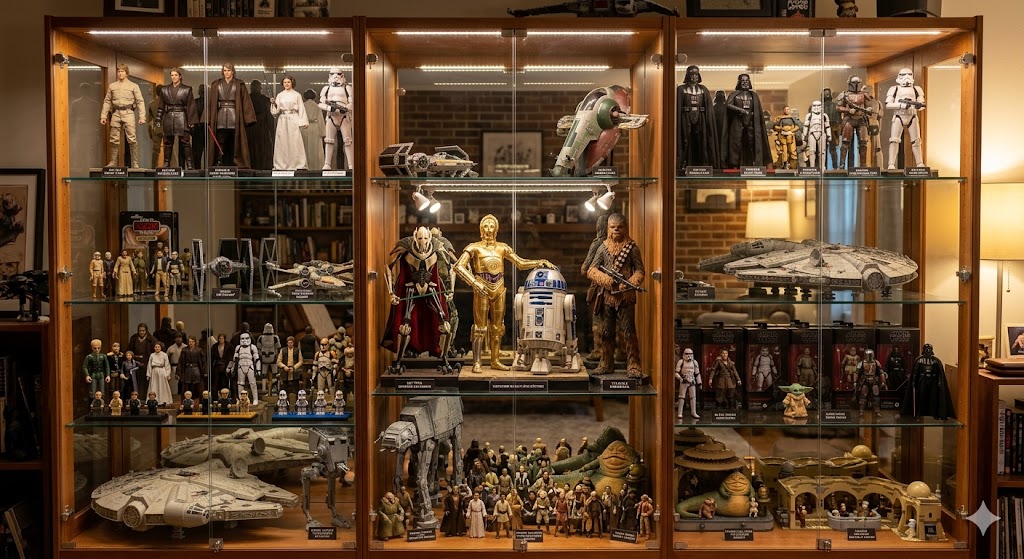
Collect at your own depth
A useful toys and games record can be simple or highly detailed.
One item might need little more than a name, photograph and condition. Another might deserve detailed records of franchises, product lines, manufacturers, editions, figures, vehicles, playsets and dolls. Both belong in Collectaneum.
Start quickly. Add detail when it earns its place.
Why the collection becomes difficult
One character or title can produce hundreds of distinct releases
The same subject may appear across scales, materials, manufacturers, product lines, markets and anniversary reissues. Packaging and accessory combinations can create further collectible variants.
Completeness and condition belong to the individual example: a loose figure, boxed example, sealed release and assembled set may share product identity while remaining very different owned records.
Franchise and product line
Connect characters and titles to the correct manufacturer, line, wave, scale and release period.
Packaging and region
Record card, box, language, retailer, country, assortment and regional packaging differences.
Variants and exclusives
Preserve production changes, colour variants, convention releases, store exclusives and promotional issues.
Accessories and completeness
Track weapons, stands, inserts, instructions, decals, cards, trays and other expected components.
Condition and alteration
Record wear, fading, paint loss, broken parts, repairs, restoration, resealing and customisation.
Sets and relationships
Link figures, vehicles, expansions, game components and related releases without duplicating owned records.
From product line to owned example
Build the record in connected layers
Shared release knowledge can identify the product, while packaging condition, completeness, markings, provenance and photographs remain specific to the example in your collection.
Identify the release
Record franchise, character or title, manufacturer, product line, category, type, scale, wave and release year.
Distinguish the version
Capture region, packaging, retailer, exclusive status, production variant, reissue and catalogue number.
Describe your example
Preserve completeness, condition, seals, accessories, repairs, grading, display and storage location.
Attach the evidence
Connect photographs, receipts, certificates, catalogues, provenance, research and valuations.
A record in practice
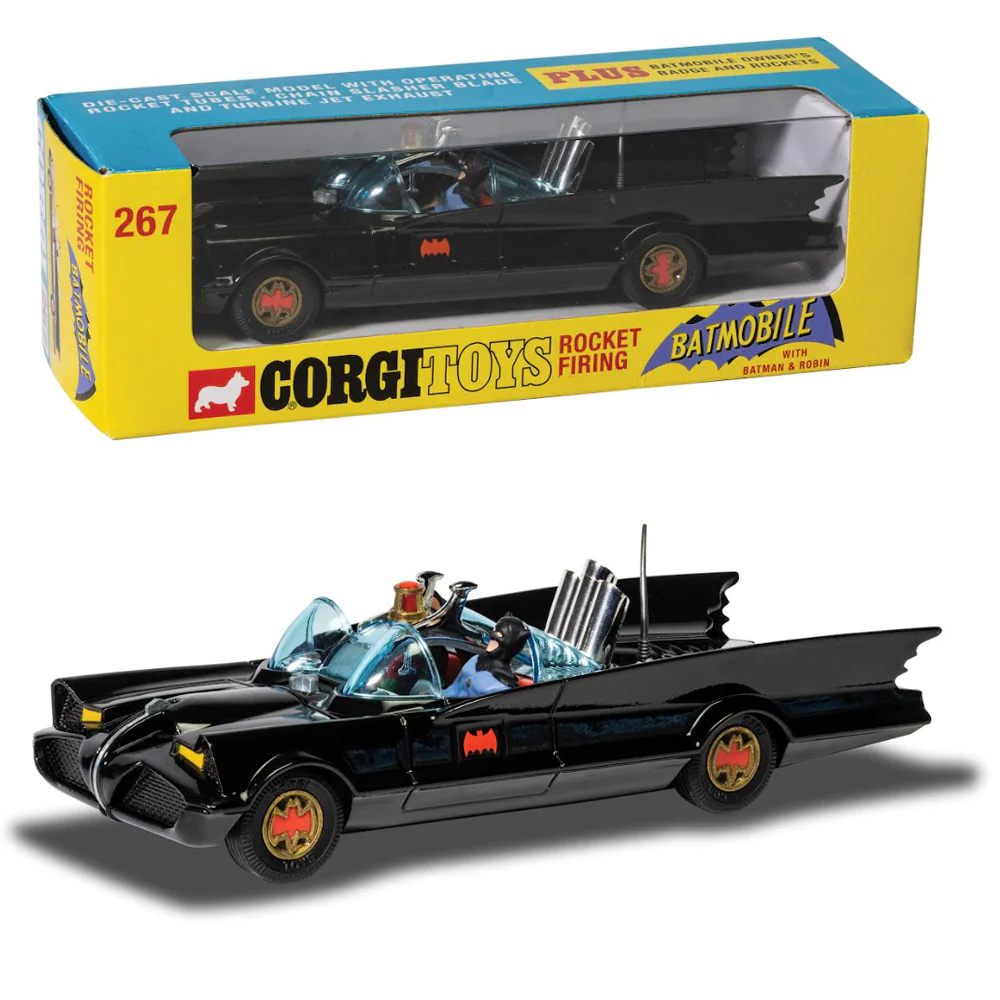
A boxed vehicle is more than the toy inside
The shared record may identify the manufacturer, product line, catalogue number, release year, vehicle and expected contents.
The owned-item record then captures the exact box version, inserts, instructions, figures or accessories, applied decals, wear, repairs, seals, provenance, acquisition source and photographs.
A loose example can share the same product knowledge while remaining visibly different in completeness, packaging and history.
Important collecting distinctions
Details that should not be collapsed into one label
Toy and game records are more useful when release identity, packaging, completeness and condition remain separate.
Original release or reissue
Anniversary and reproduction releases may closely resemble earlier products while differing in markings, materials and packaging.
Sealed or complete
A sealed item may be presumed complete, but completeness and seal integrity remain separate observations.
Variant or later alteration
Factory changes, regional variants, sun fading, repainting and customisation should not share one label.
Set or assembled group
An original boxed set, incomplete set and collector-assembled group have different histories and should remain distinguishable.
The collection extends beyond toys alone
Games bring rules, components and expansion relationships
Board and tabletop games may require records for editions, printings, expansions, component counts, language, punched or unpunched state and compatibility with a base game.
Collectaneum can preserve those relationships alongside toys, figures and display pieces without forcing every object into the same descriptive model.
Learn more when you want to
Research the judgement, then preserve the evidence
The Knowledge Center supports documentation, condition photography, authentication, preservation and valuation. The registry keeps variant research, completeness evidence and ownership history connected to the correct item.
Collectaneum does not authenticate, grade or value an object for you. It keeps conclusions, uncertainty and supporting material connected to the exact owned item so the record remains reviewable.
Your toys & games collection. Your way.
Start recording your toys & games collection
Create connected records for franchises, lines and releases while preserving packaging, variants, accessories, completeness, condition, provenance and photographs.
Start with the essentials and add more whenever it matters. The depth is there when you want it.