
Your toy soldiers & miniatures collection. Your way.
Toy Soldiers & Miniatures Collection Management
Start with the items you own and record the details useful to you.
Keep things simple, or go deeper with manufacturers, scales, materials, sets, castings, paint states, boxes and condition whenever they matter.
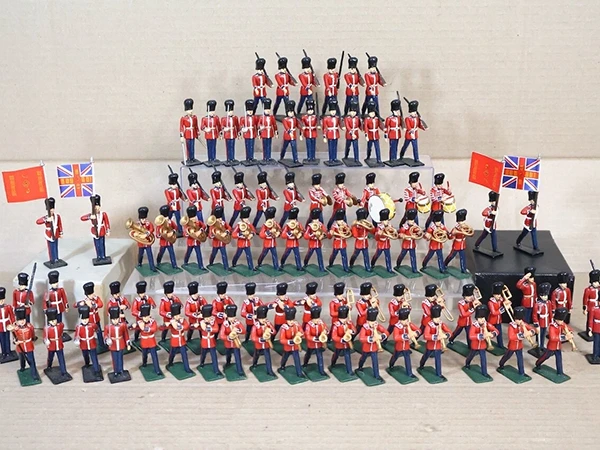
Collect at your own depth
A useful toy soldier and miniature record can be simple or highly detailed.
One item might need little more than a name, photograph and condition. Another might deserve detailed records of manufacturers, scales, materials, sets, castings, paint states, boxes and condition. Both belong in Collectaneum.
Start quickly. Add detail when it earns its place.
Why the collection becomes difficult
The same figure can be judged as a toy, a model and a historical object
Traditional glossy toy soldiers preserve a stylised visual language, while modern matte miniatures may prioritise anatomical detail, uniform accuracy and narrative realism.
A useful registry therefore needs to preserve both the manufacturing history of the miniature and the historical subject it represents.
Toy, model or miniature
Separate traditional toy soldiers, detailed model soldiers and miniature artwork without forcing every object into one visual tradition.
Maker, casting and subject
Record manufacturer, sculpt or casting, historical subject, regiment, campaign, pose, production period and country.
Scale and compatibility
Preserve nominal scale or millimetre size while recognising that 54mm, 60mm, 1:32 and 1:30 figures may not look compatible across makers.
Original paint and intervention
Distinguish factory paint, retouching, repainting, conversion, commissioned painting and later artist intervention.
Set integrity and packaging
Track correct figures, officers, horses, guns, accessories, tie cards, inserts, boxes and labels as parts of one collectible configuration.
Material-specific condition
Record paint loss, bent parts, broken weapons, lead corrosion, plastic brittleness and packaging wear separately.
From casting to owned miniature
Build the record in connected layers
Shared catalogue knowledge can identify a maker, set, casting, sculpt or recognised production state while paint, repairs, conversion, box condition and provenance remain specific to your owned example.
Identify the miniature
Record maker, range, catalogue reference, material, scale, historical subject, regiment, pose, production period and country.
Distinguish the production state
Capture casting type, paint style, gloss or matte finish, sculptor, box type, label, edition, set composition and recognised variation.
Describe your example
Preserve original paint, retouching, repairs, conversions, missing parts, corrosion, completeness, box condition and display or diorama use.
Attach the evidence
Connect photographs, catalogues, receipts, provenance, restoration notes, exhibition history and valuations to the exact owned figure or set.
A record in practice
A genuine old figure can still have a later history
The shared record may identify manufacturer, catalogue number, set, material, scale, regiment, pose, casting period and original box or label.
The owned-item record then captures original paint, retouching, repainting, replaced heads or arms, conversion work, bent or broken parts, corrosion, missing accessories, box condition, acquisition source, photographs and valuations.
Two figures from the same casting can therefore share reliable catalogue knowledge while retaining completely different paint, intervention and ownership histories.
Owned-item evidence
Paint is both surface and evidence
Chipped original factory paint can preserve more collector information than a flawless repaint. Record retouching, repainting and artist work explicitly rather than treating appearance alone as condition.
Important collecting distinctions
Details that should not be collapsed into one label
Toy-soldier and miniature records are clearer when casting, paint, configuration, artistic intervention and completeness remain separate questions.
Original paint or improved appearance
A chipped figure retaining factory paint can be more desirable than a visually perfect repaint.
Casting authenticity or set originality
A genuine old casting can still be paired with later paint, replaced components or incorrect packaging.
Factory object or artist work
A converted or repainted figure may lose factory originality yet gain significance when the intervention is by a recognised miniature artist.
Army completeness or scene completeness
Collectors may complete a boxed set, a manufacturer run, a regiment, a campaign or an entire diorama rather than one universal checklist.
Condition follows the material
Lead, paint, plastic and packaging can deteriorate in different ways
Metal figures may show active lead corrosion, bent components, broken weapons or flaking paint. Plastic figures can warp, discolour or become brittle. Boxes, labels and tie cards have their own condition histories.
Keeping those observations separate creates a more useful record than one overall grade, especially where a complete set survives with mixed figure and packaging condition.
Learn more when you want to
Research the production state, then preserve the evidence
The Knowledge Center supports documentation, authentication, condition, restoration and valuation decisions. The registry keeps photographs, provenance and intervention history connected to the exact owned figure or set.
Collectaneum does not authenticate, grade or value an object for you. It keeps conclusions and supporting material connected to the item so the record remains reviewable as manufacturer, paint or casting knowledge develops.
Your toy soldiers & miniatures collection. Your way.
Start recording your toy soldiers & miniatures collection
Create connected records for manufacturers, sets, castings, scales, historical subjects, paint states and boxes while preserving condition, originality, conversions, photographs and valuations for each owned item.
Start with the essentials and add more whenever it matters. The depth is there when you want it.