
Your teddy bear collection. Your way.
Teddy Bear Collection Management
Start with the items you own and record the details useful to you.
Keep things simple, or go deeper with makers, materials, construction, labels, editions, condition, originality and restoration whenever they matter.
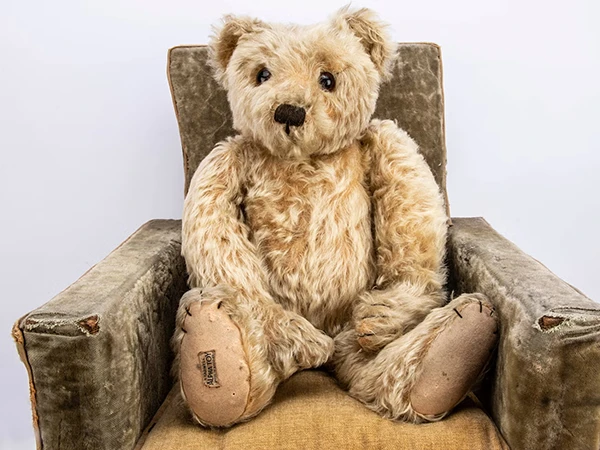
Collect at your own depth
A useful teddy bear record can be simple or highly detailed.
One item might need little more than a name, photograph and condition. Another might deserve detailed records of makers, materials, construction, labels, editions, condition, originality and restoration. Both belong in Collectaneum.
Start quickly. Add detail when it earns its place.
Why the collection becomes difficult
Attribution often depends on anatomy, not labels
Experienced collectors look at muzzle shape, ear placement, jointing, eyes, stuffing, pads, seams, nose stitching, claws and mohair before they trust a maker attribution.
A useful registry therefore needs to preserve clusters of physical evidence while keeping uncertainty visible where maker or production attribution remains open.
Maker and attribution
Record manufacturer, production period, country, labels, buttons and construction clues without relying on a single identifier.
Materials and construction
Preserve mohair or plush type, stuffing, jointing, eyes, pads, nose stitching, claws, growlers and other anatomical details.
Originality and repair
Document replacement eyes, pads, restitching, new stuffing, renewed growlers, seam repairs and other interventions component by component.
Condition and character
Keep mohair loss, staining, joint firmness, pest damage and wear separate from the more subjective appeal of expression and character.
Modern editions and artist bears
Track OOAK work, limited editions, club releases, certificates, tags, boxes, retired models and authorised replicas.
Biography and provenance
Preserve names, previous owners, photographs, letters, historic repairs and stories where the bear has acquired a documented individual identity.
From maker attribution to owned bear
Build the record in connected layers
Shared catalogue knowledge can describe a recognised maker, model, replica, edition or artist while condition, surviving original material, repairs, clothing and provenance remain specific to your owned example.
Identify the bear
Record maker, model or type, production period, country, material, size, jointing, face and construction characteristics.
Distinguish the release
Capture label or button type, colour, edition, replica status, artist, series, certificate, accessories and recognised production differences.
Describe your example
Preserve mohair coverage, eyes, pads, stitching, stuffing, joint condition, repairs, restoration, pest history, clothing and storage.
Attach the evidence
Connect photographs, receipts, auction records, certificates, provenance, restoration notes and valuations to the exact owned bear.
A record in practice
A bear can be original in some parts and restored in others
The shared record may identify the maker, approximate date, size, material, jointing, eye type, stuffing, labels and known construction traits.
The owned-item record then captures mohair loss, original or replacement eyes, pad repairs, restitched nose or claws, opened seams, changed stuffing, growler condition, old clothing, acquisition source, photographs and valuations.
Another bear of the same type can therefore share reliable catalogue knowledge while retaining a completely different originality and life history.
Owned-item evidence
Old repairs can belong to the biography
A crude childhood patch or faded ribbon may reduce conventional condition while preserving evidence of use and ownership. Record what changed, when it is known, rather than erasing the intervention from the story.
Important collecting distinctions
Details that should not be collapsed into one label
Teddy-bear records are clearer when authenticity, originality, condition, restoration, rarity and biography remain separate questions.
Authentic or period-original
A modern authorised Steiff replica can be fully genuine while remaining a different collectible from an original antique period bear.
All-original or sympathetically repaired
A well-executed repair may preserve the object while still changing the degree of surviving original material.
Wear or biography
Bald mohair, old patches and faded ribbons can be condition issues and, at the same time, evidence of a bear's lived history.
Rarity or desirability
Scarcity matters, but expression, maker, colour, provenance, originality and emotional appeal can matter just as much.
Condition is multi-material
Mohair, stuffing, pads, joints and mechanisms can age differently
Collectors may need to record mohair loss, staining, moth damage, cracked or replaced pads, loose joints, shifted stuffing, corrosion, failed growlers, fading and previous repairs independently.
Keeping those observations separate creates a more useful record than one overall grade, especially where a worn all-original bear and a restored example would otherwise appear equivalent.
Learn more when you want to
Research the attribution, then preserve the evidence
The Knowledge Center supports documentation, authentication, condition, restoration and valuation decisions. The registry keeps photographs, provenance and intervention history connected to the exact owned bear.
Collectaneum does not authenticate, grade or value an object for you. It keeps conclusions and supporting material connected to the item so the record remains reviewable as attribution or provenance knowledge develops.
Your teddy bear collection. Your way.
Start recording your teddy bear collection
Create connected records for makers, models, materials, editions, labels and artist bears while preserving condition, originality, restoration, provenance, photographs and valuations for each owned bear.
Start with the essentials and add more whenever it matters. The depth is there when you want it.