
Your Star Wars collection. Your way.
Star Wars Collection Management
Start with the items you own and record the details useful to you.
Keep things simple, or go deeper with Manage Star Wars figures, vehicles, books, comics, posters, autographs, props and production material. Track films whenever they matter.
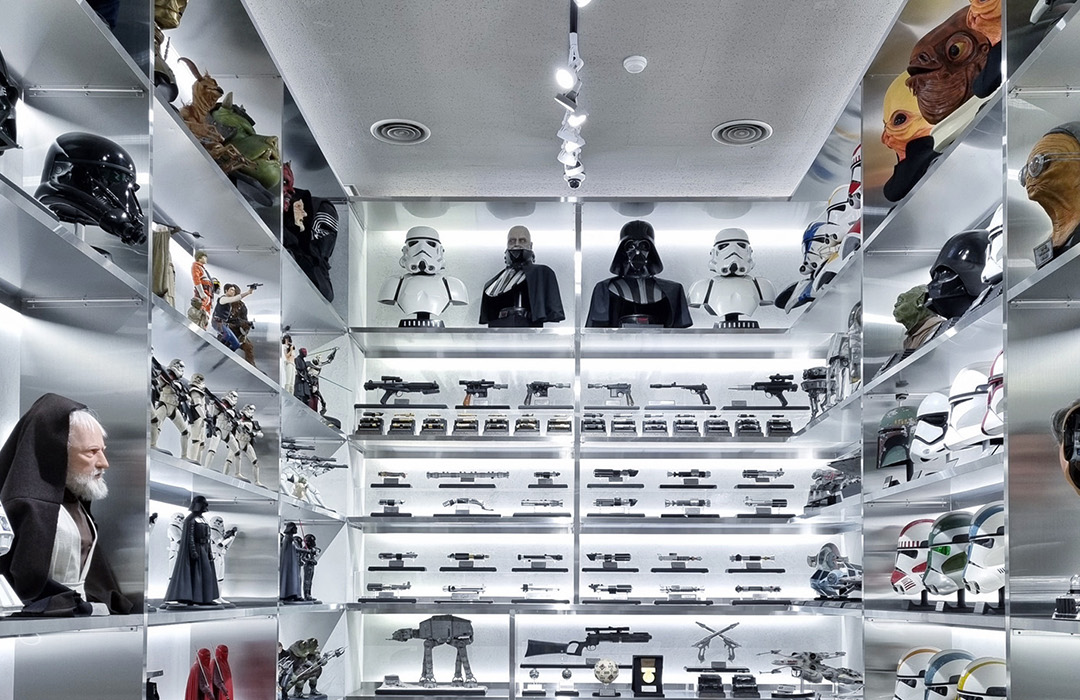
Collect at your own depth
A useful Star Wars record can be simple or highly detailed.
One item might need little more than a name, photograph and condition. Another might deserve detailed records of Manage Star Wars figures, vehicles, books, comics, posters, autographs, props and production material. Track films. Both belong in Collectaneum.
Start quickly. Add detail when it earns its place.
Why the collection becomes difficult
One franchise, many overlapping ways to collect
Star Wars has been produced across decades, markets and media. The same character or vehicle may appear in many scales, formats, languages, packaging styles and licensed product lines.
A collector may organise the same objects by film, series, era, character, faction, manufacturer or release. A useful registry must preserve those relationships without reducing the collection to one rigid folder structure.
Franchise relationships
Connect objects to films, series, characters, actors, factions, vehicles, locations and story eras without forcing each item into one hierarchy.
Product-line detail
Separate manufacturers, licensees, scales, waves, assortments, catalogue references and regional releases.
Variants and packaging
Preserve card backs, box designs, paint changes, accessories, inserts, language differences and retailer exclusives.
Completeness and condition
Record loose, boxed, carded or graded status alongside missing parts, damage, restoration and packaging condition.
Provenance and authenticity
Keep acquisition history, certificates, correspondence and expert evidence connected to autographs, props and production material.
A collection that changes
Add research, valuations, improved identification and new evidence without losing the earlier history of the owned item.
From franchise to owned item
Build the record in connected layers
The shared identity of a release should remain separate from the facts that belong only to your copy. That distinction allows research to be reused while condition, completeness, provenance and documents remain attached to the correct owned object.
Identify the object
Record the object type, film or series, character, actor, faction, vehicle, manufacturer and licensed product line.
Distinguish the release
Capture scale, wave, assortment, catalogue reference, packaging style, regional market, exclusive status and production variation.
Describe your example
Preserve accessories, inserts, completeness, markings, condition, restoration, grading, signatures and storage location at owned-item level.
Attach the evidence
Connect photographs, receipts, certificates, provenance, research notes, correspondence and valuations to the exact object they support.
A record in practice
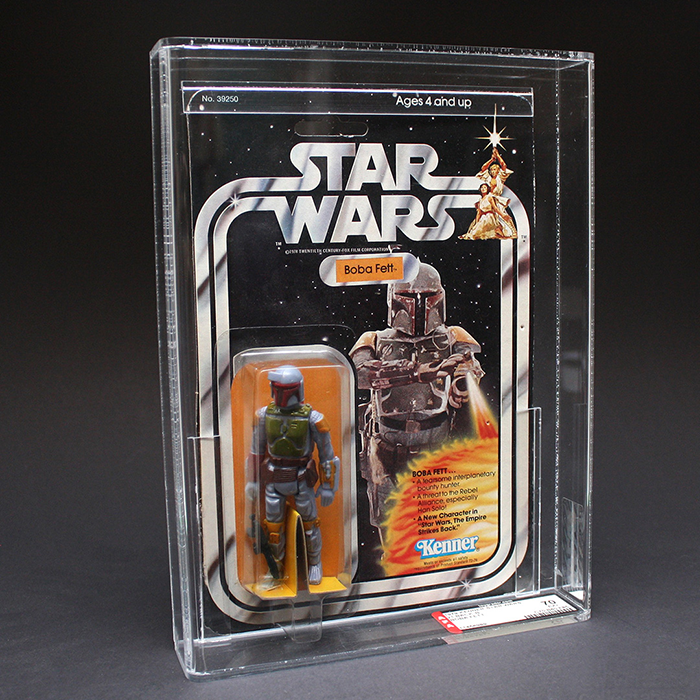
A figure is more than a character name
The shared product record may identify the character, manufacturer, product line, scale, assortment, release period and packaging design. It can also preserve known regional or production variants.
The owned-item record then captures whether your example is loose, carded, boxed or graded; which accessories and inserts remain; the condition of the figure and packaging; acquisition source; storage location; photographs; provenance; and any supporting authentication or valuation documents.
Similar-looking objects can therefore share reliable product knowledge without losing the evidence that makes each owned example different.
Important collecting distinctions
Details that should not be collapsed into one label
Accurate records preserve the difference between what an object appears to be, what evidence supports, and what is known about the individual example.
Vintage release or later reproduction
Objects based on the same character or design may belong to very different release periods, manufacturers and collecting markets.
Licensed replica or production material
A commercially released replica should not be recorded as a screen-used prop, costume piece or production-associated object.
Signed object or authenticated autograph
The presence of a signature is an observation; attribution and authenticity depend on evidence that should remain attached to the item.
Shared product or owned example
Two collectors may own the same release, but condition, completeness, provenance, grading and supporting documents belong to each individual example.
Beyond licensed merchandise
Production material depends on evidence and context
Cinema posters, press kits, scripts, crew gifts, concept art, production photographs, costume pieces, screen-used props and other production-associated objects require a different depth of description from ordinary retail merchandise.
Provenance, authentication, prior ownership and supporting documentation may determine how confidently the object can be described. Collectaneum keeps those records connected to the exact item rather than leaving the conclusion separated from its evidence.
Learn more when you want to
Research the judgement, then preserve the evidence
The Collectaneum Knowledge Center explains the disciplines behind documentation, authentication, provenance, condition, photography and valuation. The registry provides the place to preserve the resulting observations, evidence and uncertainty against the exact object.
That separation matters: Collectaneum does not authenticate, grade or value an item for you. It helps you keep the conclusion reviewable and connected to the material that supports it.
Your Star Wars collection. Your way.
Start recording your Star Wars collection
Create connected records for films, series, characters, factions, vehicles, manufacturers, product lines, figures, books, posters, autographs and production material. Keep variants, completeness, condition, provenance, photographs and valuations attached to the exact item they describe.
Start with the essentials and add more whenever it matters. The depth is there when you want it.