
Your motorsport collection. Your way.
Motorsport Collection Management
Start with the items you own and record the details useful to you.
Keep things simple, or go deeper with drivers, riders, teams, manufacturers, championships, races, circuits and helmets whenever they matter.
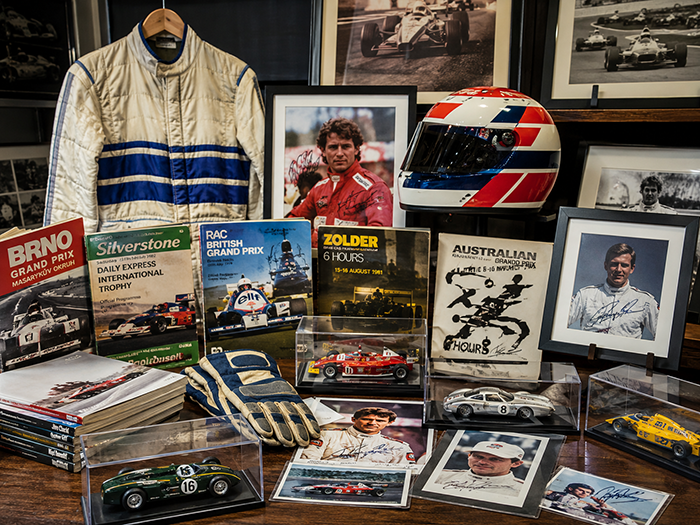
Collect at your own depth
A useful motorsport record can be simple or highly detailed.
One item might need little more than a name, photograph and condition. Another might deserve detailed records of drivers, riders, teams, manufacturers, championships, races, circuits and helmets. Both belong in Collectaneum.
Start quickly. Add detail when it earns its place.
Why the collection becomes difficult
The competitor, machine, season and race each tell a different part of the story
A helmet design may change between tests, qualifying and races. A body panel can relate to one chassis, event or incident, while a model or programme may represent the wider season rather than a particular race.
The record must therefore keep competition history, technical identity and owned-item evidence connected without collapsing them into one association claim.
Driver, rider and team
Connect competitors, teams, constructors, manufacturers and changing contracts across seasons.
Championship and event
Record series, season, round, race, circuit, date, session and result.
Machine and specification
Capture vehicle, chassis, engine, class, number, livery, technical version and component location.
Race use and issue
Distinguish replica, team-issued, test-used, practice-used, qualifying-used, race-used and presented items.
Sponsor and livery changes
Preserve decals, branding, design revisions and event-specific differences that help date an object.
Condition and provenance
Record impact damage, repairs, modifications, signatures, ownership history and documentation.
From championship structure to owned object
Build the record in connected layers
Shared competitor, team, machine and event records explain the racing context, while use, damage, repair, provenance and supporting material remain specific to the collectible.
Identify the racing subject
Record driver or rider, team, manufacturer, constructor, series, class and career context.
Define the machine or event
Capture vehicle, chassis, engine, livery, race number, circuit, round, session and date.
Describe your example
Preserve maker, specification, markings, sponsor decals, wear, damage, repairs, signatures and location.
Attach the evidence
Connect photographs, certificates, team correspondence, race records, receipts, research and valuations.
A record in practice
A race-used helmet needs more than a famous name
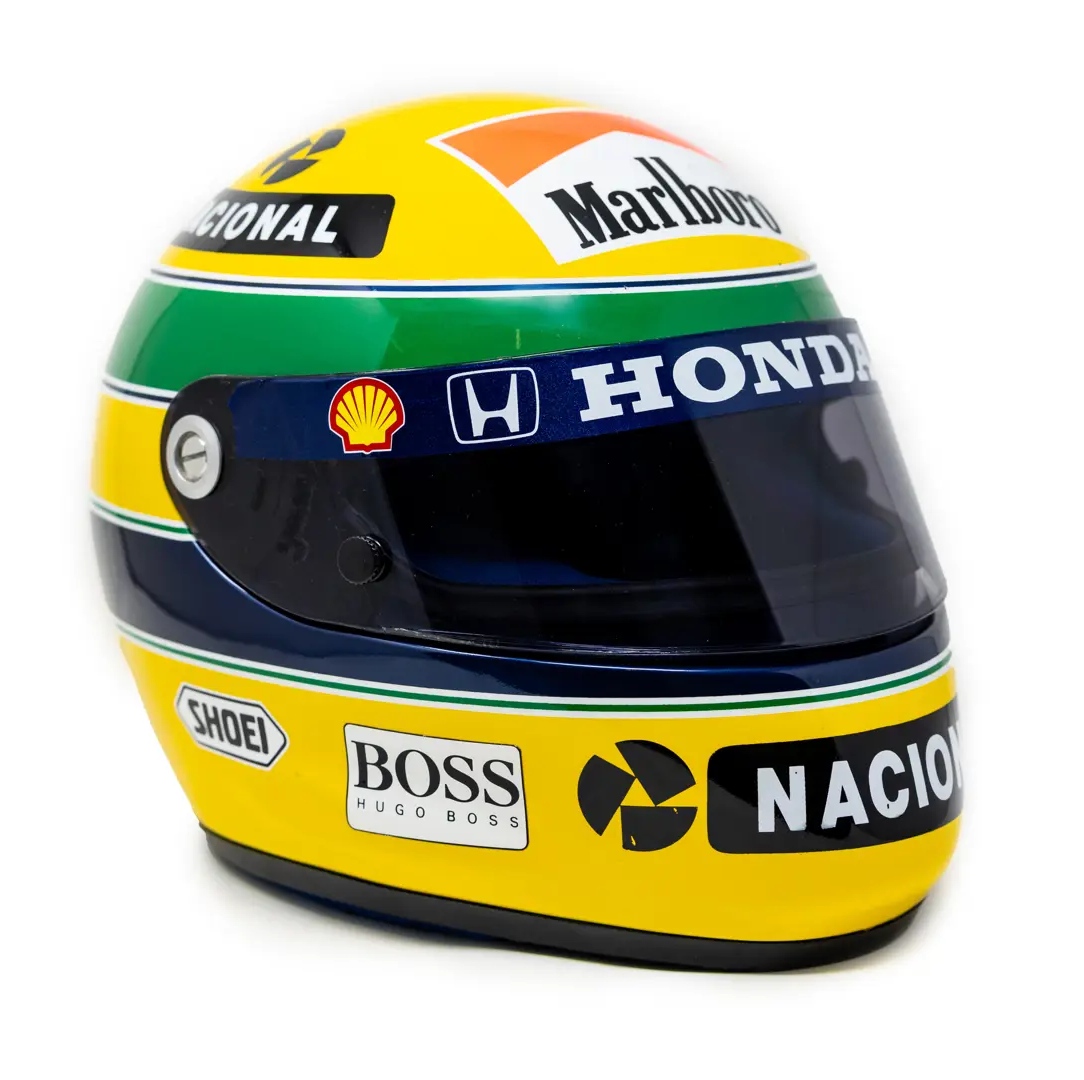
The shared records may identify Ayrton Senna, his team, the 1992 season and the Belgian Grand Prix at Spa-Francorchamps.
The owned-item record then captures helmet maker and model, paint and sponsor configuration, interior labels, visor, radio fittings, wear, repairs, photographic comparisons, provenance and supporting correspondence.
That structure allows the association with a driver and race to be assessed through physical and documentary evidence rather than repeated as an unsupported headline.
Important collecting distinctions
Details that should not be collapsed into one label
Motorsport records are clearer when visual design, technical specification, issue and actual race use remain separate claims.
Replica livery or original racewear
A precise visual reproduction can celebrate a season without sharing the history of team-issued equipment.
Test-used or race-used
Use by a competitor does not necessarily establish use during an official race session.
Vehicle type or exact chassis
A component may match a model or team without being traced to one identified chassis.
Period damage or later alteration
Race impact, workshop repair, souvenir cutting and display modification should be recorded independently.
Technical history is part of provenance
Motorsport objects may be rebuilt, repainted and reused
Teams routinely adapt equipment, replace sponsor graphics, repair damage and move components between sessions or machines. Those changes can be authentic parts of working life rather than defects.
A strong record preserves chronological layers and uncertainty so later research can distinguish original specification, period intervention and post-career presentation.
Learn more when you want to
Research the judgement, then preserve the evidence
The Knowledge Center provides deeper guidance on authentication, provenance, documentation, photography and valuation. The registry keeps technical observations, conclusions and evidence connected to the exact object.
Collectaneum does not authenticate, grade or value an object for you. It keeps conclusions, uncertainty and supporting material connected to the exact owned item so the record remains reviewable.
Your motorsport collection. Your way.
Start recording your motorsport collection
Create connected records for competitors, teams, machines, championships and owned memorabilia while preserving technical detail, race-use claims, condition, provenance and evidence.
Start with the essentials and add more whenever it matters. The depth is there when you want it.