
Your model railway collection. Your way.
Model Railway Collection Management
Start with the items you own and record the details useful to you.
Keep things simple, or go deeper with manufacturers, scales, gauges, prototypes, eras, catalogue references, variants and operational condition whenever they matter.
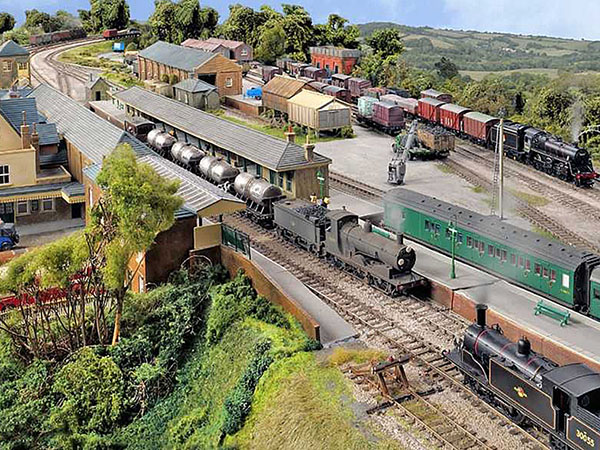
Collect at your own depth
A useful model railway record can be simple or highly detailed.
One item might need little more than a name, photograph and condition. Another might deserve detailed records of manufacturers, scales, gauges, prototypes, eras, catalogue references, variants and operational condition. Both belong in Collectaneum.
Start quickly. Add detail when it earns its place.
Why the collection becomes difficult
One model can have three different identities
A locomotive may be collected as a Hornby, Lionel or Märklin product, operated as a mechanical or electrical machine, and selected because it represents a particular railway company, class, date or route.
A useful registry therefore needs to preserve manufactured identity, operational state and prototype context without forcing them into one simplified hierarchy.
Manufacturer, prototype and era
Separate the model maker from the real railway company, locomotive class, route, depot, livery and historical period being represented.
Scale and gauge
Record both scale and track gauge because OO, HO, O, N, TT, Z and finescale standards can define different collecting and operating systems.
Production variants
Preserve running numbers, liveries, couplings, wheels, chassis, motors, pickups, tenders, pantographs, boxes and other recognised production differences.
Operational condition
Keep mechanical and electrical state separate from cosmetic condition so a visually excellent locomotive is not assumed to be a good runner.
Originality and modification
Document repaints, renumbering, weathering, replacement wheels, decoder fitting, rewiring, three-rail/two-rail conversion and other interventions.
Sets, boxes and accessories
Connect controllers, track, stations, signals, instructions, inserts and packaging to the exact set or product they belong with.
From catalogue reference to owned model
Build the record in connected layers
Shared catalogue knowledge can describe a recognised locomotive, wagon, coach, set or accessory while running condition, repairs, modifications, packaging and provenance remain specific to your individual example.
Identify the model
Record manufacturer, product family, catalogue number, scale, gauge, prototype, railway company, class, running number and production period.
Distinguish the release
Capture livery, coupling, wheel or chassis type, motor, control system, packaging, region, limited edition and recognised production variation.
Describe your example
Preserve cosmetic condition, operational state, originality, repairs, modifications, completeness, box condition and storage or layout history.
Attach the evidence
Connect photographs, receipts, catalogues, service notes, provenance, research and valuations to the exact owned locomotive, wagon, set or accessory.
A record in practice
The same locomotive can be improved and altered at the same time
The shared record may identify manufacturer, catalogue number, scale, gauge, railway company, locomotive class, running number, livery, production period and known mechanical or packaging variants.
The owned-item record then captures running quality, motor and pickup condition, replacement wheels, rewiring, decoder fitting, repainting, weathering, renumbering, box condition, acquisition source, photographs and valuations.
Another example of the same release can therefore reuse reliable catalogue knowledge while retaining a completely different operating and intervention history.
Owned-item evidence
Running history is part of object history
A locomotive that moves is not automatically mechanically healthy. Service notes, motor observations, replacement parts and test history can explain how the model runs now and what has changed over time.
Important collecting distinctions
Details that should not be collapsed into one label
Model railway records are clearer when technical standard, factory state, prototype accuracy and operational condition remain separate questions.
Scale or gauge
Scale describes the model-to-prototype ratio; gauge describes the distance between the rails. They are related but not interchangeable.
Factory-original or prototype-correct
A model can be altered to represent the real railway more accurately while becoming less original as a manufactured collectible.
Mint or mechanically excellent
A pristine model may be seized or electrically dead, while a worn example may run exceptionally well.
Set complete or system complete
A train set may be complete as originally sold, while a collector may instead pursue a complete period system of track, stations, signals and accessories.
Condition has several independent axes
Cosmetic, mechanical and packaging condition may tell different stories
Paint and transfers may remain excellent while a mechanism is seized, electrically intermittent or worn. Fine details can be broken or missing even where the main body looks near mint.
Boxes and paper also age independently through crushing, fading, tape, mildew, missing inserts or annotations. Keeping these dimensions separate creates a much more useful record than one overall grade.
Learn more when you want to
Research the model, then preserve the evidence
The Knowledge Center supports documentation, authentication, condition, restoration and valuation decisions. The registry keeps photographs, service history and conclusions connected to the exact owned model.
Collectaneum does not authenticate, grade or value an object for you. It keeps conclusions and supporting material connected to the item so the record remains reviewable as production or prototype knowledge develops.
Your model railway collection. Your way.
Start recording your model railway collection
Create connected records for manufacturers, scales, gauges, prototypes, eras, catalogue references and recognised variants while preserving operational condition, originality, modifications, photographs and valuations for each owned model.
Start with the essentials and add more whenever it matters. The depth is there when you want it.