
Your militaria collection. Your way.
Militaria Collection Management
Start with the items you own and record the details useful to you.
Keep things simple, or go deeper with conflicts, campaigns, countries, services, units, makers, recipients and object types whenever they matter.
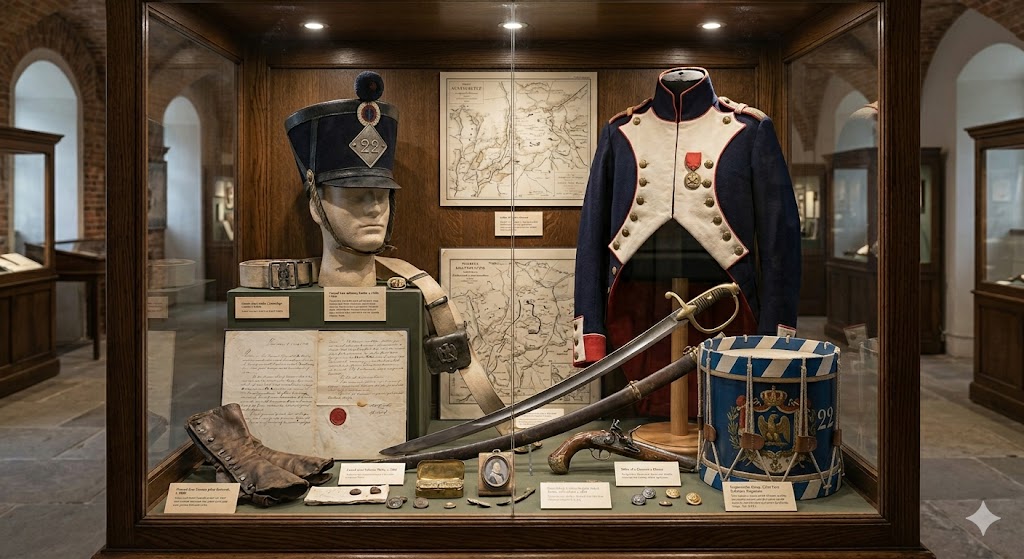
Collect at your own depth
A useful militaria record can be simple or highly detailed.
One item might need little more than a name, photograph and condition. Another might deserve detailed records of conflicts, campaigns, countries, services, units, makers, recipients and object types. Both belong in Collectaneum.
Start quickly. Add detail when it earns its place.
Why the collection becomes difficult
Objects, people and historical events overlap
A single object may need to be understood through its country, service branch, regiment or unit, conflict, campaign, maker, issue period and named recipient. None of those dimensions fully describes the object alone.
Claims of service use, battlefield recovery or named ownership depend on evidence. The registry must preserve both the claim and the material that supports or limits it.
Conflict and campaign
Connect objects to wars, theatres, campaigns and dates without making conflict the only organising structure.
Service and unit
Record country, branch, regiment, battalion, ship, squadron or other unit at the level supported by markings and evidence.
Maker and issue
Preserve maker, manufacturer, issuing authority, pattern, model, contract and production markings.
Recipient and biography
Link named recipients or owners to service records, citations, photographs and related objects.
Provenance and claims
Keep dealer descriptions, family history, recovery accounts and documentary evidence distinct but connected.
Condition and intervention
Record wear, loss, corrosion, repairs, restoration, deactivation and conservation without hiding later change.
From historical type to owned object
Build the record in connected layers
Shared information can describe a recognised pattern, medal, badge or equipment type, while markings, recipient, condition, provenance and documents remain specific to the owned object.
Identify the object
Record object group, object type, country, service, conflict, period, maker, pattern or model and issuing authority.
Connect the history
Capture unit, campaign, named recipient, service event, award context and relationships to documents or grouped material.
Describe your example
Preserve markings, serials, inscriptions, condition, alteration, restoration, deactivation status, display and location.
Attach the evidence
Connect service papers, citations, photographs, receipts, correspondence, provenance, research and valuations.
A record in practice
A medal group is more than a list of awards
The shared records may identify each medal, award criteria, issuing authority and broad period.
The owned group then records naming or engraving, recipient, rank, service number, unit, entitlement, ribbons, mounting, condition, acquisition source, provenance and the documents that connect the awards to one person.
Related photographs, citations and service papers can be linked as evidence without being reduced to notes inside a single medal record.
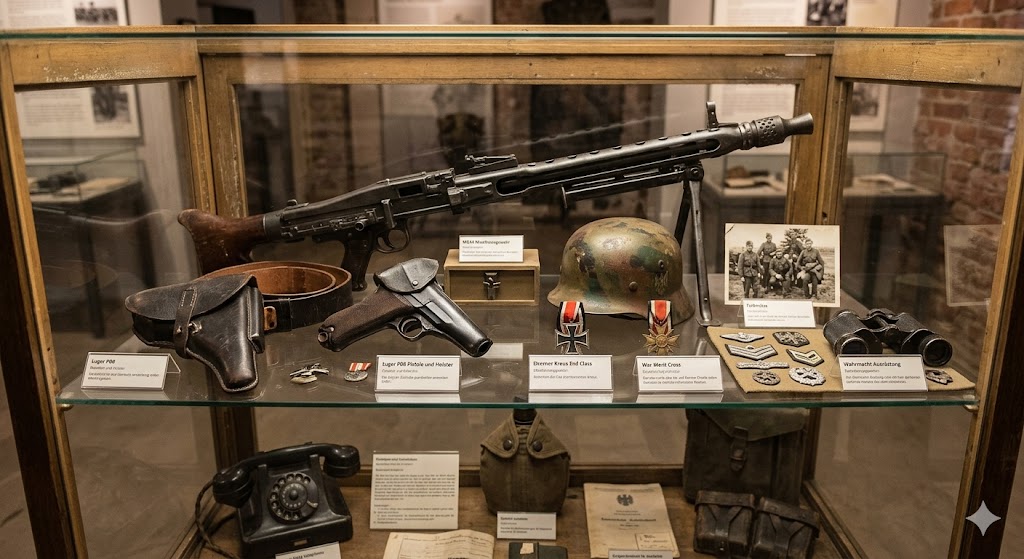
Important collecting distinctions
Details that should not be collapsed into one label
Militaria records need careful language because historical association, ownership and use are often claimed more confidently than the surviving evidence allows.
Pattern type or issued example
An object may match an official pattern without evidence that it was formally issued or used in service.
Named or attributable
A name or service number can support attribution, but connection to a particular individual may still require records.
Period object or wartime-used
Correct manufacture date does not by itself prove campaign, battlefield or combat use.
Original or restored configuration
Replacement parts, post-service alterations, deactivation and restoration should remain visible in the record.
Historical claims need proportionate evidence
Preserve the wording of the claim and the strength of its support
Family accounts, dealer descriptions and old labels can be valuable evidence, but they are not equivalent to marked objects, contemporary photographs, service records or an unbroken chain of custody.
Collectaneum allows a collector to retain the original account, add later research and record uncertainty without converting an attractive story into an unsupported fact.
Learn more when you want to
Research the judgement, then preserve the evidence
The Knowledge Center provides deeper guidance on provenance, authentication, documentation, preservation and legal or ethical considerations. The registry keeps the resulting evidence and judgement together.
Collectaneum does not authenticate, grade or value an object for you. It keeps conclusions, uncertainty and supporting material connected to the exact owned item so the record remains reviewable.
Your militaria collection. Your way.
Start recording your militaria collection
Create connected records for objects, conflicts, units, recipients and makers while keeping markings, condition, provenance, documents and research attached to the correct item.
Start with the essentials and add more whenever it matters. The depth is there when you want it.