
Your mechanical & tin toy collection. Your way.
Mechanical & Tin Toy Collection Management
Start with the items you own and record the details useful to you.
Keep things simple, or go deeper with makers, mechanisms, model numbers, variants, boxes, accessories, working condition and originality whenever they matter.
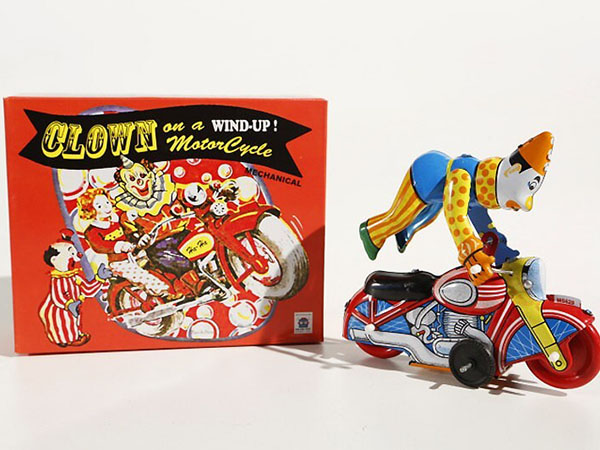
Collect at your own depth
A useful mechanical and tin toy record can be simple or highly detailed.
One item might need little more than a name, photograph and condition. Another might deserve detailed records of makers, mechanisms, model numbers, variants, boxes, accessories, working condition and originality. Both belong in Collectaneum.
Start quickly. Add detail when it earns its place.
Why the collection becomes difficult
Appearance and behaviour must both be recorded
A toy can retain vivid original lithography while its spring or motor is dead. Another can function perfectly after extensive repair. A third may look exceptional because it has been repainted.
A useful registry therefore needs separate records for visual condition, mechanical state, completeness and originality rather than one generic grade.
Maker, model and mechanism
Separate manufacturer, model name or number, country, production period and the mechanism that gives the toy its intended action.
Mechanical and cosmetic condition
Record whether the toy works separately from lithography, paint, corrosion, dents, plastics, rubber and other surface condition.
Completeness
Track keys, battery covers, antennas, guns, remotes, figures, tyres, instructions, inserts and other easily lost components.
Originality and restoration
Document replaced springs, rewiring, reproduction keys, repaired tabs, repainting, retouching and reconstructed mechanisms.
Boxes and regional variants
Preserve the correct box, importer, distributor, language, market and packaging version because these can identify distinct releases.
Mixed-material preservation
Keep metal, lithography, cardboard, rubber, plastics, wiring and mechanical parts under review because each can age differently.
From maker and model to owned toy
Build the record in connected layers
Shared catalogue knowledge can identify a recognised model, mechanism and production variant while working condition, repairs, surface wear, completeness and provenance remain attached to your individual example.
Identify the toy
Record maker, model name or number, subject, country, production period, mechanism type and known catalogue reference.
Distinguish the variant
Capture colour, lithography, wheel or tyre type, export markings, importer labels, accessories, battery arrangement and packaging differences.
Describe your example
Preserve working status, mechanical originality, surface condition, corrosion, missing parts, repairs, replacement components and box condition.
Attach the evidence
Connect photographs, catalogues, receipts, provenance, restoration notes, mechanism observations and valuations to the exact owned toy.
A record in practice
A working toy is not necessarily an original toy
The shared record may identify the manufacturer, model, mechanism, production period, lithography, intended movement, accessories and known export or packaging variants.
The owned-item record then captures whether the mechanism works, whether springs, gears or wiring have been replaced, the state of tabs and rivets, paint or lithography loss, corrosion, missing accessories, box condition, acquisition source, photographs and valuations.
Two visually similar toys can therefore share reliable catalogue information while retaining completely different mechanical and restoration histories.
Owned-item evidence
The underside often carries the strongest clues
Maker marks, country stamps, battery doors, tab construction, rivets and mechanism openings can reveal production generation, prior repair or reconstruction that is invisible from the display face.
Important collecting distinctions
Details that should not be collapsed into one label
Mechanical-toy records are clearer when function, originality, completeness and restoration remain separate questions.
Working or mechanically original
A toy may function perfectly after replacement springs, gears or wiring while no longer retaining its original mechanical state.
Complete or factory-complete
A generic key or replacement antenna may make a toy usable or visually complete without restoring the original supplied configuration.
Original surface or restored appearance
A bright repaint can look better than worn lithography while removing historic surface evidence that originality-focused collectors value.
Reproduction or counterfeit
Modern reproductions and replica boxes can be legitimate collectibles when disclosed; problems begin when later ownership obscures what they are.
Condition has several independent axes
Surface, mechanism, electrics and packaging can age differently
Lithography may fade or scratch, steel may rust, springs may weaken, battery contacts may corrode, rubber can harden, plastic can crack and original boxes may deteriorate even when the toy itself survives well.
Keeping these observations separate creates a more useful record than a single overall grade, particularly where a beautiful toy is mechanically dead or a fully working toy has heavy surface wear.
Learn more when you want to
Research the mechanism, then preserve the evidence
The Knowledge Center supports documentation, authentication, condition, restoration and valuation decisions. The registry keeps photographs, repair history and observations connected to the exact owned toy.
Collectaneum does not authenticate, grade or value an object for you. It keeps conclusions and supporting material connected to the item so the record remains reviewable as maker, mechanism or variant knowledge develops.
Your mechanical & tin toy collection. Your way.
Start recording your mechanical & tin toy collection
Create connected records for makers, models, mechanisms, production eras, variants and packaging while preserving working state, completeness, originality, restoration, photographs and valuations for each owned toy.
Start with the essentials and add more whenever it matters. The depth is there when you want it.