
Your LEGO collection. Your way.
LEGO Collection Management
Start with the items you own and record the details useful to you.
Keep things simple, or go deeper with sets, themes, minifigures, elements, variants, packaging, completeness and condition whenever they matter.
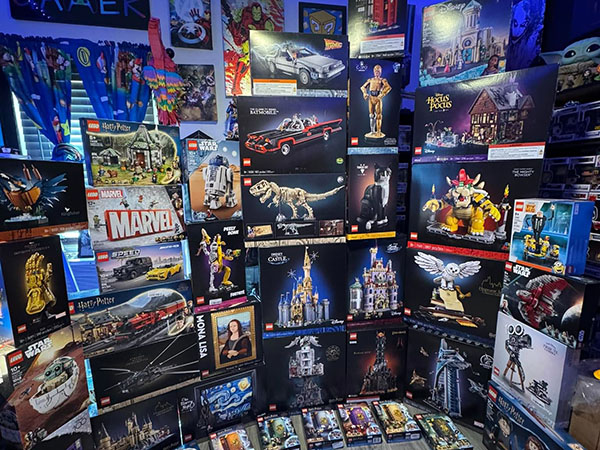
Collect at your own depth
A useful LEGO record can be simple or highly detailed.
One item might need little more than a name, photograph and condition. Another might deserve detailed records of sets, themes, minifigures, elements, variants, packaging, completeness and condition. Both belong in Collectaneum.
Start quickly. Add detail when it earns its place.
Why the collection becomes difficult
The set is not always the smallest collectible unit
Minifigures, printed elements, stickers, instructions and even boxes can have their own catalogue identity and market value. At the same time, interchangeable parts can migrate between sets for decades.
A useful registry therefore needs to understand both the set as a whole and the components whose presence, absence or replacement affect its completeness and originality.
Set, theme and era
Separate set number, theme, subtheme, release year, region and production era so similar models and reissues remain distinct.
Minifigures and elements
Track minifigures, printed parts, moulds, colours, accessories and other components that may carry their own collector identity and value.
Completeness
Distinguish build-complete, figure-complete, full set contents, instructions, stickers, boxes, inserts and factory extras.
Originality and replacements
Record whether missing elements were replaced with modern genuine LEGO, period-correct parts, custom pieces or reproductions.
Sealed, opened and built
Preserve factory-sealed state, opened condition, building history and box integrity without reducing everything to one condition label.
Condition and material ageing
Document scratches, cracks, print wear, yellowing, brittle elements, sticker damage, clutch issues and packaging wear separately.
From set number to owned example
Build the record in connected layers
Shared catalogue knowledge can describe a recognised set, theme, production variant or minifigure while substitutions, completeness, condition and packaging remain specific to the example in your collection.
Identify the set
Record set number, title, theme, subtheme, release period, region, packaging version and known catalogue or production differences.
Describe the components
Capture minifigures, important elements, printed parts, stickers, instructions, box and other components relevant to identity or completeness.
Describe your example
Preserve sealed or opened state, completeness, substitutions, repairs, discolouration, cracks, sticker condition, storage and display history.
Attach the evidence
Connect photographs, receipts, inventories, provenance, restoration notes, market references and valuations to the exact owned set or component.
A record in practice
A complete-looking set may contain a different history inside
The shared record may identify the set number, title, theme, release period, intended minifigures, inventory, stickers, instructions and known regional or packaging variants.
The owned-item record then captures which components are present, whether replacements are modern or period-correct, print and sticker condition, cracks, discolouration, box state, seal integrity, acquisition source, photographs and valuations.
Another copy of the same set can therefore reuse reliable catalogue knowledge while retaining a completely different component and originality history.
Owned-item evidence
Genuine LEGO does not always mean original to the set
A replacement brick or minifigure part can be genuine LEGO and perfectly correct in appearance while still being a later substitution. Record both authenticity and originality rather than treating them as the same thing.
Important collecting distinctions
Details that should not be collapsed into one label
LEGO records are clearer when authenticity, originality, completeness and sealed status remain separate questions.
Genuine or original
A modern genuine LEGO replacement may make a set physically complete without making that element original to the historic copy.
Build-complete or collector-complete
A model can be fully buildable while still lacking original figures, instructions, stickers, packaging, inserts or factory extras.
Sealed or verified
Factory seals preserve collecting status, but unopened contents cannot be directly checked for completeness without destroying that status.
Restored or untouched
Replacing yellowed parts, using reproduction stickers or reversing discolouration may improve appearance while reducing historical originality.
Condition reaches from brick to box
Plastic, printing, stickers and packaging age differently
Collectors may need to record scratches, cracks, loosened joints, faded printing, yellowing, brittle elements, warped parts, sticker wear and damaged electrical components independently of box creases, fading or seal condition.
Keeping those observations separate creates a more useful record than a single overall grade, especially for valuable minifigures and sealed or vintage sets.
Learn more when you want to
Research the set, then preserve the evidence
The Knowledge Center supports documentation, authentication, condition, restoration and valuation decisions. The registry keeps inventories, photographs and conclusions connected to the exact owned set or component.
Collectaneum does not authenticate, grade or value an object for you. It keeps conclusions and supporting material connected to the item so the record remains reviewable as variant, component or market knowledge develops.
Your LEGO collection. Your way.
Start recording your LEGO collection
Create connected records for sets, themes, minifigures, elements, packaging and recognised variants while preserving completeness, originality, condition, photographs and valuations for each owned example.
Start with the essentials and add more whenever it matters. The depth is there when you want it.