
Your ice hockey collection. Your way.
Ice Hockey Collection Management
Start with the items you own and record the details useful to you.
Keep things simple, or go deeper with players, teams, leagues, games, seasons, jerseys, sticks and pucks whenever they matter.
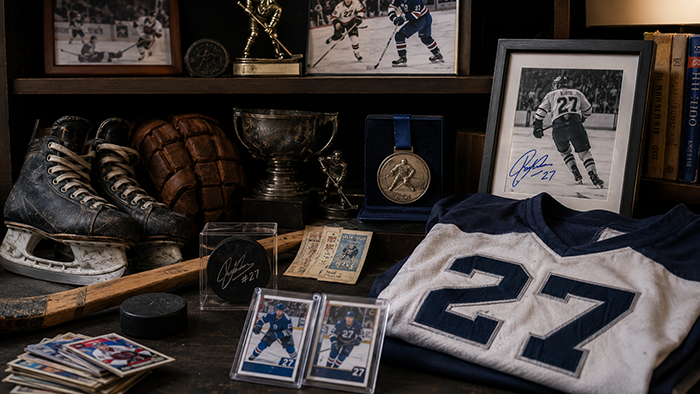
Collect at your own depth
A useful ice hockey record can be simple or highly detailed.
One item might need little more than a name, photograph and condition. Another might deserve detailed records of players, teams, leagues, games, seasons, jerseys, sticks and pucks. Both belong in Collectaneum.
Start quickly. Add detail when it earns its place.
Why the collection becomes difficult
Player, team, season and use must remain separate but connected
The same jersey design may appear across retail replicas, team-issued sets, preseason use, regular-season games and later commemorative releases. Equipment can also be reused, repaired, modified or transferred between players.
A reliable record therefore needs to distinguish visible identity from attributed use, and preserve the evidence behind each conclusion rather than relying on one broad description.
Player and roster context
Connect players, positions, teams, leagues, seasons and roster changes without treating them as one field.
Game and competition
Record fixture, date, venue, opponent, competition stage, result and milestone context.
Issue and use status
Distinguish retail, replica, team-issued, game-issued, game-worn, practice-used and presented objects.
Equipment specification
Capture maker, model, size, tagging, stick pattern, blade, tape, markings, repairs and modifications.
Photographic matching
Preserve image comparisons, distinctive repairs, wear patterns, numbering and other matching evidence.
Condition and provenance
Record wear, damage, restoration, signatures, ownership history and supporting documentation.
From league history to owned equipment
Build the record in connected layers
Shared player, team and game records explain the sporting context, while tagging, use, repairs, condition and provenance remain attached to the individual object.
Identify the sporting subject
Record player, team, league, position, season, career stage and relevant milestones.
Define the event or product
Capture game, competition, date, venue, maker, model, design, number and release or issue details.
Describe your example
Preserve tags, markings, wear, repairs, modifications, signatures, dimensions and storage location.
Attach the evidence
Connect photographs, certificates, receipts, correspondence, roster records, research and valuations.
A record in practice
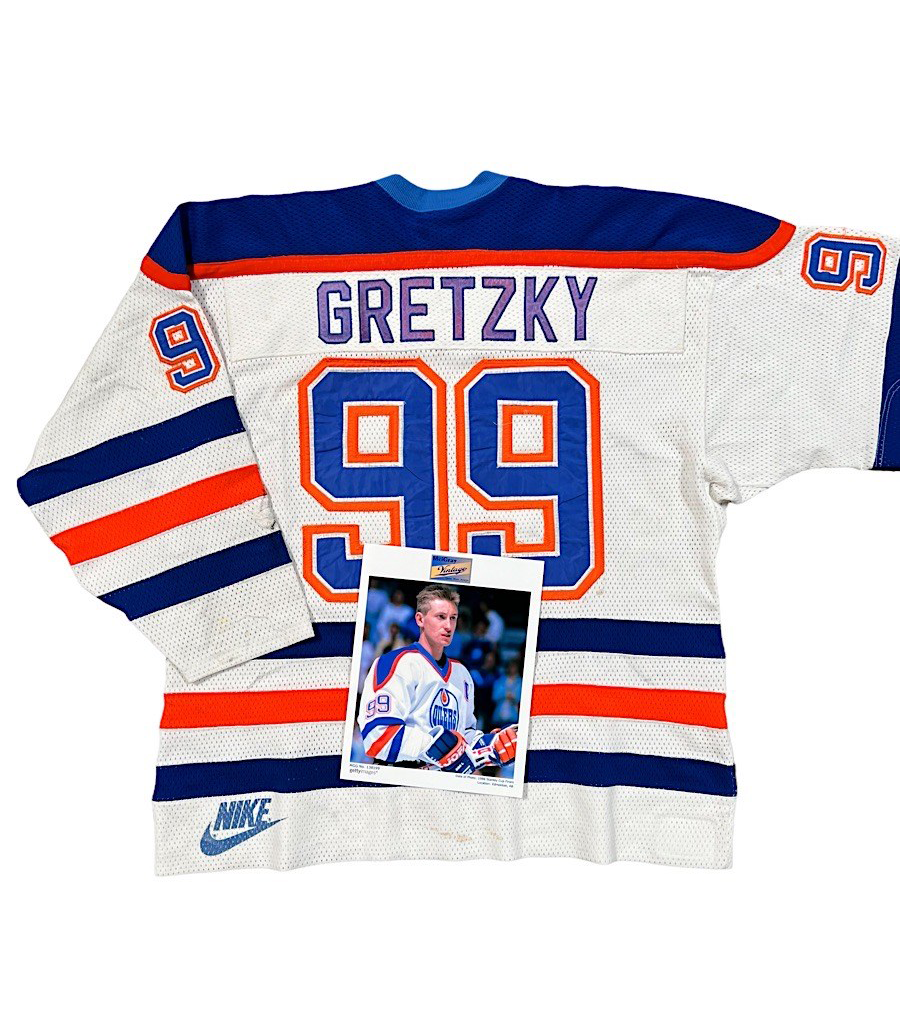
A game-used jersey is a chain of linked evidence
The shared record may identify the team design, manufacturer, season, player and Stanley Cup Finals context.
The owned-item record then captures tagging, number style, repairs, wear, alterations, signatures, photographic comparisons, acquisition history and any letter or certificate supporting game use.
Keeping those elements separate allows the record to show exactly which conclusions are established, which are probable and which remain unresolved.
Important collecting distinctions
Details that should not be collapsed into one label
Ice hockey records become more dependable when issue, use, player attribution and later modification are not treated as interchangeable.
Team-issued or game-worn
An item prepared by the team is not automatically proven to have been used in a competitive game.
Set tagging or player attribution
Correct tagging can establish production context without by itself proving assignment to one player.
Original wear or later damage
Game wear, storage damage, display fading and restoration should remain separately described.
Photo match or visual similarity
A convincing resemblance is not the same as a documented match based on distinctive, repeatable features.
Equipment can change during its working life
Repairs and modifications may be part of the object’s sporting history
Stitching, reinforcement, shortened sleeves, replaced name bars, taped sticks and equipment adjustments may look like condition problems while also documenting team practice and player preference.
The registry should preserve those interventions without automatically classifying them as later restoration, allowing physical evidence and sporting interpretation to remain visible together.
Learn more when you want to
Research the judgement, then preserve the evidence
The Knowledge Center provides deeper guidance on authentication, provenance, documentation, photography and valuation. The registry keeps those conclusions and supporting evidence attached to the exact item.
Collectaneum does not authenticate, grade or value an object for you. It keeps conclusions, uncertainty and supporting material connected to the exact owned item so the record remains reviewable.
Your ice hockey collection. Your way.
Start recording your ice hockey collection
Create connected records for players, teams, games and owned memorabilia while preserving tagging, equipment detail, use claims, condition, provenance and supporting evidence.
Start with the essentials and add more whenever it matters. The depth is there when you want it.