
Your franchise & character collection. Your way.
Franchise & Character Collection Management
Start with the items you own and record the details useful to you.
Keep things simple, or go deeper with toys, books, ceramics, clothing, props, ephemera, homeware and more. Track characters whenever they matter.
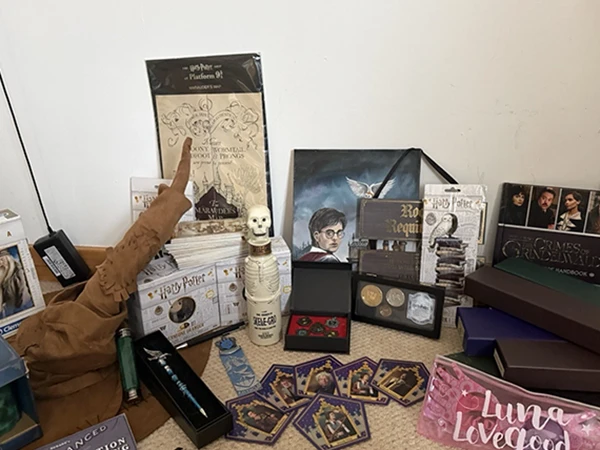
Collect at your own depth
A useful franchise and character record can be simple or highly detailed.
One item might need little more than a name, photograph and condition. Another might deserve detailed records of toys, books, ceramics, clothing, props, ephemera, homeware and more. Track characters. Both belong in Collectaneum.
Start quickly. Add detail when it earns its place.
Why the collection becomes difficult
The character can outrank the object category
A Snoopy, Batman, Pikachu, Hello Kitty, Doctor Who or Godzilla collector may cross dozens of object types without feeling they have left the same collection. The character or universe provides the continuity.
A useful registry therefore needs to preserve subject relationships and product history at the same time, without forcing everything into one rigid material hierarchy.
Subject before object type
Connect toys, books, ceramics, stationery, clothing, props, homeware and ephemera through the character or franchise they belong to.
Character and incarnation
Separate franchise, character, supporting cast, costume, actor, adaptation, visual era and specific character state where those distinctions matter.
Maker and regional licensing
Record manufacturer, licensee, retailer, country, market and packaging differences across regions and production periods.
Official, unofficial and reproduced
Distinguish licensed merchandise, fan-made objects, bootlegs, vintage originals, official reproductions and later reissues.
Self-defined completeness
Preserve the collector's chosen scope, whether that means one character, one era, one maker, one adaptation, one region or one product class.
Condition across materials
Apply the right condition language to plush, paper, ceramics, vinyl, textiles, boxed toys, props and other very different object types.
From character identity to owned object
Build the record in connected layers
Shared catalogue knowledge can describe a recognised character, incarnation, manufacturer and release while condition, completeness, packaging, provenance and intervention remain specific to the object in your collection.
Identify the subject
Record franchise, character, faction or relationship, incarnation, adaptation, performer, costume or visual state where relevant.
Identify the object
Capture object type, manufacturer, licensee, product line, release period, region, retailer, event or exclusive status.
Describe your example
Preserve condition, completeness, packaging, accessories, originality, repairs, customisation, storage and display details at owned-item level.
Attach the evidence
Connect photographs, receipts, tags, certificates, provenance, research notes, correspondence and valuations to the exact object they support.
A record in practice
A character name is only the first level of identification
The shared record may identify the franchise, character, incarnation, visual era, manufacturer, product line, regional market, event or exclusive release.
The owned-item record then captures material-specific condition, packaging, accessories, tags, repairs, authenticity evidence, acquisition source, storage location, photographs, provenance and valuations.
Similar-looking character objects can therefore share reliable subject knowledge while retaining entirely separate production and ownership histories.
Collector-defined scope
Complete often means complete by your own rule
A collector may define completion as every item for one character, one incarnation, one maker, one region, one adaptation or one product class. Preserving that rule is often more useful than pretending the whole franchise has a finite checklist.
Important collecting distinctions
Details that should not be collapsed into one label
Franchise and character records become clearer when subject identity, adaptation, authenticity, scarcity and desirability remain separate questions.
Franchise or character
A collector may ignore most of a franchise and specialise in one character, villain, companion, monster or supporting figure.
Character or incarnation
Different actors, costumes, designs, adaptations and production eras may represent distinct collecting subjects rather than interchangeable versions.
Official or historically original
A modern licensed reproduction can be fully official while still differing fundamentally from a vintage period release or production-used object.
Scarce or desirable
A genuinely rare item may attract little demand, while a common object depicting an especially popular character can remain highly sought after.
Condition follows the object, not the character
Plush, ceramics, paper, vinyl and props need different condition records
A plush may show matting, staining or missing tags; ceramics may chip or craze; paper can fox, tear or fade; vinyl can yellow or become tacky; boxed toys have separate packaging condition; production props may carry use wear that supports their history.
Keeping those observations object-specific allows a character collection to remain coherent without flattening very different materials into one generic grade.
Learn more when you want to
Research the object, then preserve the context
The Knowledge Center supports documentation, authentication, provenance, condition and valuation decisions. The registry keeps the resulting observations and evidence connected to the exact owned object.
Collectaneum does not authenticate, grade or value an object for you. It keeps conclusions and supporting material connected to the item so the record remains reviewable as licensing, variant or provenance research develops.
Your franchise & character collection. Your way.
Start recording your franchise & character collection
Create connected records for franchises, characters, incarnations, manufacturers, regions and releases across toys, books, plush, ceramics, clothing, props, homeware and ephemera. Keep condition, authenticity, provenance, photographs and valuations attached to the exact item they describe.
Start with the essentials and add more whenever it matters. The depth is there when you want it.