
Your football collection. Your way.
Football Collection Management
Start with the items you own and record the details useful to you.
Keep things simple, or go deeper with players, clubs, national teams, matches, competitions, seasons, shirts and programmes whenever they matter.
Collect at your own depth
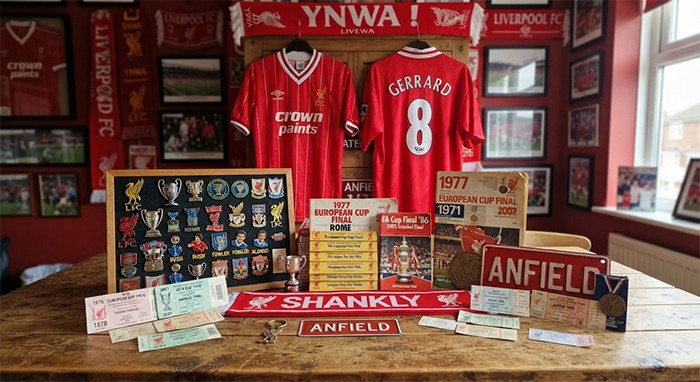
A useful football record can be simple or highly detailed.
One item might need little more than a name, photograph and condition. Another might deserve detailed records of players, clubs, national teams, matches, competitions, seasons, shirts and programmes. Both belong in Collectaneum.
Start quickly. Add detail when it earns its place.
Why the collection becomes difficult
Club history, match history and object history overlap
One design may be used across a season, adapted for a competition or issued to different players. Printed material can also vary by fixture, stand, price, edition or later reproduction.
The record should keep player, team, match, competition and season connected while preserving the evidence behind match-use, issue, signature and provenance claims.
Player and team
Connect players, clubs, national teams, managers and squads across changing careers.
Match and competition
Record fixture, stage, date, venue, competition, season and result.
Shirt specification
Capture manufacturer, sponsor, design, size, number, patches and player attribution.
Issue and use claims
Distinguish retail, replica, player-issued, match-issued, match-worn and signed items.
Printed variants
Preserve programme, ticket, pass and poster editions, prices, stands and print differences.
Condition and provenance
Record wear, alterations, signatures, framing, acquisition and supporting evidence.
From sporting fixture to owned item
Build the record in connected layers
Shared player, club and match records explain the sporting context, while issue, use, condition, provenance and evidence remain specific to the object.
Identify the people and teams
Record player, club, national side, manager, squad role and career context.
Define the football event
Capture match, competition, stage, season, venue, date and result.
Describe your example
Preserve maker, design, size, number, patches, signatures, wear, alterations and location.
Attach the evidence
Connect photographs, certificates, receipts, correspondence, match records, research and valuations.
A record in practice
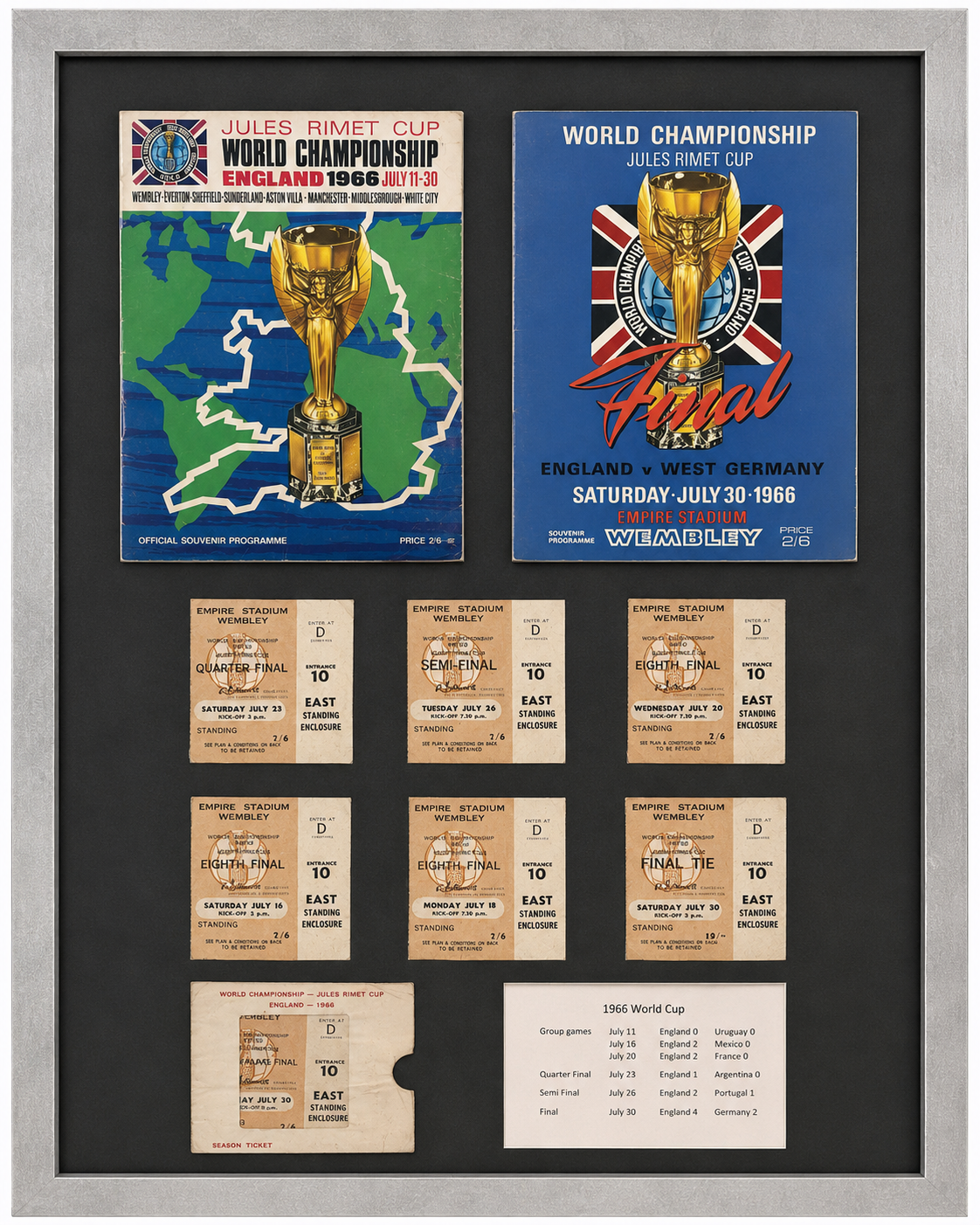
A final programme and ticket are related but separate records
The shared event record identifies the match, competition, date, venue, teams and result.
Each owned item then retains its own edition, seat or stand detail, annotations, signatures, condition, provenance and photographs.
Linking them to the same event preserves their relationship without merging two distinct collectibles into one record.
Important collecting distinctions
Details that should not be collapsed into one label
Football collecting depends on claims that sound similar but carry very different evidential weight.
Replica or player issue
A commercially sold shirt can match the design without sharing the specification or history of player-issued kit.
Match-issued or match-worn
Preparation for a fixture does not prove that the item was used during play.
Signed or match associated
A genuine signature does not by itself establish that the object was present at the named match.
Fixture or competition
An item may relate to one match, a tournament stage or the wider competition as a whole.
The same design can have many biographies
Association should be recorded as evidence, not implied by appearance
Shirts, balls, medals and printed material can be visually convincing while differing in issue, use, date or provenance. The record should state exactly what is known and how it is supported.
Collectaneum keeps those conclusions alongside photographs, documents and uncertainty so the object can be reassessed as further evidence emerges.
Learn more when you want to
Research the judgement, then preserve the evidence
The Knowledge Center provides deeper guidance on authentication, provenance, documentation, photography and valuation. The registry keeps the conclusions and supporting material attached to the exact item.
Collectaneum does not authenticate, grade or value an object for you. It keeps conclusions, uncertainty and supporting material connected to the exact owned item so the record remains reviewable.
Your football collection. Your way.
Start recording your football collection
Create connected records for players, teams, matches and owned memorabilia while preserving issue, use, signatures, condition, provenance and supporting evidence.
Start with the essentials and add more whenever it matters. The depth is there when you want it.