
Your Disney collection. Your way.
Disney Collection Management
Start with the items you own and record the details useful to you.
Keep things simple, or go deeper with toys, animation art, park memorabilia, pins, books, watches, ceramics and ephemera whenever they matter.
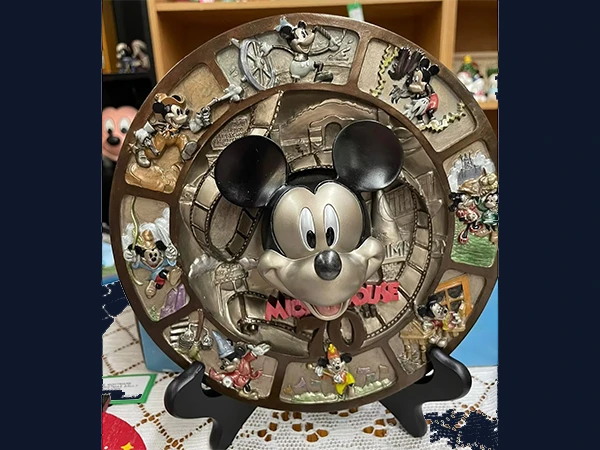
Collect at your own depth
A useful Disney record can be simple or highly detailed.
One item might need little more than a name, photograph and condition. Another might deserve detailed records of toys, animation art, park memorabilia, pins, books, watches, ceramics and ephemera. Both belong in Collectaneum.
Start quickly. Add detail when it earns its place.
Why the collection becomes difficult
Disney is the taxonomy above the objects
The same character can appear across toys, watches, books, ceramics, animation art, pins and park merchandise. A film, artist, attraction or resort can create another equally valid way of organising those objects.
A useful registry therefore needs to preserve those relationships without reducing Disney collecting to toys or any other single material category.
One world, many object types
Connect toys, pins, animation art, books, ceramics, watches, costumes, posters, park material and ephemera without forcing them into one physical category.
Character, film and place
Record relationships to characters, films, artists, parks, resorts, attractions and events because these often matter more than object type alone.
Maker and licensing
Separate Disney-produced, officially licensed, manufacturer-specific, regional and later reproduction material.
Artefact or collectible
Distinguish production cels, park-used signs and Imagineering material from objects created specifically for collectors.
Regional and event releases
Preserve park, country, event, D23, limited-edition, limited-release and exclusive issue details.
Condition and provenance
Keep object-specific condition and supporting history attached to the exact owned item, especially for animation art and park-used material.
From Disney relationship to owned item
Build the record in connected layers
Shared catalogue knowledge can identify a recognised release, park object, artwork type or licensed product while condition, originality, provenance and supporting documentation remain attached to the individual item you own.
Identify the object
Record object type, character, film or production, park or attraction, maker, artist or designer, release period and intended market.
Distinguish the release
Capture edition, licensing status, regional issue, event or park source, limited status, packaging and known production variation.
Describe your example
Preserve condition, completeness, originality, restoration, park use, signatures, tags, certificates, storage and display details at owned-item level.
Attach the evidence
Connect photographs, receipts, certificates, provenance, auction records, correspondence, research notes and valuations to the exact object they support.
A record in practice
A familiar Disney image does not identify the object
The shared record may identify a character, film, attraction, maker, artist, production period, licensing status, edition or regional release.
The owned-item record then captures whether the object is production-used, park-used, officially reproduced, signed, complete, restored or altered, together with condition, acquisition source, photographs, provenance, certificates and valuations.
Similar-looking Disney objects can therefore share reliable catalogue knowledge without losing the evidence that makes their historical status completely different.
Owned-item evidence
Park-used and production material depend on provenance
A sign, costume, cel, prop or Imagineering object may require photographs, auction records, correspondence or other evidence to support where it was used and how it left Disney ownership. Keep that evidence attached to the exact item.
Important collecting distinctions
Details that should not be collapsed into one label
Disney records are clearer when historical function, licensing, originality, scarcity and condition remain separate questions.
Artefact or collector product
A production cel, park sign or costume was made to help create or operate Disney; a commemorative cel, pin or figurine was made to be collected.
Authentic or original
An official Disney reproduction can be fully authentic merchandise while still not being an original period production or park-used object.
Historical scarcity or manufactured scarcity
A rare surviving 1930s object and a modern LE 500 release may both be scarce, but for completely different reasons.
Condition or historical use
Pinholes, fading, mounting marks or wear may reduce cosmetic condition yet support the history of a production or park-used artefact.
Condition depends on the object
A cel, pin and park sign cannot share one condition model
Animation art may show paint lifting, line fading or acetate deterioration; paper may show folds, foxing or tears; pins may show enamel or post damage; toys and figurines may have paint loss, missing parts or packaging wear.
Park-used material may also carry scratches, repainting, mounting holes or weathering that form part of its operational history. Those observations should remain separate from later damage or restoration.
Learn more when you want to
Research the object's history, then preserve the evidence
The Knowledge Center supports documentation, authentication, provenance, condition and valuation decisions. The registry keeps the resulting observations, photographs and evidence connected to the exact owned item.
Collectaneum does not authenticate, grade or value an object for you. It keeps conclusions and supporting material connected to the item so the record remains reviewable as new information emerges.
Your Disney collection. Your way.
Start recording your Disney collection
Create connected records for characters, films, artists, parks, attractions, makers and releases across toys, animation art, pins, books, ceramics, watches, ephemera, costumes and park material. Keep condition, provenance, originality, photographs and valuations attached to the exact item they describe.
Start with the essentials and add more whenever it matters. The depth is there when you want it.