
Your die-cast model collection. Your way.
Die-Cast Model Collection Management
Start with the items you own and record the details useful to you.
Keep things simple, or go deeper with makers, scales, castings, vehicle subjects, production variants, packaging, condition and originality whenever they matter.
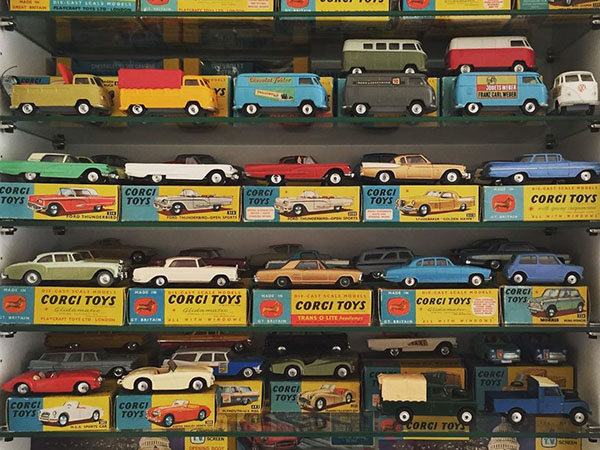
Collect at your own depth
A useful die-cast model record can be simple or highly detailed.
One item might need little more than a name, photograph and condition. Another might deserve detailed records of makers, scales, castings, vehicle subjects, production variants, packaging, condition and originality. Both belong in Collectaneum.
Start quickly. Add detail when it earns its place.
Why the collection becomes difficult
The same miniature can belong to several different collecting systems
One collector may organise by Dinky, Corgi, Matchbox or Hot Wheels. Another may collect Ferrari, buses, Formula One, police vehicles or a particular scale. The same object can sit inside all of those structures.
A useful registry therefore needs to preserve both what the model represents and how the model itself was manufactured and released.
Maker, casting and subject
Separate the model manufacturer and casting from the real vehicle, marque, race car, livery or subject being represented.
Scale and series
Record scale, product range, catalogue number, series and release period because 1:64, 1:43 and 1:18 collecting can behave very differently.
Production variants
Preserve wheel types, paint shades, interiors, baseplates, glazing, decals, mould changes and other recognised production differences.
Packaging and accessories
Keep the correct box, card, insert, instructions, figures, loads, trailers and detachable accessories connected to the model.
Originality and intervention
Document repaints, replacement wheels, tyres, glazing, decals, rivet work, reproduction boxes and other restoration or customisation.
Condition and mechanics
Record paint wear, corrosion, zinc deterioration, tyre condition, glazing, decals and working features separately from box condition.
From casting to owned model
Build the record in connected layers
Shared catalogue knowledge can describe a casting, release or recognised variant while paint wear, axle condition, replacement parts, box state, provenance and restoration remain specific to the model in your collection.
Identify the model
Record manufacturer, range, catalogue number, casting, real vehicle subject, scale, release period and country of production.
Distinguish the variation
Capture colour, wheel type, interior, baseplate text, glazing, decals, packaging style, promotional issue and recognised casting changes.
Describe your example
Preserve paint and metal condition, tyres, axles, mechanisms, accessories, box state, originality, restoration, storage and display history.
Attach the evidence
Connect photographs, receipts, catalogue references, provenance, restoration notes and valuations to the exact owned model.
A record in practice
A catalogue number rarely tells the whole story
The shared product record may identify the manufacturer, casting, catalogue number, scale, real vehicle subject, release period and known paint, wheel, baseplate or packaging variations.
The owned-item record then captures paint chips, fading, glazing, tyre condition, bent axles, working features, decals, accessories, box condition, rivet disturbance, repairs, replacement parts, acquisition source, photographs and valuations.
Similar-looking models can therefore share reliable catalogue knowledge without losing the evidence that makes each owned example different.
Owned-item evidence
The underside can be as important as the body
Baseplate text, rivets, axle construction, wheel type and casting details can help distinguish a genuine production variant from a repaint, component swap or later intervention.
Important collecting distinctions
Details that should not be collapsed into one label
Die-cast records are clearer when casting identity, variation, originality and packaging correctness remain separate questions.
Casting or release
The same underlying casting may appear in many colours, liveries, wheel types, markets and packaging configurations.
Original or restored
A visually perfect restoration may be less desirable to originality-focused collectors than a worn but untouched factory example.
Rare variant or altered model
An unusual colour or component combination may be a genuine production state, fading, repainting, customisation or a factory trial.
Boxed or correctly boxed
A genuine period box does not automatically belong with that exact model, production state or release.
Condition is multi-material
Metal, paint, tyres, glazing and packaging age differently
Paint may chip or fade, zinc alloy can corrode or distort, rubber tyres can harden or flatten, clear plastics may yellow and decals can lift or wear. Mechanical features can fail while the model still looks excellent.
Keeping those observations separate creates a more useful record than one overall grade, particularly where model condition and box condition differ sharply.
Learn more when you want to
Research the variation, then preserve the evidence
The Knowledge Center supports documentation, authentication, condition, restoration and valuation decisions. The registry keeps photographs, reference notes and conclusions connected to the exact owned model.
Collectaneum does not authenticate, grade or value an object for you. It keeps conclusions and supporting material connected to the model so the record remains reviewable as variant or production research develops.
Your die-cast model collection. Your way.
Start recording your die-cast model collection
Create connected records for manufacturers, castings, scales, vehicle subjects, series and recognised variants while preserving packaging, condition, originality, restoration, photographs and valuations for each owned model.
Start with the essentials and add more whenever it matters. The depth is there when you want it.