
Your cricket collection. Your way.
Cricket Collection Management
Start with the items you own and record the details useful to you.
Keep things simple, or go deeper with players, clubs, nations, matches, tours, series, grounds and bats whenever they matter.
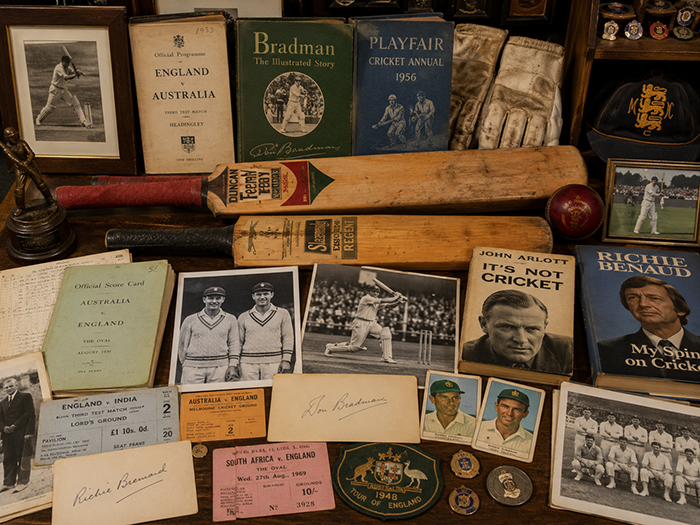
Collect at your own depth
A useful cricket record can be simple or highly detailed.
One item might need little more than a name, photograph and condition. Another might deserve detailed records of players, clubs, nations, matches, tours, series, grounds and bats. Both belong in Collectaneum.
Start quickly. Add detail when it earns its place.
Why the collection becomes difficult
A single object may carry match, series and career significance
A bat might be associated with one innings, several matches or an entire season. A scorecard may document a match, but its importance may come from one performance recorded within it.
Tour, series, competition, venue and format should therefore remain separate but connected, alongside signatures, use claims, condition and provenance.
Player and team context
Connect players, clubs, counties, nations and representative sides.
Match, tour and series
Keep individual fixtures distinct from the wider tour, series or tournament.
Ground and date
Record venue, dates, session or day where relevant, and historical naming changes.
Use and presentation
Distinguish match-used, player-issued, signed, presented and commemorative items.
Score and performance
Preserve innings, wickets, records and milestones without replacing the item record.
Condition and provenance
Capture wear, repairs, inscriptions, ownership history and supporting evidence.
From sporting event to owned object
Build the record in connected layers
Shared event and player records provide the context, while use, signatures, condition, provenance and documentation remain specific to the object in your collection.
Identify the people and sides
Record players, captains, clubs, counties, nations, officials and relevant career context.
Define the cricket context
Capture match, competition, format, tour, series, season, ground and date.
Describe your example
Preserve object type, maker, markings, signatures, use, wear, damage, restoration and location.
Attach the evidence
Connect scorecards, photographs, certificates, receipts, correspondence, research and valuations.
A record in practice
A scorecard records more than a final result
The shared record identifies the match, teams, venue, date, competition and score.
The owned-item record then captures its edition or format, annotations, signatures, condition, acquisition source, provenance and photographs.
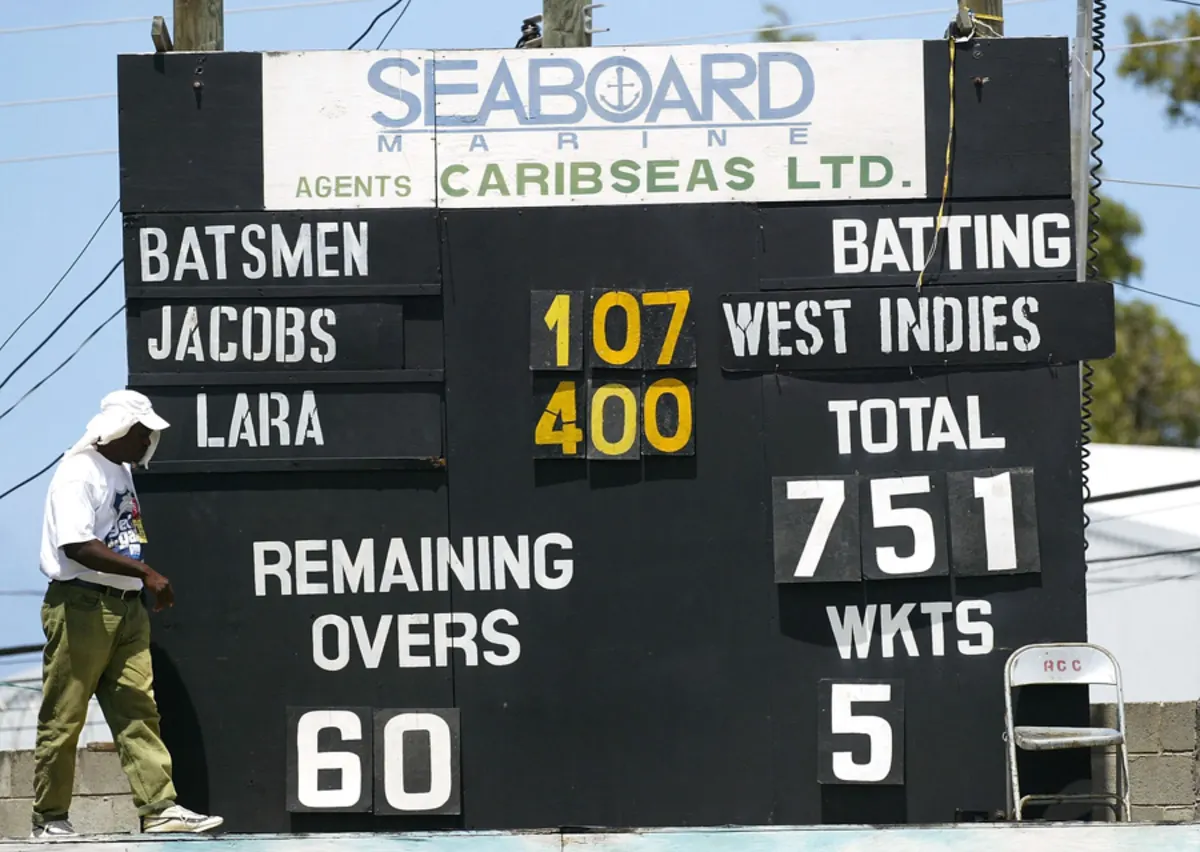
If the item is significant because of a record innings, that performance can be linked without turning the scorecard itself into the player or event record.
Important collecting distinctions
Details that should not be collapsed into one label
Cricket collecting benefits from keeping sporting hierarchy and object claims precise.
Match or series
A fixture is one event within a wider contest; memorabilia may relate to either or both.
Match-used or player-issued
An item prepared for a player is not necessarily proven to have been used in play.
Signed or presented
A signature records authorship of a mark; presentation records a transfer and may require separate evidence.
Original scorecard or reproduction
The information may be historically accurate even when the physical print is later.
Cricket is rich in nested history
The record should preserve both the object and the performance it represents
Cricket objects often become meaningful through statistics, milestones, tours and long-running rivalries. Those facts belong in connected context rather than being buried in a caption.
Collectaneum allows a collector to record that depth while keeping the physical object, its evidence and its condition independently understandable.
Learn more when you want to
Research the judgement, then preserve the evidence
The Knowledge Center provides deeper guidance on documentation, authentication, provenance, photography and valuation. The registry keeps the resulting evidence connected to the exact item.
Collectaneum does not authenticate, grade or value an object for you. It keeps conclusions, uncertainty and supporting material connected to the exact owned item so the record remains reviewable.
Your cricket collection. Your way.
Start recording your cricket collection
Create connected records for players, matches, tours, series and owned memorabilia while preserving use claims, signatures, condition, provenance and supporting evidence.
Start with the essentials and add more whenever it matters. The depth is there when you want it.