
Your boxing collection. Your way.
Boxing Collection Management
Start with the items you own and record the details useful to you.
Keep things simple, or go deeper with fighters, bouts, events, promoters, venues, gloves, robes and belts whenever they matter.
Collect at your own depth
A useful boxing record can be simple or highly detailed.
One item might need little more than a name, photograph and condition. Another might deserve detailed records of fighters, bouts, events, promoters, venues, gloves, robes and belts. Both belong in Collectaneum.
Start quickly. Add detail when it earns its place.
Why the collection becomes difficult
The fighter, the bout and the object each carry different evidence
Boxing collections cross sporting equipment, promotional print, tickets, photographs, belts, robes and signed material. Their identity may depend on a single contest or on a longer relationship with a boxer, promoter or venue.
Claims such as fight-worn, corner-used, signed at an event or championship-issued should remain explicit and supported rather than compressed into one description.
Fighter attribution
Connect one or more fighters without losing the difference between subject, signer, owner and user.
Bout and event context
Record card, contest, date, venue, promoter, title status and billing.
Use claims
Distinguish fight-worn, training-used, corner-used, presented and commemorative objects.
Signatures and inscriptions
Preserve signer, placement, date, circumstances and authentication evidence.
Edition and format
Separate original posters, later prints, programmes, tickets, photographs and promotional variants.
Condition and provenance
Record wear, repairs, framing, chain of ownership and supporting documentation.
From event history to owned memorabilia
Build the record in connected layers
Shared records can describe a recognised bout, fighter or published item, while signatures, use, condition, provenance and supporting evidence remain specific to your example.
Identify the subject
Record fighters, trainers, promoters, governing bodies, weight class, championships and career context.
Define the event or release
Capture bout, card, date, venue, competition, publisher, manufacturer, edition and format.
Describe your item
Preserve size, materials, markings, signatures, wear, damage, restoration, framing and location.
Attach the evidence
Connect photographs, certificates, receipts, correspondence, catalogues, research and valuations.
A record in practice
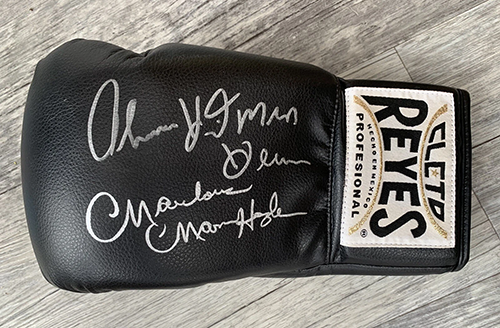
A signed glove can contain several separate claims
The shared record may identify the glove model, maker and the Hagler–Hearns bout commonly known as “The War”.
The owned-item record then captures both signatures, where and when they were obtained, whether the glove is commemorative or used, its condition, provenance, photographs and any authentication.
Keeping those statements separate prevents a genuine signature from accidentally implying genuine fight use.
Important collecting distinctions
Details that should not be collapsed into one label
Boxing records become more reliable when association, use, signature and publication claims are not treated as interchangeable.
Fight-worn or commemorative
An object may celebrate a bout without having been present in the ring.
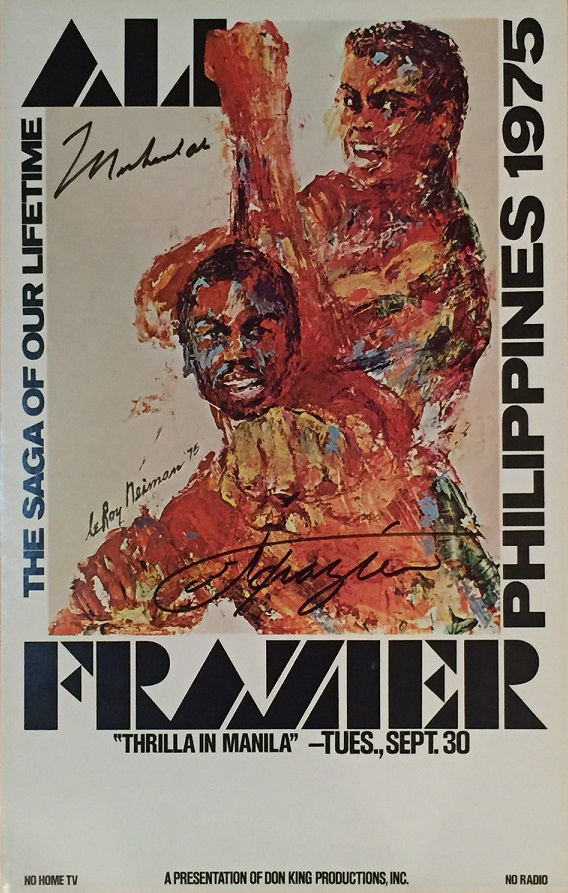
Original poster or later print
The same artwork may exist as period advertising, authorized reissue, reproduction or decorative print.
Signed or authenticated
A visible signature is an observation; authentication records the evidence and conclusion supporting attribution.
Bout or event card
One contest sits within a wider promoted event, and memorabilia may relate to either level.
Sporting significance depends on context
A famous name is not enough to explain the object
The strongest boxing records identify how the item relates to a fighter’s career, a particular contest, a championship, a venue or a promotional campaign.
That context should remain linked to the physical evidence and provenance so later owners can distinguish established fact from seller description or family history.
Learn more when you want to
Research the judgement, then preserve the evidence
The Knowledge Center provides deeper guidance on authentication, provenance, documentation, photography and valuation. The registry keeps those conclusions and supporting evidence attached to the exact item.
Collectaneum does not authenticate, grade or value an object for you. It keeps conclusions, uncertainty and supporting material connected to the exact owned item so the record remains reviewable.
Your boxing collection. Your way.
Start recording your boxing collection
Create connected records for fighters, bouts and owned memorabilia while preserving signatures, use claims, condition, provenance, photographs and supporting evidence.
Start with the essentials and add more whenever it matters. The depth is there when you want it.