
Your board game collection. Your way.
Board Game Collection Management
Start with the items you own and record the details useful to you.
Keep things simple, or go deeper with publishers, designers, editions, printings, versions, expansions, components and completeness whenever they matter.
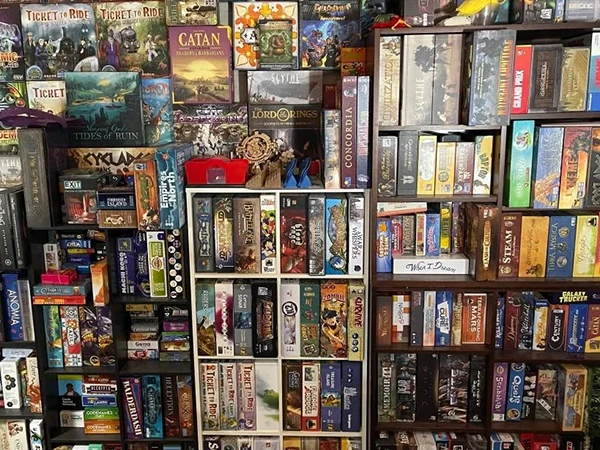
Collect at your own depth
A useful board game record can be simple or highly detailed.
One item might need little more than a name, photograph and condition. Another might deserve detailed records of publishers, designers, editions, printings, versions, expansions, components and completeness. Both belong in Collectaneum.
Start quickly. Add detail when it earns its place.
Why the collection becomes difficult
One title can exist as many different collectible versions
Board games change through publishers, regions, languages, artwork, rules revisions, component specifications, deluxe editions, expansions and crowdfunding releases. Two copies with the same title may not be the same version.
A useful registry therefore needs both catalogue-level version information and an item-level record of the exact contents, condition and alterations of the copy you own.
Edition and printing
Separate title, publisher, edition, printing, language, region, artwork and rules changes so similar boxes are not treated as identical releases.
Components and completeness
Track boards, cards, counters, dice, pawns, miniatures, score pads, inserts, rules and other parts at a level detailed enough to prove completeness.
Expansions and promos
Connect base games to expansions, mini-expansions, promotional components, convention items, exclusives and crowdfunding additions.
Sealed, punched and played
Preserve whether a game is factory sealed, opened, unpunched, punched, lightly played or heavily used without collapsing these states into one condition field.
Originality and replacements
Document replacement dice, reproduced cards, photocopied rules, 3D-printed parts, repaired boxes and other interventions at component level.
Condition across the whole game
Keep box, board, cards, counters, rules, components and environmental issues such as mould, smoke or damp as separate observations.
From game title to owned copy
Build the record in connected layers
Shared catalogue knowledge can identify a recognised edition or version, while component completeness, box condition, replacements, play history and provenance remain attached to the individual copy in your collection.
Identify the game
Record title, designer, publisher, release year, edition, printing, language, region and catalogue or product reference where known.
Define the version
Capture box artwork, rules state, component specification, expansions, deluxe or collector status, crowdfunding tier and recognised version differences.
Describe your copy
Preserve completeness, sealed or opened state, punched or unpunched counters, component condition, replacements, repairs, storage and play history.
Attach the evidence
Connect photographs, inventories, receipts, rulebooks, provenance, research notes and valuations to the exact copy they support.
A record in practice
A complete game is more than a box with a rulebook
The shared record may identify the publisher, designer, edition, printing, language, release year, rules state and expected component inventory.
The owned-item record then captures whether your copy is sealed, opened, punched or unpunched; which cards, counters, dice, pawns, boards, inserts, score sheets and expansions remain; the condition of the box and contents; repairs; replacement pieces; acquisition source; photographs and valuations.
Another copy of the same version can reuse reliable catalogue knowledge while retaining a completely separate completeness and condition history.
Owned-item evidence
Completeness can exist at several levels
A game may be playable with a replacement piece, component-complete with every required part, or fully original with the correct edition-specific contents, packaging and paperwork. Record the distinction rather than relying on one generic "complete" label.
Important collecting distinctions
Details that should not be collapsed into one label
Board game records become clearer when playability, completeness, originality and version identity remain separate questions.
Playable or complete
A replacement die may make a game fully playable while the copy remains incomplete or non-original from a collecting perspective.
Edition or printing
The same title may exist across publishers, regions, artwork, corrected rules and component changes that matter to collectors.
Sealed or verified
Factory shrink can preserve external condition, but unopened contents cannot be checked for missing or incorrect components.
Historic wear or damage
Writing, score sheets, homemade repairs and other signs of play may reduce market condition while preserving personal or historical provenance.
Condition is component-specific
Box, board, cards and pieces can tell different condition stories
Crushed corners, splits, fading and tape affect the box; warping and hinge wear affect boards; marking and edge wear affect cards; punched, clipped, broken or missing pieces affect components independently.
Keeping those observations separate creates a more useful record, especially where an excellent box contains heavily played contents or a worn box protects an unusually complete and well-preserved game.
Learn more when you want to
Research the version, then preserve the evidence
The Knowledge Center supports documentation, authentication, condition, restoration and valuation decisions. The registry keeps inventories, photographs and conclusions connected to the exact owned copy.
Collectaneum does not authenticate, grade or value an object for you. It keeps conclusions and supporting material connected to the exact game so the record remains reviewable as edition research or component knowledge develops.
Your board game collection. Your way.
Start recording your board game collection
Create connected records for titles, designers, publishers, editions, printings, expansions and versions while preserving component completeness, box and contents condition, originality, photographs and valuations for each owned copy.
Start with the essentials and add more whenever it matters. The depth is there when you want it.