
Your basketball collection. Your way.
Basketball Collection Management
Start with the items you own and record the details useful to you.
Keep things simple, or go deeper with players, teams, leagues, seasons, games, jerseys, shoes and balls whenever they matter.
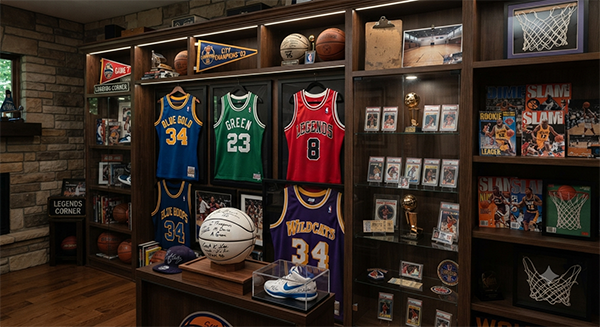
Collect at your own depth
A useful basketball record can be simple or highly detailed.
One item might need little more than a name, photograph and condition. Another might deserve detailed records of players, teams, leagues, seasons, games, jerseys, shoes and balls. Both belong in Collectaneum.
Start quickly. Add detail when it earns its place.
Why the collection becomes difficult
Player association can mean several different things
A shoe or jersey may be a retail release, player model, team-issued example, player-issued item or game-used object. Visual similarity alone cannot establish those distinctions.
Cards and commercial memorabilia introduce another structure of sets, parallels, serial numbering and grades, all of which need to coexist with team and player history.
League and competition
Record professional, women’s professional, college, international and Olympic contexts accurately.
Player and team
Connect athletes to teams, positions, seasons, transfers and career periods.
Game and milestone
Link objects to fixtures, championships, drafts, records and presentations where evidence supports it.
Issue and use claims
Distinguish retail, team-issued, player-issued, practice-used and game-used material.
Cards and releases
Preserve manufacturer, set, year, number, parallel, insert, serial numbering and grade.
Signatures and provenance
Keep autograph evidence, acquisition history and supporting photographs attached to the exact object.
From commercial release to owned sporting object
Build the record in connected layers
Shared records can describe a jersey design, shoe model or card release, while issue, use, signatures, condition and provenance remain specific to the owned example.
Identify the object
Record object type, manufacturer, model or set, player, team, league, season and release details.
Connect the sporting context
Capture game, opponent, date, competition, milestone, draft or presentation context where supported.
Describe your example
Preserve size, serials, customisation, wear, repairs, signatures, grade, display and storage location.
Attach the evidence
Connect certificates, photographs, receipts, auction records, provenance, research and valuations.
A record in practice
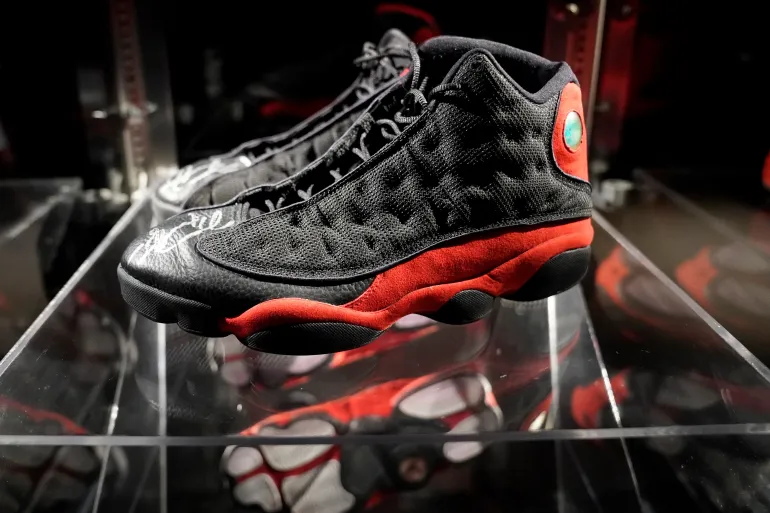
Player shoes need both product and use records
The shared record may identify the brand, model, colourway, release period and athlete endorsement.
The owned-pair record then captures size, player-specific construction, markings, wear, repairs, match or practice-use claim, game association, signatures, provenance and supporting photographs.
A retail pair can share model knowledge while remaining clearly separate from player-issued or game-used footwear.
Important collecting distinctions
Details that should not be collapsed into one label
Basketball memorabilia records should distinguish commercial identity from athlete association and event-specific use.
Player model or player-issued
A shoe designed for or endorsed by an athlete is not automatically an item issued to that athlete.
Player-issued or game-used
Issue establishes intended recipient; use requires additional evidence.
Team style or game-specific
Correct colours and season design do not prove use in one fixture or championship.
Signed or witnessed provenance
An authentic autograph may be well supported even when the exact signing occasion is unknown.
One collection can cross several basketball ecosystems
League, college, international and Olympic records should remain connected but distinct
A player may appear through college, professional, national-team and Olympic material, each with different teams, competitions, seasons and product relationships.
Collectaneum allows the player to connect those records while preserving the precise context of every item.
Learn more when you want to
Research the judgement, then preserve the evidence
The Knowledge Center supports authentication, provenance, photography and valuation. The registry keeps issue claims, signatures and supporting evidence attached to the owned object.
Collectaneum does not authenticate, grade or value an object for you. It keeps conclusions, uncertainty and supporting material connected to the exact owned item so the record remains reviewable.
Your basketball collection. Your way.
Start recording your basketball collection
Create connected records for players, teams, leagues, games and objects while preserving issue, use, signatures, condition, provenance, photographs and valuations.
Start with the essentials and add more whenever it matters. The depth is there when you want it.