
Your baseball collection. Your way.
Baseball Collection Management
Start with the items you own and record the details useful to you.
Keep things simple, or go deeper with teams, players, leagues, seasons, games, cards, balls and bats whenever they matter.
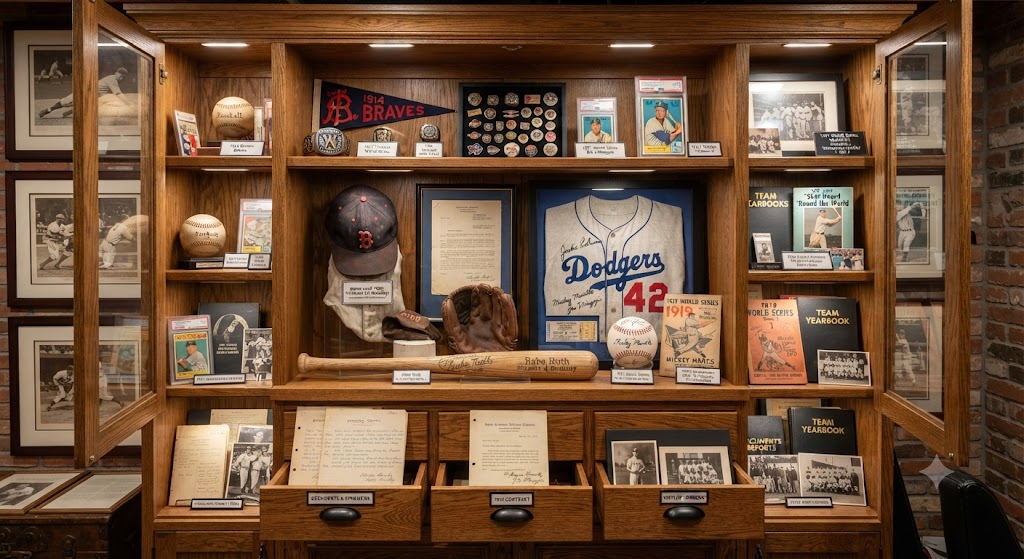
Collect at your own depth
A useful baseball record can be simple or highly detailed.
One item might need little more than a name, photograph and condition. Another might deserve detailed records of teams, players, leagues, seasons, games, cards, balls and bats. Both belong in Collectaneum.
Start quickly. Add detail when it earns its place.
Why the collection becomes difficult
Baseball collecting crosses products, people and statistical history
A card is identified through set, year, manufacturer, number, variation and grade. A bat or jersey may instead depend on model, team issue, player attribution and game use.
The registry must accommodate those different object types while preserving the shared relationships that allow a collection to be explored by player, team, season or event.
Set and release
Record card set, manufacturer, year, number, subset, parallel, insert and recognised variation.
Player and team
Connect players to teams, positions, seasons, leagues and career periods without duplicating the object.
Game and event
Link material to games, World Series, milestones, signings and presentations where evidence supports it.
Issue and use
Distinguish retail, team-issued, player-used, game-used and commemorative equipment.
Signatures and inscriptions
Preserve autograph authentication, inscriptions, dates and signing context.
Condition and grading
Record object-specific condition, restoration and third-party grading without reducing every type to one scale.
From published release to owned memorabilia
Build the record in connected layers
Shared records can describe a card release, bat model or uniform style, while grade, signatures, use, provenance and documents remain specific to the owned example.
Identify the object
Record object type, maker, set or model, player, team, league, season, number and release details.
Connect the context
Capture game, milestone, competition, venue, date, opponent or career event where supported.
Describe your example
Preserve grade, wear, markings, signatures, repairs, customisation, framing and storage location.
Attach the evidence
Connect certificates, photographs, receipts, auction records, provenance, research and valuations.
A record in practice
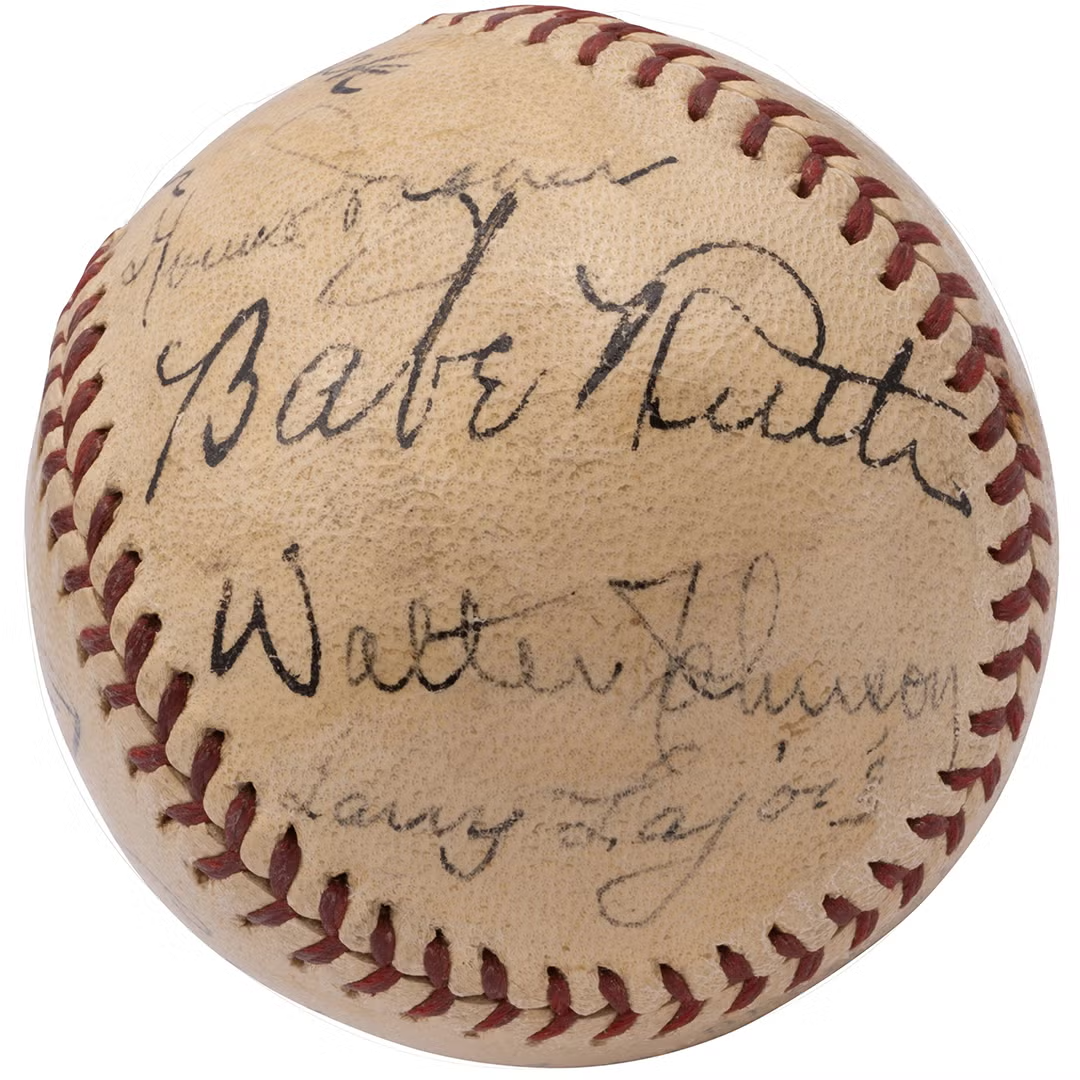
A signed baseball carries several separate records
The shared record may identify the ball type, manufacturer, league period and intended use.
The owned-item record then captures each signer, inscription, panel position, signing occasion, authentication, toning or surface condition, display method, acquisition source and provenance.
A game-use claim or connection to a milestone requires its own evidence and should not be implied merely by the presence of a signature.
Important collecting distinctions
Details that should not be collapsed into one label
Baseball records become stronger when product identity, player association, signature and game use are not presented as one claim.
Set variation or condition difference
A recognised printing variation is part of release identity; fading, trimming or damage belongs to the owned copy.
Player model or player-used
Equipment matching a player specification does not by itself prove personal use.
Signed or game-used
An authentic signature establishes authorship, not use in a game.
Season association or specific event
An object may be correct for a season without evidence connecting it to one fixture or milestone.
Collections can reveal connected histories
Cards, equipment and paper records can support one another
A programme, photograph or team document may help date a uniform style, identify a signing occasion or explain the context of a game-related object.
Collectaneum keeps each item independent while allowing those evidential relationships to be recorded and reviewed.
Learn more when you want to
Research the judgement, then preserve the evidence
The Knowledge Center supports authentication, provenance, grading, photography and valuation. The registry preserves the resulting evidence and uncertainty with the exact object.
Collectaneum does not authenticate, grade or value an object for you. It keeps conclusions, uncertainty and supporting material connected to the exact owned item so the record remains reviewable.
Your baseball collection. Your way.
Start recording your baseball collection
Create connected records for players, teams, sets, games and objects while preserving grades, signatures, use claims, provenance, photographs and valuations.
Start with the essentials and add more whenever it matters. The depth is there when you want it.