
Your Barbie collection. Your way.
Barbie Collection Management
Start with the items you own and record the details useful to you.
Keep things simple, or go deeper with dolls, eras, face sculpts, body types, fashions, accessories, packaging and regional variants whenever they matter.
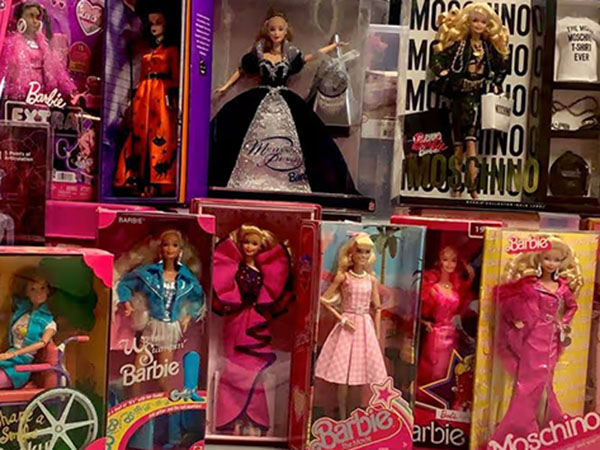
Collect at your own depth
A useful Barbie record can be simple or highly detailed.
One item might need little more than a name, photograph and condition. Another might deserve detailed records of dolls, eras, face sculpts, body types, fashions, accessories, packaging and regional variants. Both belong in Collectaneum.
Start quickly. Add detail when it earns its place.
Why the collection becomes difficult
Barbie is a system of dolls, fashions and changing design states
The same named character can appear with different face sculpts, body constructions, hairstyles, screenings, fashions, packaging and regional configurations. Outfits and accessories can also be collected independently.
A useful registry therefore needs to describe both the recognised release and the physical state of the individual doll, fashion or accessory that survives.
Era and production state
Separate release year from collector-recognised eras, face sculpts, body types, hair styles, screenings and production differences.
Doll and fashion relationships
Record dolls, outfits, shoes, jewellery, handbags and other wardrobe pieces without assuming the fashion is secondary to the doll.
Packaging and completeness
Preserve NRFB, boxed, loose and displayed states alongside stands, booklets, certificates, tissue, inserts and other original contents.
Originality and reproduction
Distinguish vintage original parts from later official Mattel reproductions, unofficial reproductions, restorations and custom work.
Regional and market variants
Capture Japan, US and other market-specific dolls, fashions, packaging, fabrics, labels and accessory combinations.
Condition and intervention
Record green ear, discolouration, haircuts, paint loss, neck splits, staining, repairs, rerooting and repainting at owned-item level.
From recognised release to owned example
Build the record in connected layers
Shared catalogue knowledge can identify a recognised doll, fashion, collector line or regional issue while condition, completeness, originality, restoration and provenance remain attached to your individual example.
Identify the doll
Record character, era, model or release, face sculpt, body type, hair style, face screening, production period and country markings.
Distinguish the release
Capture outfit or fashion name, stock reference, packaging format, collector line, regional market, label status and recognised variant.
Describe your example
Preserve NRFB or loose state, completeness, condition, original parts, repairs, restoration, customisation, accessories and storage location.
Attach the evidence
Connect photographs, receipts, certificates, provenance, reference notes and valuations to the exact doll, fashion or accessory they support.
A record in practice
A Barbie is more than a name and a year
The shared product record may identify the era, release, face sculpt, body type, hairstyle, screening, fashion, stock reference and regional market.
The owned-item record then captures whether your example is NRFB, boxed or loose; which original outfit pieces and accessories remain; hair and face condition; green ear or discolouration; repairs; replacement parts; acquisition source; photographs and valuations.
Similar-looking dolls can therefore share reliable catalogue knowledge without losing the evidence that makes each owned example different.
Owned-item evidence
Tiny wardrobe pieces can determine completeness
Shoes, gloves, jewellery, handbags, belts, hats, stockings, booklets and packaging may be individually losable. Record what survives rather than reducing completeness to a single yes-or-no field.
Important collecting distinctions
Details that should not be collapsed into one label
Barbie records are clearer when identity, authenticity, completeness and preservation are treated as separate questions.
Character or face sculpt
The same face sculpt may appear across several named characters, while Barbie herself has used many different face sculpts over time.
Authentic or period original
An official Mattel reproduction is authentic Mattel, but it is not the same thing as a vintage period-original doll, fashion or accessory.
Complete or untouched
A doll may retain every component supplied with it while also having been cleaned, restyled, repaired or partially restored.
Preserved or never removed
NRFB records original packaging state, but plastics, fabrics, metals and elastic can still deteriorate while sealed in the box.
Condition is material and component-specific
Doll, hair, clothing and packaging can age in different ways
Barbie collectors may need to distinguish green ear, greasy or discoloured vinyl, haircuts, paint loss, neck splits, loose joints, staining, fabric fading, metal corrosion and packaging wear.
Keeping those observations separate creates a more useful record than one overall condition label, particularly for vintage, boxed and highly complete examples.
Learn more when you want to
Research the judgement, then preserve the evidence
The Knowledge Center supports documentation, authentication, condition, restoration and valuation decisions. The registry keeps the resulting observations, photographs and evidence connected to the owned item.
Collectaneum does not authenticate, grade or value an object for you. It keeps conclusions and supporting material connected to the exact doll, fashion or accessory so the record remains reviewable.
Your Barbie collection. Your way.
Start recording your Barbie collection
Create connected records for dolls, eras, face sculpts, body types, fashions, collector lines and regional releases while preserving accessories, packaging, completeness, condition, originality, photographs and valuations for each owned item.
Start with the essentials and add more whenever it matters. The depth is there when you want it.