
Your American football collection. Your way.
American Football Collection Management
Start with the items you own and record the details useful to you.
Keep things simple, or go deeper with teams, players, leagues, seasons, games, jerseys, helmets and balls whenever they matter.
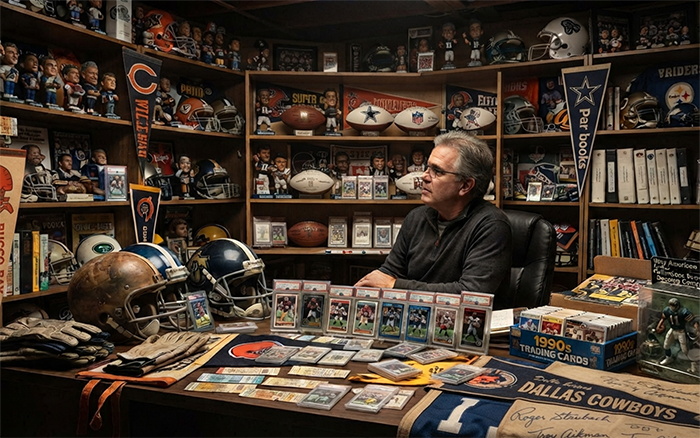
Collect at your own depth
A useful American football record can be simple or highly detailed.
One item might need little more than a name, photograph and condition. Another might deserve detailed records of teams, players, leagues, seasons, games, jerseys, helmets and balls. Both belong in Collectaneum.
Start quickly. Add detail when it earns its place.
Why the collection becomes difficult
The object often matters because of a specific sporting connection
A jersey or helmet may be a retail product, team-issued item, player-issued example, game-used object or commemorative release. Those claims require different fields and different evidence.
Signatures, game association, season, competition and ownership history should remain connected without being compressed into a single descriptive title.
Team and league
Record professional, college or historic league context while preserving team changes and franchise history.
Player and role
Connect athletes, coaches and other figures to positions, seasons and relevant teams.
Game and season
Link objects to fixtures, championships, bowls, drafts, seasons and dated events where supported.
Use and issue claims
Distinguish retail, team-issued, player-issued, practice-used and game-used material.
Signatures and authentication
Keep autograph placement, date, occasion and authentication evidence attached to the signed object.
Condition and display
Record wear, repairs, customisation, framing, mounting and storage without obscuring original state.
From product type to sporting evidence
Build the record in connected layers
Shared records can describe a recognised jersey style, helmet model or card release, while use, signatures, condition and provenance remain specific to the owned item.
Identify the object
Record object type, manufacturer, model, team, league, player, position, season and competition.
Connect the event
Capture game, date, venue, opponent, championship, draft or presentation context where evidence supports it.
Describe your example
Preserve size, numbering, customisation, markings, wear, repairs, signatures, condition and location.
Attach the evidence
Connect certificates, photographs, tickets, receipts, provenance, research and valuations.
A record in practice
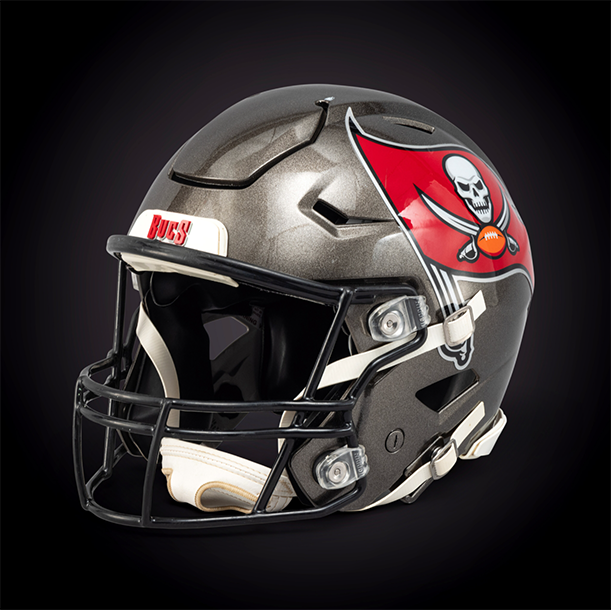
A helmet needs more than a player name
The shared record may identify the helmet model, manufacturer, team style, period and expected decals or hardware.
The owned-item record then captures size, serial or date codes, custom padding, player attribution, practice or game-use claim, wear patterns, repairs, signatures, provenance and supporting photographs.
A retail replica can share design context while remaining clearly separate from team-issued or game-used material.
Important collecting distinctions
Details that should not be collapsed into one label
Sports memorabilia records should preserve what is known, what is claimed and what the surviving evidence can actually establish.
Retail or team-issued
A correct team design does not by itself establish that equipment entered team inventory.
Player-issued or game-used
Issue to a player and use in a specific game are related but separate claims.
Signed or witnessed
An autograph can be genuine without proving when, where or for whom it was signed.
Season style or event-specific
A design may match a season while lacking evidence for one particular game or championship.
Sporting context creates relationships
One object can connect player, team, season and event
A programme, ticket, jersey and photograph may each relate to the same game while retaining different identities and provenance.
Collectaneum allows those records to remain distinct yet connected, making it possible to explore the collection by player, team, competition, season or event.
Learn more when you want to
Research the judgement, then preserve the evidence
The Knowledge Center provides guidance on authentication, provenance, photography and valuation. The registry keeps signatures, use claims and supporting evidence attached to the exact object.
Collectaneum does not authenticate, grade or value an object for you. It keeps conclusions, uncertainty and supporting material connected to the exact owned item so the record remains reviewable.
Your American football collection. Your way.
Start recording your American football collection
Create connected records for players, teams, games and objects while preserving signatures, use claims, condition, provenance, photographs and valuations.
Start with the essentials and add more whenever it matters. The depth is there when you want it.