
Watch Collection Management
Recording the story behind each watch
Watch collecting combines craftsmanship, history, provenance, and technical detail.
A watch is rarely defined solely by its appearance. Reference numbers, movements, servicing history, dial variations, provenance, and condition all contribute to its significance.
As collections grow, keeping those records together becomes increasingly valuable.
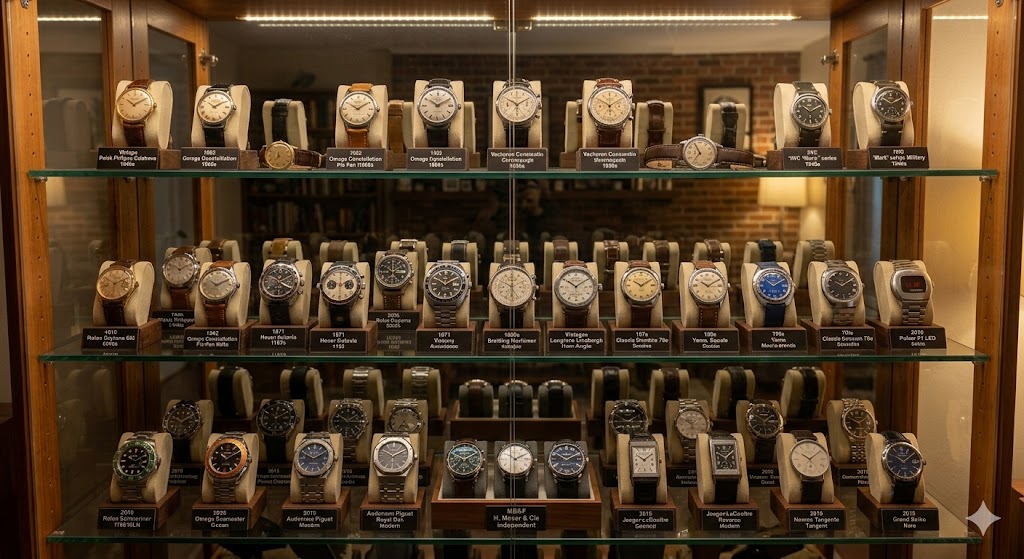
Why watch collections require detailed records
Two watches may appear almost identical while differing significantly in collectability.
Collectors often care about:
- Reference numbers
- Serial numbers
- Dial variations
- Movements
- Service history
- Provenance
- Original accessories
Those details are difficult to manage effectively in a simple spreadsheet.
Service history matters
Unlike many collectibles, watches are mechanical objects designed to be maintained.
Recording servicing, repairs, replacement parts, and maintenance history provides important context for future valuation and ownership.
What a watch collector may want to track
- Brand and model
- Reference and serial numbers
- Movement information
- Service history
- Provenance
- Condition
- Acquisition history
- Valuation history
- Photographs & Documentation
Building a lasting watch registry
A watch registry becomes a long-term record of ownership, maintenance, and collecting history rather than simply a list of timepieces.
From inventory to long-term collection knowledge
The real value of structured collection management is not only knowing what you own today. It is building a record that stays useful over time. As your collection evolves, the information around each item often becomes more important.
That is especially true for watches, where the knowledge around an mechanical componants can be as important as the item itself.
Also see Collectors Hub, Collection Management Software and Import Your Collection.