
Militaria Collection Management
Preserving the history behind the item
Collecting militaria is often about more than the object itself. A helmet, medal, uniform, document, insignia, or field item may have historical context that is just as important as its physical condition. The story behind an item can influence its significance, desirability, and value.
As collections grow, keeping that information organised becomes increasingly difficult. Photographs, provenance notes, acquisition records, references, and supporting documents often end up spread across notebooks, folders, spreadsheets, and memory.
Collectaneum is designed to bring those records together in a structured way.
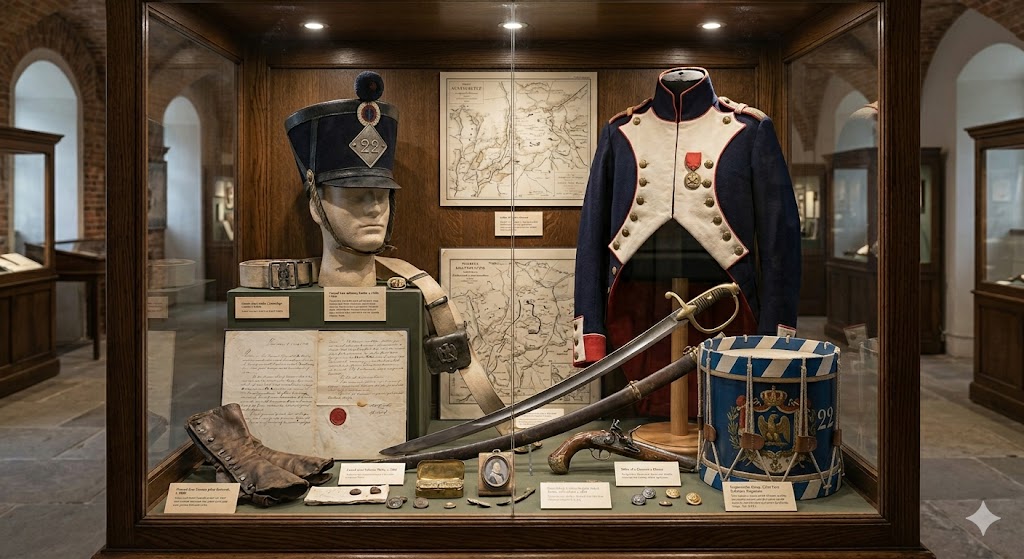
Why militaria collections become difficult to manage
Militaria collections are rarely uniform. A collector may own medals, badges, uniforms, equipment, documents, photographs, and personal effects, all of which require different kinds of documentation.
Many items also carry supporting information:
- Provenance and ownership history
- Service records
- Regiment or unit associations
- Research notes
- Photos and supporting evidence
- Authentication history
Over time, these details often become more important than the item itself.
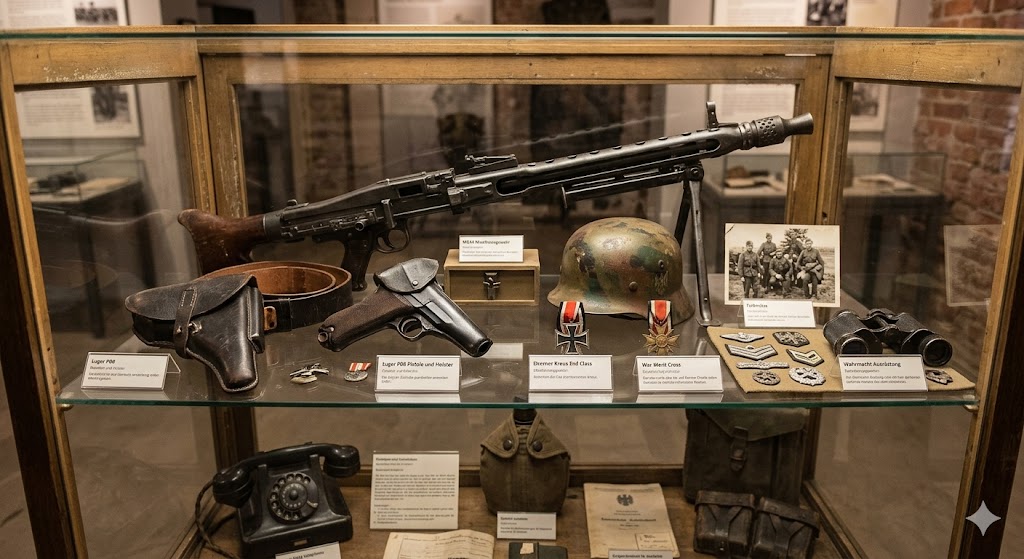
Provenance often matters as much as condition
Unlike many collectible categories, militaria frequently gains significance through documented history.
A medal group linked to a named individual tells a different story from an identical unnamed example. A uniform accompanied by photographs and service records provides context that cannot be replaced later.
Recording those connections helps preserve the collecting knowledge surrounding the item.
What a militaria collector may want to track
A world of Militaria collecting covers a vast array of details. A collector will want to know about:
- The item (product) itself
- Country/Campaign/Conflict
- Named recipients or owners
- Provenance and acquisition history
- Supporting documents and research
- Authentication evidence
- Condition and conservation notes
- Authentication evidence
- Condition and conservation notes
- Valuation history
- Photographs and markings
- Related items within a group
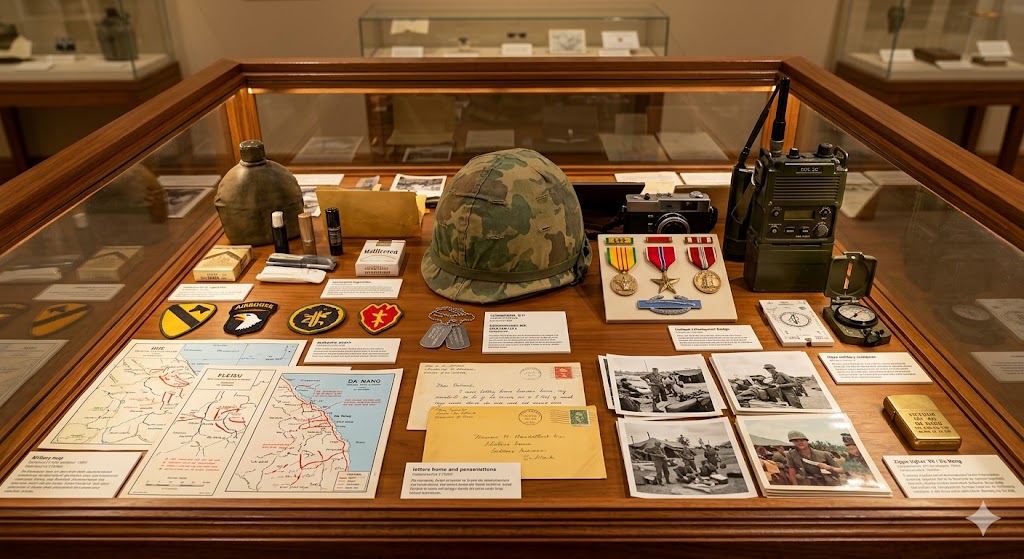
From collecting objects to preserving history
The long-term value of a militaria registry is not simply knowing what you own. It is preserving the research, evidence, and context that surround each piece. Owning history is the ideoly of collecting Militaria
For many collectors, that knowledge becomes the most important part of the collection.
From inventory to long-term collection knowledge
The real value of structured collection management is not only knowing what you own today. It is building a record that stays useful over time. As your collection evolves, the information around each item often becomes more important.
That is especially true for Militaria items, where the historical context and provenance around an item can be as important as the item itself.
Also see Collectors Hub, Collection Management Software and Import Your Collection.