
Dungeons & Dragons Collection Management
Collecting Dungeons & Dragons material quickly moves beyond simple inventory. For TSR-era collectors especially, editions, printings, completeness, condition, provenance, and oddities all matter. A flat list can tell you that you own a book or boxed set, but it struggles to describe what it actually is, how complete it is, how it differs from another copy, and why it matters in the wider history of the game.
That is where structured collection management becomes valuable. Instead of treating everything as one row in a spreadsheet, Collectaneum is designed to help collectors separate products, variants, and the individual items they actually own.
Why D&D collections become difficult to track
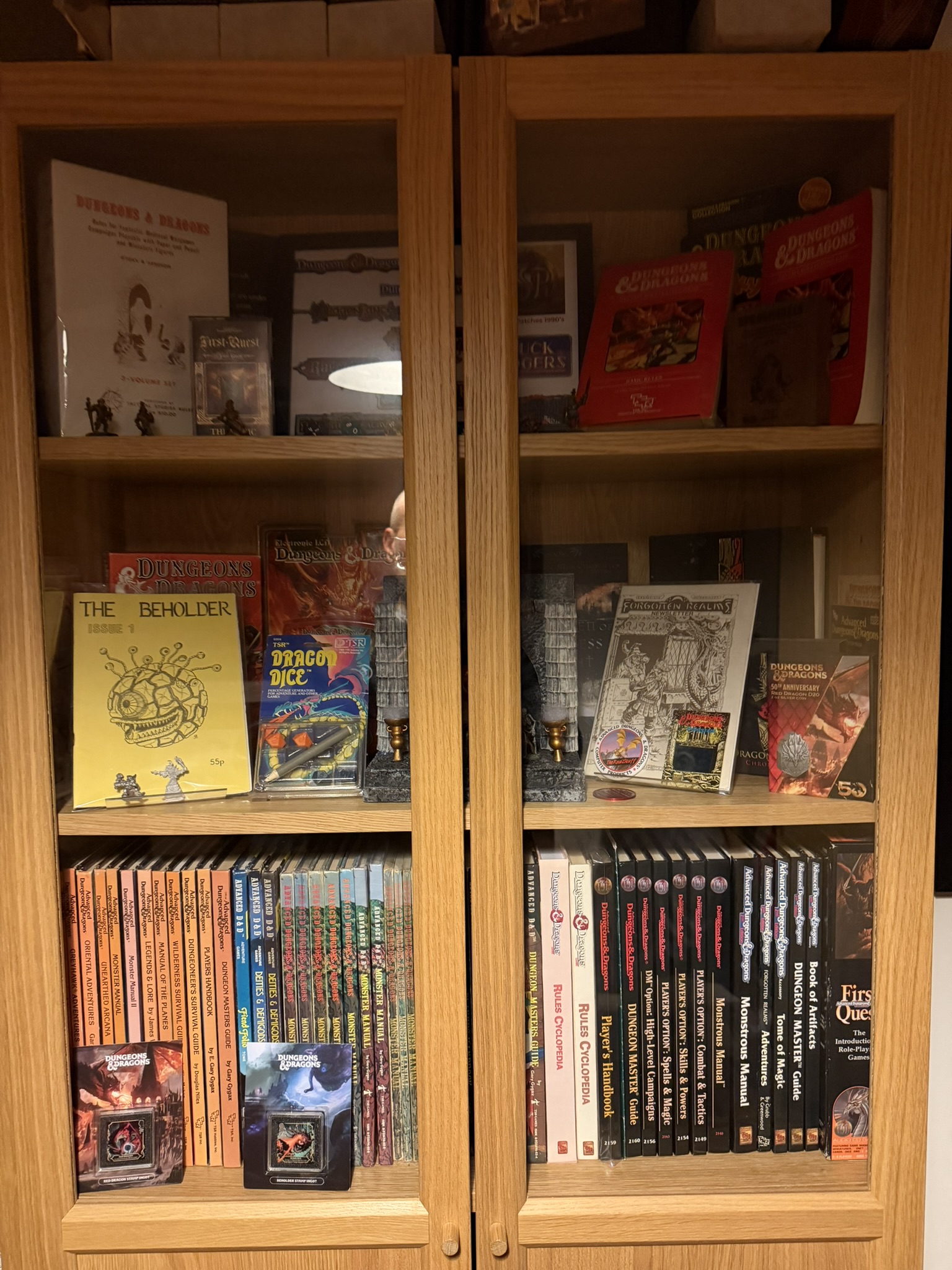
Dungeons & Dragons collections are not difficult simply because they are large. They are difficult because the material is layered. A title may exist in multiple printings. A boxed set may be complete, incomplete, or assembled from multiple sources. A magazine, patch, flyer, convention item, or promotional piece may have significance that a standard inventory system does not capture at all.
Even when a spreadsheet starts well, it tends to flatten those distinctions. Over time, notes multiply, columns become inconsistent, and the collector ends up relying on memory to interpret their own data.
TSR collections are especially rich in variation
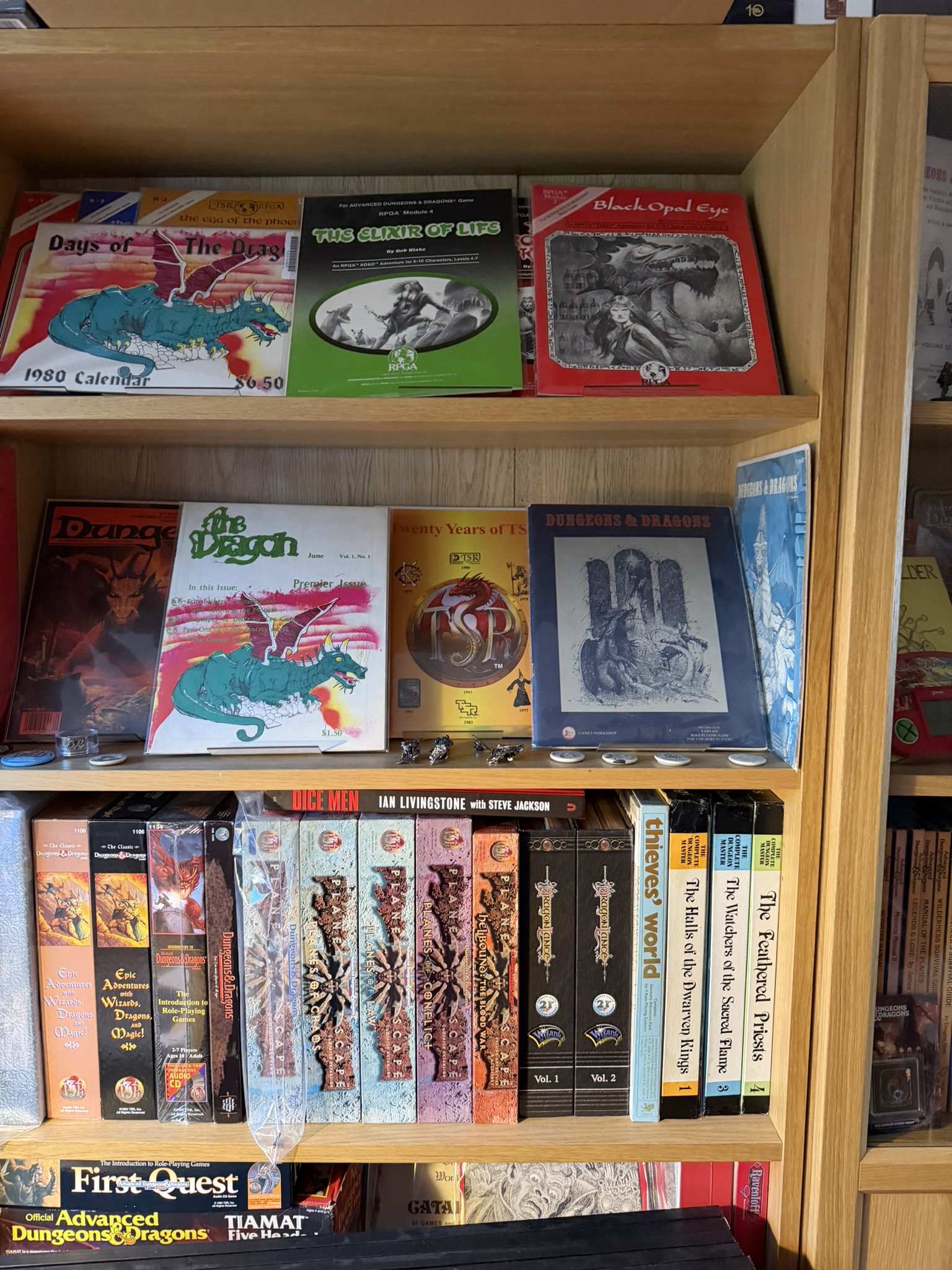
TSR-era material often rewards deeper cataloguing. Differences between printings, logos, covers, inserts, adverts, maps, and component contents can all matter to collectors. Condition is not enough on its own; completeness matters too. A boxed set that is visually attractive but missing key contents is not the same collectible as a fully complete one.
Provenance can matter as well. Some items have a clearer collecting story because of where they came from, how they were acquired, or what collection history they carry with them.
For detailed print-run and edition research, collectors often refer to resources such as The Acaeum, which has long documented TSR-era material in depth.
A structured way to manage the collection
Collectaneum is designed around structure rather than a flat list. In simple terms, that means separating:
- the product itself
- the variant or printing of that product
- the individual copy you personally own
That distinction matters because collectors often own copies that differ in condition, completeness, provenance, and evidence even when they relate to the same underlying product.
What a D&D collector may want to track
- Edition and printing
- Condition and visible wear
- Completeness of boxed contents or inserts
- Ownership history and provenance
- Photos and supporting evidence
- Acquisition details such as seller, date, and price
- Valuation history over time
- Notes about unusual traits or variant details
Beyond books: memorabilia, dice, and crossover collectibles
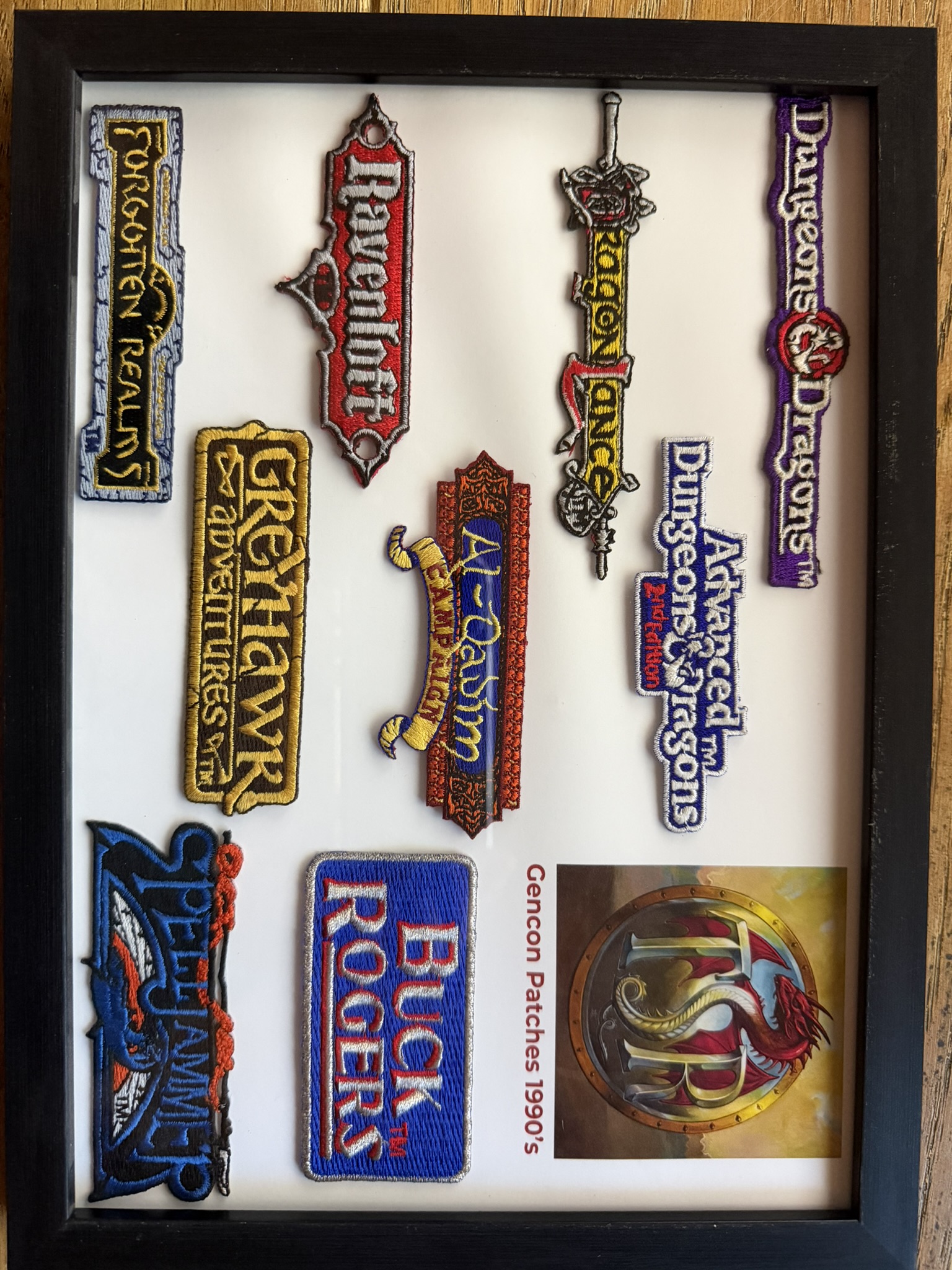
One of the strengths of the RPG collecting space is that it does not stop at books. Dice, patches, event items, accessories, promotional material, and miniatures often overlap with the core collection. These pieces may be small, but they still have identity, history, and significance.
That crossover is exactly why collectors benefit from a system that can handle both formal cataloguing and collector notes without reducing everything to the same kind of record.
From inventory to long-term collection knowledge
The real value of structured collection management is not only knowing what you own today. It is building a record that stays useful over time. As your collection evolves, the information around each item often becomes more important, not less.
That is especially true for long-running hobby spaces like Dungeons & Dragons, where the context around an item can be as important as the item itself.
Also see Collectors Hub, Collection Management Software and Import Your Collection.